
Lake Macbride State Park
3525 Highway 382 NE
Solon, IA
The biggest state park in Iowa, wrapped around a quiet 900-acre lake in wooded creek valleys, with stone shelters the CCC built by hand in the 1930s.
Lake Macbride is the largest state park in Iowa, and it earns the title quietly: no dramatic peak or gorge, just a big, wandering 900-acre lake folded into wooded creek valleys, with more than two thousand acres of oak-hickory timber and grassland around it. The lake fills the joined valleys of Mill and Jordan Creeks, so it splits into two long arms that reach back into the trees, and a boater or paddler can spend a whole afternoon poking into coves and never see the far end.
It is also a piece of living conservation history. The push to protect these wooded valleys came in the 1930s from the Iowa City Chamber of Commerce and Jay 'Ding' Darling, the Pulitzer-winning cartoonist and conservationist who did as much as anyone to build America's wildlife-refuge system. The park opened in 1937, the Civilian Conservation Corps raised its beautiful stonework, and the lake was later enlarged in 1955 to the broad sheet of water you see today.
What Travelers Love
- A big, calm 900-acre lake for fishing, paddling, and no-wake boating
- The handsome stone shelter and beach house the Civilian Conservation Corps built in the 1930s
- More than seven miles of trail, including a scenic limestone path between the beach and the dam
- Ospreys, waterfowl, and shorebirds passing through in spring and fall
Worth Knowing
- This is Iowa's largest state park, so give yourself time; the two lake arms are miles apart by road
- The lake is a no-wake, quiet-water lake, which is what keeps it good for fishing and paddling
- The swimming beach is open in the warm season only, and there is no lifeguard, so swim with care
- Trails can be muddy after rain, and winter turns the park over to cross-country skiing and snowmobiling
Learn about Lake Macbride State Park
How the biggest park in Iowa came to be
In the depths of the Great Depression, Iowa City boosters and the conservationist Jay 'Ding' Darling set out to protect the wooded valleys of Mill and Jordan Creeks before farming and development swallowed them. Darling, a newspaper cartoonist who later ran the U.S. Biological Survey and designed the first federal Duck Stamp, is often called the father of conservation in Iowa, and this park is one of the landscapes his advocacy saved. It opened to the public in June 1937.
The park is named for Thomas Macbride, a botanist who spent forty years at the University of Iowa and served as its president, and who preached the value of wild land long before it was fashionable. The original lake was smaller; in 1955 the state enlarged it to roughly 900 acres, giving the park the long, branching shoreline that makes it feel so much bigger than its map.
Stonework the CCC built by hand
Some of the best things at Lake Macbride were built during the Depression by young men of the Civilian Conservation Corps, the New Deal work program that put a generation to labor in America's parks. They quarried and laid the stone shelter and the beach building in the 1930s, and that unhurried, hand-fitted masonry, low and solid and settled into the trees, still anchors the park today.
It is worth slowing down to notice. The CCC's parkitecture, native stone and heavy timber meant to look as if it grew from the ground, is a signature of the era, and Lake Macbride has a fine, well-kept example of it right where families still gather to picnic and swim. Walking up to that beach house is a small trip back nearly a century.
A lake for the slow things
Lake Macbride is a no-wake, quiet-water lake, and that is the whole point of it. Without ski boats and jet skis churning it up, the water stays calm and the fishing stays good; anglers pull rare spotted bass, muskellunge, walleye, channel catfish, and a long list of panfish from it, and a canoe or kayak can drift the coves in near silence. A concessioner rents boats in season for those who arrive without one.
On land, more than seven miles of trail lace the timber, and the prettiest of them is a crushed-limestone path that runs about a mile and a half between the beach and the lake's dam, easy walking with water views most of the way. Spring and fall bring ospreys, waterfowl, and shorebirds through on migration, and in winter the trails go over to cross-country skiers and snowmobilers.
Visiting Lake Macbride
The park sits just north of Solon, tucked between Cedar Rapids to the north and the Coralville and Iowa City area to the south, so it makes an easy half-day escape from either. Because it is Iowa's largest park, the two arms of the lake are a real drive apart, and it pays to decide first whether you are coming for the beach, the boat ramp, the trails, or a quiet picnic, then aim for that part of the shore.
Come in the warm season for swimming, though the beach has no lifeguard, so keep an eye on your own group. Bring what you need for a day outdoors, since services are limited, and let the place set your pace. Lake Macbride rewards the unhurried visit: a slow paddle into a cove, a walk to the CCC shelter, an evening watching the light go long across the water.
Closest Boutels
The closest Boutel™ stays, so you can turn this stop into an overnight. Each is a place we chose through independent editorial review, never a paid placement.
Details
Solon, IA
Frequently asked questions
What is Lake Macbride State Park?
Lake Macbride State Park, near the towns of Solon and Iowa City in east-central Iowa, is one of the state's largest and most popular parks, surrounding the big, sprawling Lake Macbride amid wooded hills and inlets. A favorite for water recreation, the park offers boating, sailing, fishing, swimming at the beach, kayaking, miles of hiking and biking trails, camping, and abundant wildlife, all set around the scenic lake. Its size and variety make it a beloved destination for outdoor fun near the Iowa City area. With its large lake, beaches, trails, boating, and camping, Lake Macbride State Park offers a rewarding outdoor destination in east-central Iowa.
What can you do at Lake Macbride State Park?
You can boat, sail, kayak, and paddle on the large lake, fish its waters, swim at the beach, hike and bike the miles of trails through wooded hills, camp at the campgrounds, picnic, and watch for wildlife around the scenic lake and its inlets. The variety of water recreation and the trail system are highlights, and the lake's connection to a nearby reservoir adds to the setting. It is a favorite for active outdoor days. With its boating, swimming, fishing, hiking, biking, and camping, Lake Macbride State Park offers a rewarding outdoor experience near Iowa City in east-central Iowa.
What safety tips apply at Lake Macbride State Park?
The lake is large, so boaters and paddlers should always wear a life jacket, watch for winds that can quickly create waves, and stay alert to boat traffic, which is busy in summer, while swimmers should stay in the designated beach area and watch children closely near and in the water. Summer storms can arise quickly, so watch the sky. Wear sturdy shoes on the trails and bring insect repellent for the woods. Following water-safety basics and being weather-aware ensures a safe and enjoyable visit to Lake Macbride State Park in east-central Iowa.
When is the best time to visit Lake Macbride State Park?
Summer is the prime time for swimming, boating, and enjoying the lake, when the weather is warm and the water inviting, while late spring and early fall offer pleasant weather with fewer crowds for hiking, biking, fishing, and camping, and fall brings beautiful color to the wooded hills. Winter is quiet and cold. The park's water recreation shines in the warm months. For the best combination of warm-weather lake fun and pleasant trails, aim for late spring through early fall, with summer best for the beach, at Lake Macbride State Park in east-central Iowa.
What is near Lake Macbride State Park?
Lake Macbride State Park is near Solon and Iowa City in east-central Iowa, within reach of the Iowa Children's Museum in Coralville, Palisades-Kepler State Park, Cedar Rapids with the National Czech and Slovak Museum, and the Amana Colonies. That makes Lake Macbride State Park a rewarding outdoor stop to combine with Iowa City, the Amana Colonies, and the other attractions of east-central Iowa on a visit to the state.
Outside the Park
Palisades-Kepler State Park
7.6 miles away
Most people blow past Palisades-Kepler on Highway 30 without knowing there is a river gorge behind the trees.

The Iowa Children's Museum
8.3 miles away
The Iowa Childrens Museum sits inside the Coral Ridge Mall in Coralville, which makes it a reliable stop in any weather.
Lincoln Highway Heritage Byway
10 miles away
Iowa's stretch of the Lincoln Highway, America's first coast-to-coast road, laid out in 1913 and now a marked heritage byway.
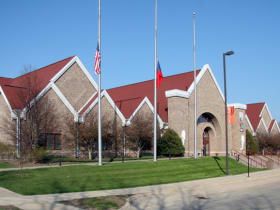
National Czech and Slovak Museum and Library
13 miles away
The National Czech and Slovak Museum and Library anchors the Czech Village district of Cedar Rapids, telling the story of the Czech and Slovak immigrants who shaped this city.

Amana Colonies
17 miles away
The Amana Colonies are seven historic villages on the Iowa River west of Iowa City, founded in the 1850s by a German religious group that lived communally for nearly 80 years.