
Amana Colonies
708 47th Ave, Amana, IA
Amana, IA
Seven villages built by German communal believers who shared everything for eighty years, now a living landmark of woodwork, wine, wool, and hearty family-style tables.
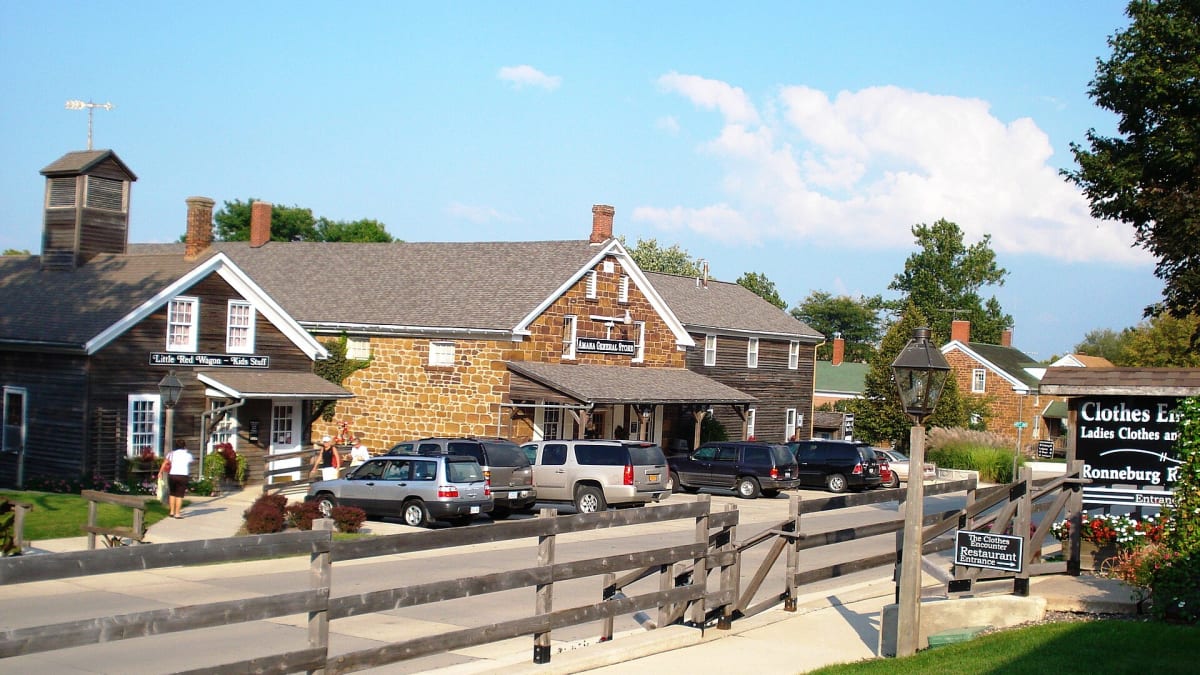
The Amana Colonies are seven villages in eastern Iowa founded in the 1850s by the Community of True Inspiration, a German religious group that fled persecution in Europe and built a fully communal society on the Iowa prairie. For nearly eighty years the members owned no private property, ate in communal kitchens, and were assigned work by the church, a rare experiment in shared living that lasted far longer than most.
Today the colonies are a National Historic Landmark and one of Iowa's most-loved destinations, their old brick and native-sandstone buildings filled with craftspeople, restaurants, wineries, and shops. The communal era ended in 1932, but the villages kept their language, their trades, and their deep sense of place, and a visit still feels like stepping into a carefully preserved world.
What Travelers Love
- Browsing the craft shops for handmade furniture, woolens, baskets, and clocks
- Family-style German meals served on big platters at the historic restaurants
- The old brick-and-sandstone buildings, communal kitchens, and church still standing
- Local wine, beer, and smoked meats made in the villages' old-world tradition
Worth Knowing
- The seven villages are spread out, so a car makes it easy to see more than one
- Some shops and restaurants keep seasonal schedules, so plan a little in advance
- The Amana Heritage Museum is the best place to start to understand the story
- Family-style dining means shared platters, so come hungry and expect generous portions
Learn about Amana Colonies
The Community of True Inspiration
The people who built Amana belonged to the Community of True Inspiration, a Pietist movement that arose in Germany in the early 1700s and believed that God still spoke through inspired human voices. Facing persecution and military conscription in Europe, the group emigrated to the United States in the 1840s and first settled near Buffalo, New York, in a colony they called Ebenezer.
As that land grew crowded and expensive, the community looked west and bought a large tract along the Iowa River in the 1850s, naming their new home Amana, a biblical word meaning to remain faithful. They laid out seven villages close enough for oxcart travel, each with its own church, communal kitchens, school, and workshops, and organized every part of daily life around the church and the common good.
Eighty years of communal life
In the Amana of the communal era, no member held private property. Families lived in assigned houses, took their meals in neighborhood communal kitchens run by the village women, and received their clothing, food, and a small annual credit from the church-run society. Men and women alike were assigned jobs, in the fields, the woolen mill, the print shop, the calico works, the smithies and carpentry shops that made the colonies nearly self-sufficient.
This way of life held together for almost eighty years, a remarkable span for a communal experiment. The strain of the Great Depression, the pull of the modern world, and a younger generation's desire for private life led the community in 1932 to what residents call the Great Change, separating the church from the businesses and reorganizing the economy into a joint-stock company. Members became shareholders and wage earners, and Amana entered the modern age without losing its identity.
Crafts, food, and drink
The trades that once served the communal society survive as the colonies' living heart. Amana furniture makers still turn out solid walnut, cherry, and oak pieces prized across the Midwest, and shops carry handwoven baskets, wool blankets from the old woolen mill tradition, and tall-case clocks. Walking the villages, you pass workshops where you can watch craftspeople at work.
The kitchens have their own fame. Amana's German-rooted cooking is served family style, with platters of ham, fried chicken, sauerkraut, spaetzle, and pickled vegetables passed around a shared table. The villages also carry a long tradition of winemaking, especially fruit and rhubarb wines, along with brewing and old-fashioned meat smoking, all of which visitors can sample from the local makers.
The land and the river valley
The Iowa River valley the Inspirationists settled had long been the homeland of the Ioway, for whom the state is named, along with the Meskwaki and Sauk peoples who hunted and lived along these rivers. Their descendants remain part of Iowa today, with the Meskwaki owning their Settlement not far to the west near Tama.
The colonists were skilled at bending the land to communal use, digging a seven-mile canal, the Amana Millrace, to power their woolen and grain mills, and managing thousands of acres of forest and farm in common. That legacy of stewardship shows in the woodlots, the preserved millrace, and the tidy village greens that still give the colonies their gentle, ordered feel.
Closest Boutels
The closest Boutel™ stays, so you can turn this stop into an overnight. Each is a place we chose through independent editorial review, never a paid placement.
Details
Amana, IA
Frequently asked questions
What are the Amana Colonies?
The Amana Colonies, a cluster of seven historic villages in east-central Iowa near Cedar Rapids, are one of America's longest-lived communal societies, founded in the nineteenth century by German immigrants of a religious group who lived and worked together in a shared, communal way for generations. Today the beautifully preserved villages, a National Historic Landmark, welcome visitors with their old brick and stone buildings, craft workshops, shops, museums, restaurants serving hearty German-style food, wineries, and a warm sense of heritage. With their communal history, handcrafts, hearty cuisine, and charming villages, the Amana Colonies offer a rich and distinctive cultural destination in east-central Iowa.
What can you do at the Amana Colonies?
You can explore the seven historic villages and their preserved brick and stone buildings, visit museums that tell the story of the communal society, watch and shop for traditional crafts like furniture, woolens, and baskets, sample German-style cooking at family-style restaurants, taste local wines and beer, browse specialty shops, and stroll the pleasant streets steeped in heritage. The blend of history, crafts, and food makes for a full day. The communal-era story is fascinating. With their historic villages, artisan crafts, hearty cuisine, and museums, the Amana Colonies offer a rich and enjoyable cultural experience in east-central Iowa.
What is the history of the Amana Colonies?
The Amana Colonies were founded in the mid-nineteenth century by German-speaking members of a Protestant religious group called the Community of True Inspiration, who immigrated to America seeking religious freedom and established a communal society, first in New York and then in Iowa. For generations the seven villages shared property, work, and communal kitchens in a cooperative way of life, until the community reorganized in the early twentieth century into a modern society and business while preserving its heritage. This remarkable communal history, one of the longest in American history, is celebrated in the museums and preserved villages of the Amana Colonies in east-central Iowa.
When is the best time to visit the Amana Colonies?
The Amana Colonies are enjoyable year-round, with late spring through fall offering the mildest weather for strolling the villages, visiting wineries, and exploring, and fall bringing especially festive charm with harvest and Oktoberfest-style celebrations, while the holiday season brings cozy seasonal events. Summer is the peak visiting season. Many shops, restaurants, and museums are open across the seasons, though checking current hours before you go is wise. For the best combination of pleasant weather and lively events, aim for late spring through fall at the Amana Colonies in east-central Iowa.
What is near the Amana Colonies?
The Amana Colonies are in east-central Iowa near Cedar Rapids, home to the National Czech and Slovak Museum and Library, within reach of Iowa City with the Iowa Children's Museum, the Cedar River and Cedar Valley Nature Trail, and the state parks of the region like Palisades-Kepler and Lake Macbride. That makes the Amana Colonies a rich cultural stop to combine with Cedar Rapids, Iowa City, and the other attractions of east-central Iowa on a visit to the state.
Nearby
Lincoln Highway Heritage Byway
11 miles away
Iowa's stretch of the Lincoln Highway, America's first coast-to-coast road, laid out in 1913 and now a marked heritage byway.
National Czech and Slovak Museum and Library
15 miles away
The National Czech and Slovak Museum and Library anchors the Czech Village district of Cedar Rapids, telling the story of the Czech and Slovak immigrants who shaped this city.

The Iowa Children's Museum
15 miles away
The Iowa Childrens Museum sits inside the Coral Ridge Mall in Coralville, which makes it a reliable stop in any weather.
Lake Macbride State Park
17 miles away
Iowa's largest state park wraps a quiet 900-acre lake in wooded creek valleys just north of Solon, between Cedar Rapids and Iowa City.