Katmai National Park and Brooks Falls
Brooks Camp
Katmai National Park, AK
The place where brown bears line up at a waterfall to catch leaping salmon, in a park born from one of the largest volcanic eruptions of the twentieth century.
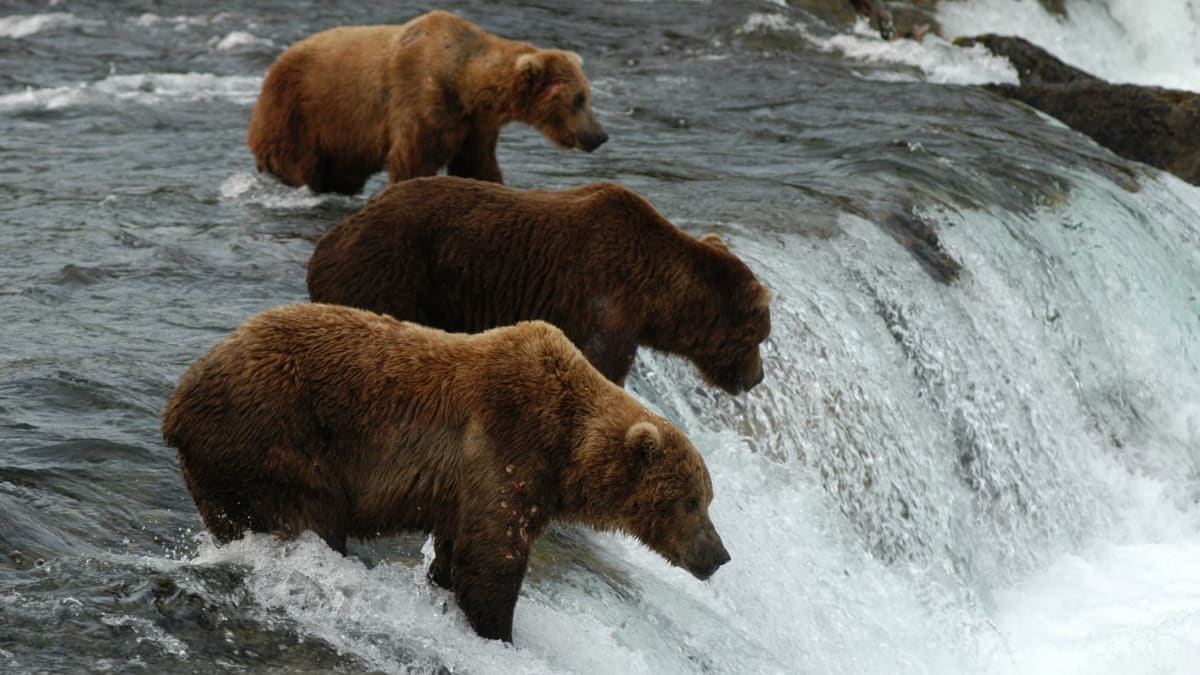
Katmai National Park protects a vast, wild stretch of the Alaska Peninsula, but it is best known for a single, unforgettable scene: brown bears crowded at Brooks Falls, snapping salmon out of the air as the fish hurl themselves up the falls. In July, when the sockeye run is at its height, some of the largest bears on the planet gather at this one short waterfall in numbers seen almost nowhere else, and the world watches, in person and on live park webcams.
The park itself was born of fire. In 1912 the eruption of Novarupta, one of the most powerful volcanic eruptions of the twentieth century, buried a nearby valley in glowing ash and reshaped the region. Katmai was first set aside to protect that stunned landscape, the Valley of Ten Thousand Smokes, and only later became famous for the bears that thrive in its salmon-rich rivers.
What Travelers Love
- Watching brown bears catch salmon in midair as the fish leap up Brooks Falls
- Seeing dozens of the largest bears on Earth gathered at one river, from safe elevated platforms
- The famous Fat Bear Week tradition each fall, when the park celebrates the bears fattening for winter
- Standing in a park that was created by a colossal volcanic eruption still visible on the land
Worth Knowing
- This is dense brown bear country, and safety depends on following park rules closely, staying on platforms, keeping distance, and never bringing food near the bears
- The bear viewing at Brooks Falls peaks in July when the salmon run is strongest, with a second surge in September
- Katmai is remote and reached by plane; access, permits, and camp reservations should be arranged well ahead
- Weather on the peninsula is famously changeable and can ground flights, so allow flexibility in travel plans
Learn about Katmai National Park and Brooks Falls
The bears of Brooks Falls
Brooks Falls is a modest waterfall on the Brooks River, but its position turns it into a natural bear buffet. Each summer, sockeye salmon run up the river to spawn, and when they reach the falls they must leap to continue upstream. The bears learned long ago to gather here and take the fish, some snatching them from the air at the lip of the falls, others fishing the plunge pool below.
In peak season, viewers on the park's elevated platforms may see many bears fishing at once, each with its own style and its own place in the loose hierarchy that forms at the falls. Large dominant males take the prime spots at the top of the falls, while others fish the edges. Watching them is a lesson in bear behavior, patience, and personality.
The bears have become individuals to a global audience through the park's live webcams and its annual Fat Bear Week, a lighthearted online bracket in which viewers vote for the bear that has most successfully packed on fat for the coming winter. Behind the fun is a serious point: these bears must gorge all summer to survive months of hibernation, and a healthy, fat bear is a sign of a healthy salmon river.
All of this happens under strict rules. Visitors stay on platforms and designated trails, keep well back from bears on the paths, and never have food where a bear could get it. The safety of both people and bears at Brooks Camp depends on that discipline, and rangers reinforce it constantly.
The eruption that made the park
In June 1912, the volcano Novarupta erupted with tremendous force on the Alaska Peninsula, one of the largest eruptions anywhere in the world in the twentieth century. It blasted out an enormous volume of ash and pumice, darkened skies far away, and drained magma from beneath nearby Mount Katmai, whose summit then collapsed into a crater.
The eruption filled a nearby valley with hundreds of feet of hot ash, from which countless jets of steam and gas rose for years afterward. When an early expedition reached it, the sight of all those fuming vents gave the place its name, the Valley of Ten Thousand Smokes. That otherworldly landscape led to the region's protection as a national monument in 1918, decades before the bears made it famous.
Today the valley no longer smokes, but it remains a stark, ash-filled expanse cut by rivers, a reminder of the raw geologic power that shaped this coast. It is one of the great volcanic landscapes in North America, and a striking contrast to the green, salmon-rich rivers where the bears fish.
The wider park and its wildlife
Beyond Brooks Falls, Katmai is a huge and largely trailless wilderness of volcanoes, lakes, tundra, and coastline. Its rivers and lakes support one of the world's great sockeye salmon runs, the foundation that feeds not only the bears but eagles, foxes, and the whole food web.
The park's coast, along Shelikof Strait, hosts its own concentrations of brown bears digging clams and grazing sedge meadows, and its waters and shores hold sea otters, seals, whales, and abundant seabirds. Moose, wolves, and caribou range the interior.
This richness is exactly why Katmai's boundaries were eventually expanded to protect the bears and their salmon, turning a park first meant to guard a volcanic wonder into one of the premier wildlife sanctuaries on the continent.
Season by season
July is the marquee month, when the salmon run peaks at Brooks Falls and the largest numbers of bears gather to fish, the classic image of Katmai.
Early summer sees the bears emerging and the camp opening, with green landscapes and building anticipation before the salmon arrive in force.
September brings a second wave of bear activity as salmon spawn and die in the shallows and the bears feed hard before winter, the season that leads into Fat Bear Week, along with fall color and thinner crowds.
Winter closes the camp and returns the park to deep snow and silence, when the bears den up and the salmon rivers rest under ice.
Closest Boutels
The closest Boutel™ stays, so you can turn this stop into an overnight. Each is a place we chose through independent editorial review, never a paid placement.
Details
Katmai National Park, AK
Frequently asked questions
What is Brooks Falls in Katmai National Park?
Brooks Falls, in Katmai National Park in southwestern Alaska, is one of the most famous bear-viewing sites in the world, where brown bears gather at a waterfall to catch salmon leaping upstream in an unforgettable natural spectacle. At Brooks Falls, during the salmon runs, numerous large brown bears line up at the falls to snatch the jumping fish, and visitors watch from safe elevated viewing platforms as the bears fish, an iconic scene famous around the world. It offers perhaps the finest accessible brown-bear viewing anywhere. A breathtaking wildlife spectacle, it awes visitors. With its bears and salmon, Brooks Falls offers a spectacular destination in Alaska.
When can you see bears catching salmon at Brooks Falls?
The famous scene of brown bears catching leaping salmon at Brooks Falls happens during the salmon runs, most spectacularly in the height of summer when the salmon surge upstream and the bears gather at the falls, with another period of bear activity in early fall as bears fatten before winter. Because the timing follows the salmon runs, checking current information and planning around the peak season, and reserving access well ahead, are important. For the iconic bear-and-salmon spectacle, aim for the peak summer salmon run at Brooks Falls in Alaska.
How do you visit Brooks Falls, and is it safe?
Brooks Falls is reached by flying in to the Brooks Camp area of Katmai National Park, and visitors view the bears from safe elevated platforms under strict bear-safety rules, because these are powerful wild bears. Keeping a great distance, following all ranger guidance and camp rules, never approaching or feeding bears, storing food properly, and staying on the designated platforms and trails are essential for safety. Because access is remote and popular, planning and reservations well ahead are needed. Following all bear-safety rules ensures a safe, thrilling visit to Brooks Falls in Alaska.
What should I know before visiting Brooks Falls?
Brooks Falls is a remote, fly-in destination in Katmai National Park where bear safety governs everything, so following all park and ranger rules, keeping your distance from bears, and using the viewing platforms are essential. It is extremely popular during the salmon run, so access, camping, and viewing may require permits or reservations arranged far in advance, and the weather can be cool and wet, so bringing layers helps. Planning well ahead and following bear-safety guidance ensure a safe, unforgettable visit to Brooks Falls in Alaska.
What is near Brooks Falls?
Brooks Falls is in Katmai National Park on the Alaska Peninsula in southwestern Alaska, reached by air via the gateway community of King Salmon, within reach of the wider wonders of Katmai including the Valley of Ten Thousand Smokes. That makes Brooks Falls a spectacular centerpiece of a Katmai National Park visit, reached via King Salmon on a trip to Alaska.
Nearby

Valley of Ten Thousand Smokes
18 miles away
The Valley of Ten Thousand Smokes is a vast ash-filled valley created by the 1912 eruption of Novarupta, the largest volcanic eruption of the twentieth century.