
Kathryn Abbey Hanna Park
500 Wonderwood Dr
Atlantic Beach, FL
A rare stretch of wild Atlantic shore and old coastal forest just north of the beaches, on ground that was once Florida's first beach resort open to Black families.
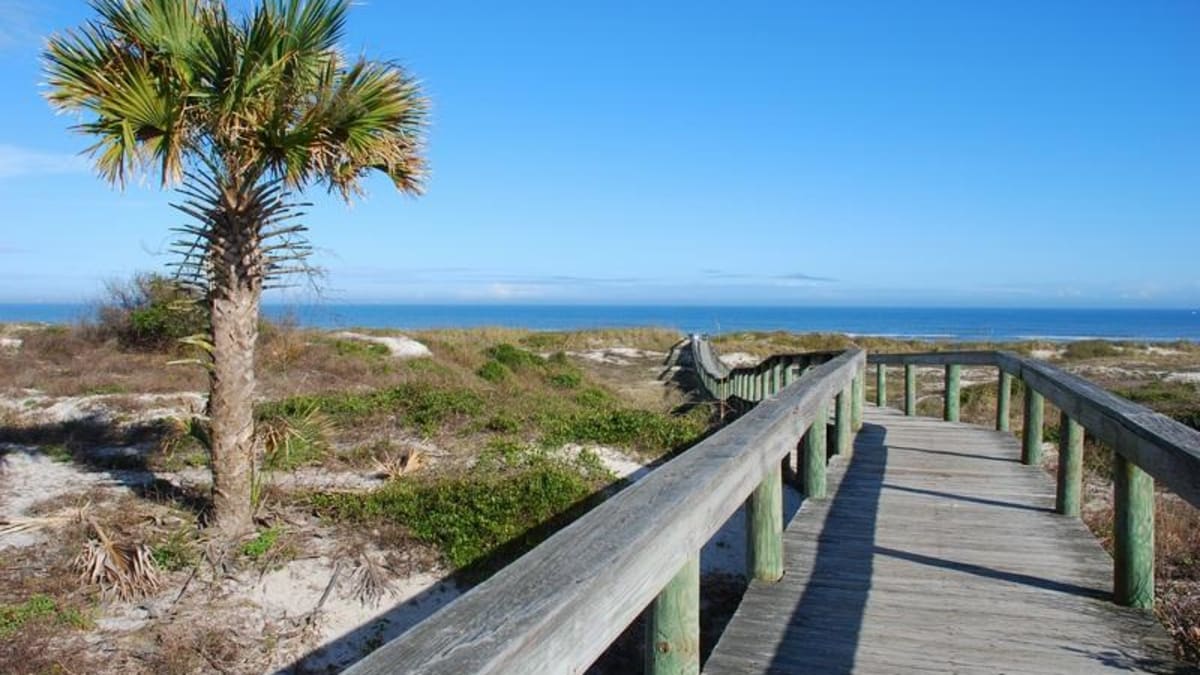
Along a coast as heavily built up as Florida's Atlantic shore, a wild place is a rare gift, and Kathryn Abbey Hanna Park is exactly that. Its roughly 447 acres hold a mile and a half of open ocean beach, tall dunes, a 60-acre freshwater lake, and one of the last big stands of mature coastal hammock in the Jacksonville area, all laced with more than twenty miles of trail.
But the park is more than scenery. The dunes here were once Manhattan Beach, Florida's first African American beach resort, a place where Black families could enjoy the ocean during the long decades of segregation. That history gives this green sweep of shore a depth that most beaches cannot match.
What Travelers Love
- A mile and a half of wide, uncrowded Atlantic beach backed by real dunes
- Miles of shaded trails for hiking and mountain biking through old coastal forest
- A large freshwater lake for fishing, kayaking, and paddling
- The layered history of the ground, from Manhattan Beach resort to a beloved city park
Worth Knowing
- It is a city park with a small entrance fee per vehicle, so bring a little cash or a card at the gate
- The beach is a natural one with no lifeguard towers along much of it, so swim with care and watch the surf
- Trails range from easy family loops to genuinely challenging expert mountain-bike runs, so pick your route to match your group
- Bring sun protection, water, and bug spray, since much of the fun is outdoors in the forest and on open sand
Learn about Kathryn Abbey Hanna Park
Manhattan Beach, a resort against the odds
In 1900, railroad magnate Henry Flagler set aside this stretch of oceanfront for the Black employees of his Florida East Coast Railway and hotel companies, and it became Manhattan Beach, the first African American beach resort in Florida. For decades it was the only beach in the Jacksonville area open to Black families, a place to breathe salt air freely in a segregated South.
Black entrepreneurs built it into a real community. Pavilions offered dining, dancing, bathing-suit rentals, and lodging, and there were cottages and even an amusement area, drawing beachgoers from across the region. It flourished into the late 1930s, when the larger American Beach on nearby Amelia Island began to draw the crowds away.
That story was nearly lost, and local historians have worked to recover it. When you walk the sand at Hanna Park today, you are walking the same shore where families once made joyful summers in the face of Jim Crow, and knowing that changes how the place feels underfoot.
How it became a park, and its unusual name
The park carries an unexpected name for good reason. In the 1940s, philanthropist Winthrop Bancroft donated land here to the state on the condition that it be named for Dr. Kathryn Abbey Hanna, a Chicago-born educator and author who had settled in Florida, wrote works of state history, and served on the board that oversaw parks and historic places.
Over the years the holding grew into the large city park it is now, managed by Jacksonville. It preserves not just the beach but the whole living system behind it, the dunes, the freshwater lake, and the dense coastal woods, which is why the place feels so much wilder than the developed strand to the south.
The result is a park that honors two legacies at once: a historian remembered in its name, and the Black community whose resort once stood on its sand.
Beach, forest, and lake in one park
The obvious draw is the ocean. A mile and a half of natural beach backed by tall dunes gives plenty of room to spread out, swim, surf-fish, or simply walk, and because it takes a little effort to reach, it rarely feels crowded the way the town beaches can.
Behind the dunes the park turns green. More than twenty miles of trail thread the coastal hammock, from gentle family loops like the Long Trail and Back 40 to expert-only mountain-bike runs with names like Grunt, Misery, and Tornado Alley that riders come from across the region to test themselves on.
At the heart of it all lies a 60-acre spring-fed lake, calm and freshwater, where you can fish from the bank, rent a kayak or canoe, or paddle a quiet loop while herons work the shallows. Few parks let you swim the Atlantic, ride forest singletrack, and paddle a lake all in one visit.
Closest Boutels
The closest Boutel™ stays, so you can turn this stop into an overnight. Each is a place we chose through independent editorial review, never a paid placement.
Details
Atlantic Beach, FL
Frequently asked questions
What is Kathryn Abbey Hanna Park?
Kathryn Abbey Hanna Park, near Jacksonville on Florida's northeast coast, is a large and beautiful oceanfront city park offering a natural stretch of Atlantic beach along with woodlands, a freshwater lake, and extensive trails. The park features a wide sandy beach for swimming and surfing, a lake for paddling and fishing, miles of trails through maritime forest popular with mountain bikers and hikers, camping, and abundant nature, all in a preserved coastal setting. A wonderful blend of beach and woodland recreation, it is a beloved Jacksonville-area destination. With its beach, lake, and trails, Kathryn Abbey Hanna Park offers a rewarding destination in Florida.
What can you do at Kathryn Abbey Hanna Park?
You can swim and surf at the natural Atlantic beach, paddle, kayak, and fish on the freshwater lake, hike or mountain bike the miles of trails through maritime forest, camp, picnic, watch for wildlife, and enjoy the blend of beach and woodland nature. The beach, the lake, and the extensive trails are highlights, offering varied recreation from surfing to mountain biking in one preserved coastal park. It is a favorite for active outdoor days. With its beach, lake, trails, and camping, Kathryn Abbey Hanna Park offers a rewarding outdoor experience near Jacksonville, Florida.
What safety tips apply at Kathryn Abbey Hanna Park?
When swimming or surfing in the Atlantic, watch for currents and any rip currents, be aware lifeguard coverage may be limited, and supervise children closely. On the trails, wear appropriate footwear, bring water, and watch for roots and other cyclists if you are hiking, or hikers if biking. Bring sun protection and insect repellent for the warm months. Being cautious in the ocean, prepared on the trails, and protected from the sun ensures a safe and enjoyable visit to Kathryn Abbey Hanna Park in Florida.
When is the best time to visit Kathryn Abbey Hanna Park?
Spring through fall is popular for the beach and warm-weather recreation, with summer warmest for swimming and surfing though hot and humid, while spring and fall offer pleasant weather with fewer crowds for the trails and lake, and northeast Florida's mild winters allow year-round trail use. The beach shines in the warm months. For the best combination of warm water and pleasant weather for the varied recreation, aim for spring through fall at Kathryn Abbey Hanna Park near Jacksonville, Florida.
What is near Kathryn Abbey Hanna Park?
Kathryn Abbey Hanna Park is near Jacksonville on Florida's northeast coast, near the Atlantic Beach Oceanfront, within reach of Jacksonville with the Cummer Museum, Amelia Island with Fort Clinch State Park, and St. Augustine to the south. That makes Kathryn Abbey Hanna Park a rewarding stop to combine with the Atlantic Beach Oceanfront, the Jacksonville attractions, and the other sights of northeast Florida on a visit to the state.
Nearby
Atlantic Beach Oceanfront
2.9 miles away
A wide, walkable public stretch of Atlantic shoreline at the quiet north end of the Jacksonville Beaches, calmer than the tourist strands to the south and steps from a small, walkable beach town.
Cummer Museum of Art and Gardens
18 miles away
Jacksonville rarely lands on an art-museum list, which is exactly why the Cummer surprises people.
Fort Clinch State Park
23 miles away
Fort Clinch State Park guards the very tip of Amelia Island, where the river meets the ocean and you can look across to Cumberland Island in Georgia.