

John Pennekamp Coral Reef State Park
102601 Overseas Hwy
Key Largo, FL
The first underwater park in America, where living coral reefs and a bronze Christ statue wait just offshore beneath clear turquoise water.
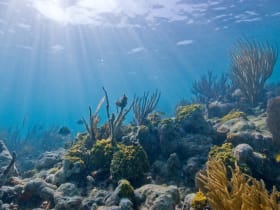
John Pennekamp Coral Reef State Park was the first undersea park in the United States, established in the 1960s to protect a portion of the living coral reef that runs along the Florida Keys. This is the only living barrier coral reef in the continental United States, a shallow, sunlit world of coral heads, sea fans, and darting tropical fish that lies a few miles off Key Largo.
Most of the park is actually underwater, so the reef is reached by boat, whether by glass-bottom cruise, snorkel trip, or scuba charter. One of its most famous sights is the Christ of the Abyss, a bronze statue of Christ with arms raised standing on the seafloor, a serene and unexpected figure in the blue depths that draws snorkelers and divers from around the world.
What Travelers Love
- Snorkeling and diving over living coral reefs alive with tropical fish
- Seeing the bronze Christ of the Abyss statue standing on the seafloor
- Glass-bottom boat trips for those who want to stay dry
- Paddling the calm mangrove creeks and swimming from the sheltered lagoon
Worth Knowing
- The reef lies offshore, so seeing it means a boat trip, whether by glass-bottom boat, snorkel tour, or dive charter
- Sea conditions vary, so calm, clear days offer the best reef visibility
- Coral is fragile and protected, so never touch or stand on it and use reef-safe sunscreen
- Boat tours and rentals are popular, so reserve ahead in busy months
Learn about John Pennekamp Coral Reef State Park
The first undersea park
By the middle of the twentieth century the reefs off the Florida Keys were suffering from souvenir collectors and boat damage, and a movement grew to protect them. The result was John Pennekamp Coral Reef State Park, dedicated in the early 1960s and named for a Miami newspaper editor who championed conservation in Florida, especially the founding of Everglades National Park.
Creating an underwater park was a novel idea, and it set a precedent for protecting marine life the way parks protect land. The state park was later complemented by the adjacent Florida Keys National Marine Sanctuary, so today the reef is guarded by layers of protection that let visitors experience it while keeping the fragile coral intact for the future.
How a coral reef lives
A coral reef is built by tiny animals, coral polyps, that pull minerals from seawater to construct hard limestone skeletons. Over centuries these skeletons pile up into the great structures of the reef. The living coral depends on warm, clear, sunlit water and on tiny algae that live inside its tissue and feed it through photosynthesis, which is why healthy reefs form only in clean, well-lit shallows.
The reef is a whole city of life. Parrotfish crunch coral into sand, angelfish and grunts drift among the heads, sea turtles glide overhead, and moray eels lurk in the crevices. Because coral is so sensitive to warming water and pollution, reefs everywhere are under stress, which makes the protected water of Pennekamp both a delight to visit and a place that rewards a gentle, look-but-do-not-touch approach.
The Christ of the Abyss and the underwater sights
The park's most iconic sight is the Christ of the Abyss, a bronze statue of Christ standing on the seabed with arms raised toward the surface. It is a copy of a statue placed off the Italian coast, given to an American dive organization and lowered onto the reef, where it has become a beloved and photographed landmark for divers and snorkelers.
Beyond the statue, the park's reefs and its adjacent sanctuary hold shallow coral gardens ideal for snorkeling and deeper sites and old shipwrecks that draw divers. For those who prefer to stay dry, glass-bottom boats cruise out to the reef so visitors can watch the coral and fish through the hull, a fine option for families and anyone not keen to get in the water.
Season by season
Late winter and spring bring the calmest, clearest water and the mildest weather, making this the prime season for reef trips and the busiest time in the Keys. Summer is warm and popular, with generally good water conditions and plenty of activity, though afternoon storms can blow through and this is the start of hurricane season.
Fall is the heart of hurricane season, quieter and sometimes stormy, so keep an eye on the forecast, but calm stretches offer uncrowded reef time. The subtropical Keys stay warm year round, so there is no bad season to visit, only the ordinary trade-off between crowds, price, and the odds of a calm, clear day on the water.
Closest Boutels
The closest Boutel™ stays, so you can turn this stop into an overnight. Each is a place we chose through independent editorial review, never a paid placement.
Details
Key Largo, FL
Frequently asked questions
What is John Pennekamp Coral Reef State Park?
John Pennekamp Coral Reef State Park, in Key Largo in the Florida Keys, is the first undersea park in the country, protecting a spectacular stretch of living coral reef in the clear waters off the Keys. The park is famous for snorkeling and scuba diving among vibrant coral reefs teeming with tropical fish, sea turtles, and marine life, along with glass-bottom boat tours for those who prefer to stay dry, mangrove trails, a beach, and paddling. A gateway to the underwater wonders of the Keys, it offers unforgettable marine experiences. With its coral reefs and marine life, John Pennekamp Coral Reef State Park offers a spectacular destination in Florida.
What can you do at John Pennekamp Coral Reef State Park?
You can snorkel or scuba dive among the vibrant coral reefs and tropical fish, take a glass-bottom boat tour to see the reef without getting wet, paddle a kayak or canoe through mangroves, swim at the beach, hike the short nature trails, and explore the visitor center and aquarium. The reef snorkeling and diving, the glass-bottom boat tours, and the marine life are highlights, offering access to the Keys' famous underwater world. Boat trips reach the offshore reefs. With its reef experiences, paddling, and beaches, John Pennekamp Coral Reef State Park offers an unforgettable experience in the Florida Keys.
What safety tips apply at John Pennekamp Coral Reef State Park?
When snorkeling or diving, go with the guided boat trips or within your ability, always use proper gear and a buddy, wear a life jacket or flotation if needed, use reef-safe sunscreen, and never touch or stand on the fragile living coral, which is both harmful to the reef and can cause injury. Be aware of currents, boat traffic, and marine life, and heed all guidance. Protecting yourself and the reef, using reef-safe sunscreen, and never touching the coral ensure a safe and responsible visit to John Pennekamp Coral Reef State Park in Florida.
When is the best time to visit John Pennekamp Coral Reef State Park?
The Florida Keys are pleasant year-round, with winter and spring offering the most comfortable weather, calm seas, and good water clarity for snorkeling and diving, drawing many visitors, while summer is hot, humid, and prone to afternoon storms though the water is warm. Sea conditions affect reef trips, so calmer days offer the best visibility. Booking reef trips ahead is wise. For the best combination of comfortable weather and clear water for the reef, aim for winter through spring at John Pennekamp Coral Reef State Park in the Florida Keys.
What is near John Pennekamp Coral Reef State Park?
John Pennekamp Coral Reef State Park is in Key Largo at the top of the Florida Keys, within reach of the Keys' islands and reefs, Islamorada with Robbie's and the History of Diving Museum, and the route toward Marathon and Key West down the island chain. That makes John Pennekamp Coral Reef State Park a spectacular stop to combine with the other attractions of the Florida Keys on a visit to the state.
Outside the Park

History of Diving Museum
19 miles away
In a place all about the water, this small museum tells the story of getting under it, and almost nobody expects to find it here.

Anhinga Trail
22 miles away
The Anhinga Trail is a famous short walk in Everglades National Park, a paved and boardwalk loop at Royal Palm where alligators, anhingas, herons, turtles, and other wildlife gather in astonishing num...

Biscayne Bay Mangroves
24 miles away
The mangrove shoreline of Biscayne Bay forms the green, tangled edge of Biscayne National Park along the mainland, a vital nursery for fish, birds, and other life.
Biscayne National Park
28 miles away
Ninety-five percent underwater, protecting turquoise bay, coral reefs, mangrove shoreline, and the northern Florida Keys.

Everglades National Park
34 miles away
A slow-moving river of grass, the only place where alligators and crocodiles live side by side.