

History of Diving Museum
82990 Overseas Hwy, Islamorada, FL
Islamorada, FL
A wall of gleaming brass diving helmets and centuries of ingenious contraptions, telling humanity's long, strange quest to breathe and work beneath the sea.
The History of Diving Museum is one of the most unexpected delights in the Florida Keys, a small but world-class collection devoted to the long human quest to explore beneath the sea. Along the Overseas Highway in Islamorada, it gathers thousands of artifacts, from ancient breathing devices to gleaming brass helmets to armored deep-sea suits, tracing roughly four thousand years of diving history.
The museum grew from the private collection of a diving physician and his wife, and its passion shows. A visitor walks past a wall of antique helmets from around the globe, peers into strange early submarines and diving bells, and follows the ingenious, often dangerous inventions that let people work, salvage, and explore underwater. It is a specialized gem that fascinates lifelong divers and curious first-timers alike.
What Travelers Love
- A dazzling wall of antique brass and copper diving helmets from around the world
- Strange early diving suits, hand-cranked air pumps, and armored deep-sea gear
- The story of Florida's own sponge divers and treasure hunters
- A small, specialized museum that surprises and delights nondivers too
Worth Knowing
- The museum welcomes visitors most days of the year
- It is compact, so a focused visit of an hour or two takes it in well
- Talks and special programs are held on certain days, so check ahead
- It pairs naturally with a Keys diving or snorkeling trip on the nearby reefs
Learn about History of Diving Museum
Four thousand years underwater
The museum's sweep begins in antiquity, with the earliest human efforts to hold breath and dive for sponges, pearls, and food, and the imaginative early attempts at breathing devices, including designs sketched by thinkers across the centuries. It moves through the age of the diving bell, the hand-pumped hard-hat helmet, and the armored suits built to reach ever greater depths.
Along the way the exhibits show the ingenuity and the danger of it all, the ever-present risks of drowning, decompression sickness, and equipment failure that inventors and divers struggled against. The collection culminates with the twentieth-century breakthroughs of scuba, which freed divers from tethered air lines and opened the underwater world to millions, changing sport, science, and salvage forever.
A wall of helmets and strange machines
The museum's signature sight is its Helmet Gallery, a wall lined with dozens of antique diving helmets in brass, copper, and steel gathered from around the world, each a small sculpture of its era and nation. Some are ornate, some fearsomely industrial, and together they trace how different countries solved the same problem of keeping a diver alive on the bottom.
Around them stand still stranger machines, early one-person submarines, atmospheric diving suits that look like deep-sea knights, hand-cranked air pumps, and salvage gear. Each has a story, and the museum delights in the eccentric inventors and bold adventurers who imagined and tested these contraptions, often with their own lives, in the effort to conquer the deep.
Florida beneath the waves
The museum gives special attention to diving in Florida and the Keys, a natural fit for a state ringed by reefs, wrecks, and springs. It tells the story of the Greek sponge divers of Tarpon Springs, whose hard-hat diving built a Gulf-coast community, and of the treasure hunters who have combed the Keys for the gold and silver of Spanish galleons wrecked on the reefs over the centuries.
Those stories tie the collection to the waters just outside the door. Islamorada and the Upper Keys sit beside some of the finest reef diving and wreck diving in the country, and many visitors pair a trip to the museum with a dive or snorkel on the reefs, seeing firsthand the underwater world that all these inventions were built to reach.
Season by season in the Upper Keys
Winter and early spring are the prime Keys season, with warm dry days and comfortable humidity, ideal for pairing an indoor museum visit with diving, snorkeling, and fishing in the clear waters nearby. These months bring the biggest crowds to Islamorada.
Summer offers the warmest, calmest, clearest water for diving, though the days are hot and humid and fall within hurricane season, so travelers watch the forecast. The air-conditioned museum makes a fine midday break from the heat and sun in any season, and its wonders wait rain or shine, indifferent to the weather outside.
Closest Boutels
The closest Boutel™ stays, so you can turn this stop into an overnight. Each is a place we chose through independent editorial review, never a paid placement.
Details
Islamorada, FL
Frequently asked questions
What is the History of Diving Museum?
The History of Diving Museum, in Islamorada in the Florida Keys, is a fascinating museum dedicated to the history of humankind's efforts to explore and work beneath the water. The museum displays a remarkable collection of diving artifacts spanning centuries, including antique diving helmets, suits, equipment, and gear from around the world, along with exhibits on the science, adventure, and history of diving, from early attempts to modern scuba. A unique and engaging museum in the diving capital of the Keys, it delights those interested in the sea, exploration, and history. With its diving artifacts and history, the History of Diving Museum offers a fascinating destination in Florida.
What can you see at the History of Diving Museum?
You can see a remarkable collection of diving history artifacts, including antique diving helmets, hard-hat suits, early breathing apparatus, and equipment from around the world spanning centuries, along with exhibits on the science and adventure of underwater exploration, from early diving attempts through the development of modern scuba diving. The fascinating collection of historic diving gear and the story of undersea exploration are highlights, engaging for divers, history lovers, and the curious. With its diving artifacts and exhibits, the History of Diving Museum offers an engaging visit in Islamorada, Florida.
When is the best time to visit the History of Diving Museum?
As an indoor museum, the History of Diving Museum is enjoyable year-round in any weather, making it an especially welcome stop during the hot, humid Keys summer or a rainy day, and a nice complement to the region's water activities. Winter and spring offer the most comfortable weather in the Keys overall. Checking current days and hours before you go is wise. Because it is climate-controlled and unique, the History of Diving Museum makes a reliable and rewarding stop any time of year in Islamorada, Florida.
Is the History of Diving Museum good for families?
Yes, the History of Diving Museum is an engaging family stop, with its fascinating collection of antique diving helmets, suits, and gear, and exhibits on undersea exploration that capture the imagination of children and adults alike, especially those interested in the ocean, adventure, and history. Kids often enjoy the unusual old diving equipment and the stories of underwater exploration. As an indoor museum, it is comfortable in any weather. With its diving artifacts and exploration history, the History of Diving Museum makes an enjoyable family stop in the Florida Keys.
What is near the History of Diving Museum?
The History of Diving Museum is in Islamorada in the Florida Keys, near Robbie's of Islamorada and Anne's Beach, within reach of John Pennekamp Coral Reef State Park in Key Largo, Marathon with the Turtle Hospital, and the route toward Key West. That makes the History of Diving Museum a fascinating stop to combine with Robbie's of Islamorada, Anne's Beach, and the other attractions of the Florida Keys on a visit to the state.
Nearby
Robbies of Islamorada
5.5 miles away
Hand-feeding a five-foot fish is the kind of thing kids talk about for the rest of the trip.

Anne's Beach
9.5 miles away
A rare free, sandy beach in the Florida Keys, on the south end of Upper Matecumbe Key.
John Pennekamp Coral Reef State Park
19 miles away
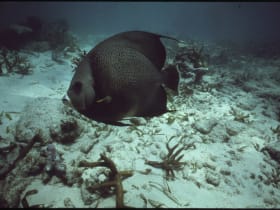
This was the first undersea park in the United States, set up in 1963 to protect part of the only living coral barrier reef in the continental country, and most of it lies offshore underwater.

Everglades National Park
35 miles away
A slow-moving river of grass, the only place where alligators and crocodiles live side by side.
Biscayne National Park
46 miles away
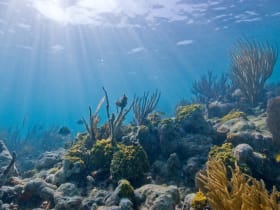
Ninety-five percent underwater, protecting turquoise bay, coral reefs, mangrove shoreline, and the northern Florida Keys.