
Hagerman Fossil Beds National Monument
Bell Rapids Rd, Hagerman, ID
Hagerman, ID
Bluffs above the Snake River that held over two hundred skeletons of the first true horse, plus deep Oregon Trail wagon ruts still cut into the same ground.
Hagerman Fossil Beds protects a set of ordinary-looking desert bluffs above the Snake River that turned out to hold something extraordinary: the richest known bed of ancient horses anywhere on Earth. Millions of years ago this was a warm, wet floodplain of marshes and slow water, and when the animals that lived here died, the fine river sediment buried and preserved them in remarkable numbers. Erosion has since cut into those old layers, and the bones have been coming out of the ground ever since.
The most famous find is the Hagerman horse, a graceful animal about the size of an Arabian that is widely regarded as the first true horse, and it is now Idaho's state fossil. Beginning in the 1920s, scientists pulled more than two hundred skeletons out of a single quarry here, an unmatched window into a whole prehistoric horse population. Layered on top of that deep-time story is a more recent one: the southern route of the Oregon Trail crossed this same ground, and the wagon ruts are still here to walk beside.
What Travelers Love
- Standing where scientists unearthed the world's richest deposit of ancient horses, Idaho's state fossil
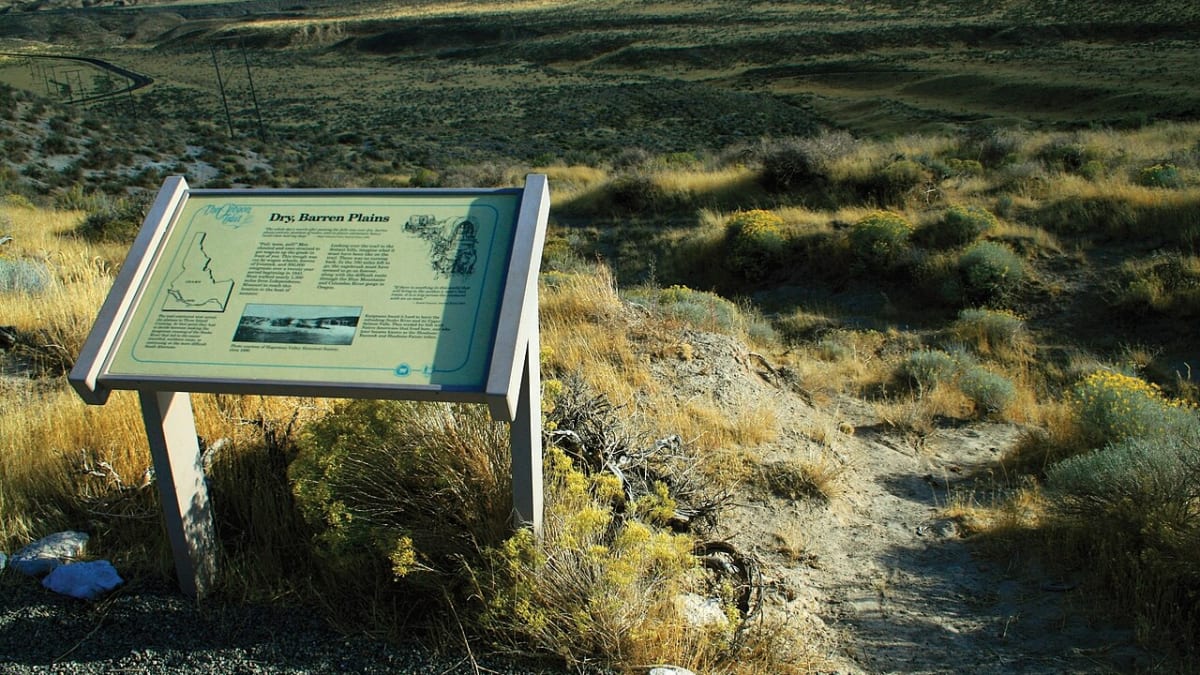
- The Snake River Overlook, with a platform and interpretive panels above the fossil-bearing bluffs
- Deep, still-visible Oregon Trail wagon ruts cut into the same ground the fossils came from
- Fossils and the full story on display at the shared visitor center in the town of Hagerman
Worth Knowing
- The fossils themselves are best seen at the Thousand Springs Visitor Center in Hagerman, not out on the bluffs, and collecting anything within the monument is not allowed
- The overlooks are reached by Bell Rapids Road, part gravel, so take it slow and check conditions after rain
- There is little shade and it gets hot and windy in summer, so bring water, sun protection, and a hat
- The best hike, out to the Oregon Trail and Snake River overlooks, is a few miles round trip with some climbing, so wear real shoes and allow a couple of hours
Learn about Hagerman Fossil Beds National Monument
The world's richest horse quarry
The story of the fossil beds really begins in the early 1900s, when local ranchers noticed strange bones weathering out of the river bluffs and word eventually reached the Smithsonian Institution. In 1928 the paleontologist James W. Gidley came out to dig, and what his crews found was staggering. From a single site, later called the Hagerman Horse Quarry, they recovered more than two hundred skeletons of an ancient horse, many of them nearly complete and beautifully preserved.
That density is what makes the place scientifically priceless. Most fossil sites yield a scattered bone here and there, but Hagerman produced whole individuals of every age, from foals to old adults, so researchers could study a prehistoric herd almost as a living community rather than a single specimen. The animal, Equus simplicidens, is considered the earliest member of the modern horse family, the ancestor at the root of every horse, zebra, and donkey alive today, which is why Idaho made it the state fossil.
A lost floodplain full of life
The horses were far from alone. The same layers, part of a formation laid down around three to four million years ago in the Pliocene, have given up mastodons and other early elephant relatives, ground sloths, camels, a saber-toothed cat, and a long list of smaller mammals, birds, fish, and freshwater shells. Together they paint a vivid picture of a warm, marshy floodplain very different from the dry sagebrush canyon you see today, a place of ponds and slow rivers teeming with animals.
The ground here is still giving. This is one of the most fossil-rich Pliocene sites in the world, and new fragments keep eroding out of the bluffs season after season, so paleontologists continue to work and study the monument. Because those bones belong to the whole scientific record, collecting is not allowed anywhere in the monument, and the place to actually see and understand the fossils is the visitor center, where skeletons and exhibits lay out the full story.
Wagon ruts and river overlooks
Long before anyone knew what lay in the bluffs, this stretch of the Snake River carried a river of people. The southern alternate of the Oregon Trail crossed the ground that is now the monument, and the heavy emigrant wagons wore ruts so deep into the earth that they are still plainly visible today, a rare and moving trace of the great overland migration. You can walk right alongside them, standing in the same swale thousands of hopeful travelers followed west.
From the trail, short spurs lead to two overlooks. The Oregon Trail Overlook takes in the wagon ruts and the wide valley, and the Snake River Overlook has a viewing platform and interpretive panels perched above the river and the fossil-bearing cliffs. Together they let you read two enormous stories, deep geologic time and the human westering story, from a single windy vantage above one of Idaho's great rivers.
Visiting Hagerman Fossil Beds
Start in the town of Hagerman at the visitor center it shares with Thousand Springs State Park, along the highway on the east side of the river. That is the only place to see actual fossils, and it is where the whole story clicks into place before you head out to the bluffs. From there the monument lies across the river, with the overlooks reached by Bell Rapids Road, part of which is gravel, so drive it slowly and be cautious after rain.
Out on the ground there is little shade, and summer days turn hot and windy, so carry plenty of water, wear sun protection, and put on real shoes for the walk out to the overlooks and the wagon ruts. Give yourself a couple of unhurried hours. Combined with the springs, waterfalls, and river access of the surrounding Thousand Springs country, Hagerman makes for one of the most quietly rewarding stops in southern Idaho, a place where you can hold four million years and one hundred and eighty in the same view.
Closest Boutels
The closest Boutel™ stays, so you can turn this stop into an overnight. Each is a place we chose through independent editorial review, never a paid placement.
Details
Hagerman, ID
Frequently asked questions
What is Hagerman Fossil Beds National Monument?
Hagerman Fossil Beds National Monument, along the Snake River near the town of Hagerman in southern Idaho, protects one of the richest fossil sites of its kind, famous for the remains of the Hagerman Horse, an ancient horse species that is Idaho's state fossil. The bluffs here have yielded an extraordinary abundance of fossils from millions of years ago, including many complete horse skeletons along with other ancient animals, offering a remarkable window into prehistoric life. The monument features overlooks, trails, and a visitor center with fossil exhibits. With its world-class fossils and Snake River scenery, Hagerman Fossil Beds National Monument offers a fascinating destination in Idaho.
What is the Hagerman Horse?
The Hagerman Horse is an extinct species of ancient horse, sometimes called the Hagerman zebra for its likely resemblance, whose remarkably abundant fossils were discovered at Hagerman Fossil Beds, making it the monument's signature find and Idaho's official state fossil. Living several million years ago, this early horse is known from an extraordinary number of complete skeletons found in the bluffs, making the site one of the most important for understanding the evolution of horses. The Hagerman Horse fossils are the celebrated highlight of the monument. Learning about this ancient animal is central to a visit to Hagerman Fossil Beds National Monument in Idaho.
What can you do at Hagerman Fossil Beds National Monument?
You can visit the monument's overlooks for views of the fossil-bearing bluffs and the Snake River, hike the trails, learn about the Hagerman Horse and other ancient fossils at the visitor center exhibits, and take in the scenic river canyon setting. Note that the actual fossil beds are fragile and generally not open for public digging or close access, so the visitor center and overlooks are the main way to experience the fossils. The fossil exhibits and the scenery are highlights. With its fossil history, overlooks, and trails, Hagerman Fossil Beds National Monument offers an engaging visit in southern Idaho.
When is the best time to visit Hagerman Fossil Beds National Monument?
Spring and fall offer the most comfortable weather for exploring the overlooks and trails, with milder temperatures more pleasant than the hot summer, when the exposed bluffs can be very warm, so bring water and sun protection then, while the visitor center offers an indoor option in any weather. Spring can bring greenery to the canyon. Checking current visitor center hours before you go is wise. For the most comfortable weather to explore the outdoor areas, aim for spring or fall at Hagerman Fossil Beds National Monument in southern Idaho.
What is near Hagerman Fossil Beds National Monument?
Hagerman Fossil Beds National Monument is along the Snake River near Hagerman in southern Idaho, near Thousand Springs State Park, within reach of Twin Falls with Shoshone Falls and the Perrine Bridge, Balanced Rock, and the route toward Boise. That makes Hagerman Fossil Beds National Monument a fascinating stop to combine with Thousand Springs State Park, the Twin Falls attractions, and the other sights of southern Idaho on a visit to the state.
Nearby
Thousand Springs State Park
8.3 miles away
Thousand Springs gets its name from the hundreds of springs that emerge from the basalt canyon walls above the Snake River between Hagerman and Buhl.
Balanced Rock
13 miles away
Balanced Rock is a mushroom-shaped column of volcanic tuff standing 48 feet tall and weighing an estimated 40 tons, perched on a neck of stone only about three feet by seventeen inches.
Canyon Rim Trail
28 miles away
A paved, mostly level clifftop path along the south rim of the Snake River Canyon, nearly 500 feet above the river.