
Grout Museum District
605 W 4th St, Waterloo, IA
Waterloo, IA
A walkable cluster of museums in the Cedar Valley, anchored by a veterans center that keeps the story of five brothers who never came home.
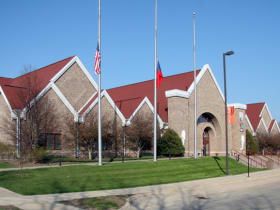
The Grout Museum District is a cluster of museums in Waterloo that together tell the story of the Cedar Valley, its people, and their service to the country. Within a short walk you can move from a local history and science museum to hands-on discovery exhibits, historic homes, and a veterans museum, all under one district. It grew from the bequest of a local businessman, Henry Grout, whose gift established the first museum and set the district in motion.
The district's emotional center is the Sullivan Brothers Iowa Veterans Museum, named for five brothers from Waterloo who enlisted together in the Navy during World War II on the condition that they serve on the same ship, and who were all lost when that ship went down. Their story shook the nation and changed military policy, and the museum uses it as a doorway into the wider story of Iowans who have served.
What Travelers Love
- The Sullivan Brothers Iowa Veterans Museum and the story it keeps alive
- Hands-on science and history exhibits that suit families
- Several museums clustered within an easy walk of each other
- The historic homes that show how the Cedar Valley lived in earlier days
Worth Knowing
- The district includes multiple museums, so allow time if you want to see them all
- The veterans museum tells sober, moving stories of service and loss
- Hours vary by site and season, so check before you go
- It sits near downtown Waterloo and the Cedar River, an easy pairing with a riverfront stroll
Learn about Grout Museum District
Five brothers and the ship they shared
The Sullivan brothers, George, Frank, Joe, Matt, and Al, grew up in Waterloo and enlisted in the Navy together after the attack on Pearl Harbor, asking to serve on the same ship. They were assigned to the light cruiser USS Juneau, and in November 1942, during the fighting around Guadalcanal, the ship was struck and sank. All five brothers were lost.
The nation was stunned by the loss of five sons from one family, and their story became one of the most widely told of the war. It contributed to changes in how the military handled the assignment of family members to the same unit. The veterans museum named for them carries their memory forward and broadens it into a tribute to Iowans across generations who have served in uniform.
A district of museums
The district began with the Grout Museum of History and Science, endowed by the businessman Henry Grout, which mixes local history with hands-on science exhibits and a planetarium-style focus on discovery. Over time the district grew to include the veterans museum and historic house museums that preserve how Cedar Valley families lived in the 1800s and early 1900s.
Because the sites cluster together, a visit can move easily from one to the next, making the district a compact way to understand a working Iowa city, from its early settlers and industry to its scientific curiosity and its wartime sacrifices. It suits families, history lovers, and anyone curious about the everyday texture of Midwestern life.
Waterloo and the Cedar Valley
Waterloo grew up on the Cedar River as a mill, rail, and manufacturing town, long tied to farm machinery and food processing, and it forms one half of the Cedar Valley metro with neighboring Cedar Falls. The river runs through the heart of the city, and a revitalized riverfront and downtown give the district a lively setting.
The Cedar Valley is named for the Cedar River, which winds down through eastern Iowa's farm and prairie country toward the Iowa River. The region has long drawn people to its water and rich soils, and today the valley blends industry, agriculture, and a growing arts and museum scene, of which the Grout district is a cornerstone.
The land and its first peoples
The Cedar Valley lies within the historic homelands of the Meskwaki and the Sauk, whose peoples lived and traded along the Cedar and Iowa rivers long before the mills and railroads arrived. The Meskwaki own the Meskwaki Settlement near Tama, southwest of Waterloo, the tribally held land where their community lives today, a rare example of a Native nation buying back and holding its own homeland in the Midwest.
The prairies and river bottoms of this region were shaped over thousands of years, their deep soils built up under tallgrass prairie and their valleys carved by the rivers. Understanding that longer story, of the land and the peoples who have called it home, adds depth to the human history the Grout district gathers and keeps.
Closest Boutels
The closest Boutel™ stays, so you can turn this stop into an overnight. Each is a place we chose through independent editorial review, never a paid placement.
Details
Waterloo, IA
Frequently asked questions
What is the Grout Museum District?
The Grout Museum District, in the city of Waterloo in the Cedar Valley of northeastern Iowa, is a cluster of museums offering history, science, and tribute exhibits under one banner. It includes a history museum exploring the region's past, a hands-on science and discovery center popular with families, historic homes, and the Sullivan Brothers Iowa Veterans Museum, which honors Iowa's veterans and tells the moving story of five brothers from Waterloo who were lost together while serving in the Second World War. Together the sites offer a rich mix of local history, interactive science, and heartfelt tribute. With its varied museums, the Grout Museum District offers an engaging destination in Waterloo, northeastern Iowa.
What can you see at the Grout Museum District?
You can explore a regional history museum with exhibits on the Cedar Valley's past, enjoy a hands-on science and discovery center with interactive exhibits that delight children, tour historic homes, and visit the Sullivan Brothers Iowa Veterans Museum, which honors Iowa veterans across the wars and tells the poignant story of the five Sullivan brothers. The mix of history, interactive science, and moving tribute offers something for everyone. Families especially enjoy the science center. With its history, science, and veterans exhibits, the Grout Museum District offers an educational and meaningful visit in Waterloo, northeastern Iowa.
Who were the Sullivan Brothers?
The Sullivan Brothers were five brothers from Waterloo, Iowa, who enlisted together in the Navy during the Second World War on the condition that they serve on the same ship, and who tragically all lost their lives together when their ship was sunk. Their story became a symbol of family sacrifice and shaped military policy about relatives serving together. The Sullivan Brothers Iowa Veterans Museum in the Grout Museum District honors their memory and all Iowa veterans. Learning their moving story is a powerful part of a visit to the Grout Museum District in Waterloo, northeastern Iowa.
Is the Grout Museum District good for families?
Yes, the Grout Museum District is good for families, especially thanks to its hands-on science and discovery center with interactive exhibits that engage and delight children, alongside the history museum and veterans museum that offer learning for older kids and adults. The variety across the sites means families can mix fun, interactive science with history and meaningful tribute. It is a comfortable, indoor destination good in any weather. With its interactive science center and varied museums, the Grout Museum District makes an engaging and educational family destination in Waterloo, northeastern Iowa.
What is near the Grout Museum District?
The Grout Museum District is in Waterloo in the Cedar Valley of northeastern Iowa, near the city of Cedar Falls, the Cedar River and Cedar Valley Nature Trail, within reach of Cedar Rapids with the National Czech and Slovak Museum, and the driftless country and Mississippi River attractions to the east. That makes the Grout Museum District an engaging stop to combine with the Cedar Valley Nature Trail, Cedar Rapids, and the other attractions of northeastern Iowa on a visit to the state.
Nearby
Cedar River and the Cedar Valley Nature Trail
26 miles away
The Cedar Valley Nature Trail follows the Cedar River on an old rail grade for about 50 miles between the Cedar Rapids area and Evansdale near Waterloo.
Matchstick Marvels
28 miles away
In the tiny town of Gladbrook, one man has quietly built some of the most obsessive folk art in the state, one matchstick at a time.
Lincoln Highway Heritage Byway
37 miles away
Iowa's stretch of the Lincoln Highway, America's first coast-to-coast road, laid out in 1913 and now a marked heritage byway.
National Czech and Slovak Museum and Library
50 miles away
The National Czech and Slovak Museum and Library anchors the Czech Village district of Cedar Rapids, telling the story of the Czech and Slovak immigrants who shaped this city.