
Great Salt Plains Crystal Digging Beach
66003 Garvin Rd, Cherokee, OK
Cherokee, OK
The only place on earth where you can dig hourglass-shaped selenite crystals out of the ground, on a shimmering white salt flat in northwest Oklahoma.
The Great Salt Plains hold one of the true natural curiosities of the country: a place where you can dig your own crystals straight out of the ground. Buried in the salty mud beneath a vast white flat are selenite crystals that grow in a distinctive hourglass shape, sometimes with sand trapped inside them, a form found in only this one place on earth.
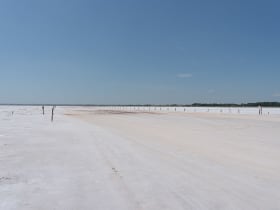
The flats themselves are a startling sight, a broad, shimmering expanse of white salt crust stretching to the horizon, the leftover bed of an ancient sea. During the open digging season, visitors come from across the region to wade out, dig their holes, and hunt for the strange, beautiful crystals hidden just below the surface.
What Travelers Love
- Digging for selenite crystals that grow in a unique hourglass shape found nowhere else
- Wading out onto a vast, shimmering white salt flat
- A hands-on treasure hunt the whole family can do together
- The strange, otherworldly scenery of the salt plains
Worth Knowing
- The crystal digging area is open only during a set season each year, so check before you go
- Bring water, a shovel or trowel, and a container; there is little shade on the flats
- The technique is to dig a hole and let it fill with water, which reveals the crystals; wear clothes and shoes you do not mind getting salty and muddy
- The surrounding refuge and lake are sensitive wildlife habitat, so follow posted rules
Learn about Great Salt Plains Crystal Digging Beach
The hourglass selenite crystal
The selenite crystals of the Great Salt Plains are unique. As they form in the wet, salty soil, they trap grains of sand in a way that produces a distinctive hourglass or bow-tie shape inside the crystal, a feature found in the selenite here and essentially nowhere else in the world. Single crystals and clustered rosettes can both be found.
Selenite is a clear, glassy form of gypsum, and the crystals grow in the top layers of the salt-saturated mud. Because the flats are constantly wetted by salty groundwater and baked by the sun, conditions are just right for the crystals to keep forming, which is why visitors are allowed to dig and keep them within reasonable limits.
How to dig for crystals
The method is simple and part of the fun. Diggers walk out onto the flat, choose a spot, and dig a shallow hole, which soon fills with salty water seeping up from below. Splashing that water against the sides of the hole washes away the mud and reveals the crystals embedded in the walls, which can then be carefully worked free by hand.
It is muddy, salty, sun-soaked work, so old clothes, closed shoes, water, and a hat make all the difference, along with a trowel and a container for your finds. The crystals are fragile when first dug, so they need to be handled and dried gently. Children love the treasure-hunt nature of it, and few people leave without at least a small hourglass crystal to take home.
An ancient sea's salt flat
The Great Salt Plains are the bed of an ancient sea that once covered the region. As it evaporated over millions of years, it left behind thick deposits of salt, which salty groundwater continues to draw to the surface today. As that water evaporates in the sun, it leaves a white crust of salt across the flats, the shimmering expanse visitors see.
The salinity here is remarkable, and the flats support life adapted to those harsh conditions. The result is a landscape that feels far from Oklahoma's green image, closer to a desert salt pan, and one of the more surprising and memorable natural areas in the state.
The refuge and its wildlife
The digging area sits within the Salt Plains National Wildlife Refuge, a major stop on the Central Flyway for migrating birds. The shallow, salty Great Salt Plains Lake and its surrounding flats and marshes draw enormous numbers of shorebirds, ducks, geese, gulls, and the striking white-and-black American avocet, along with pelicans and, at times, whooping cranes passing through.
Because it is protected habitat, parts of the refuge are closed at certain seasons to shelter nesting and migrating birds, and the crystal digging area itself is open only for part of the year. Travelers who time their visit right get both a one-of-a-kind rock hunt and some of the best bird-watching on the southern plains.
Closest Boutels
The closest Boutel™ stays, so you can turn this stop into an overnight. Each is a place we chose through independent editorial review, never a paid placement.
Evergreen Inn Motel & RV Park
Honorable Mention20001 W. US Highway 54, Pratt, KS
71 miles away|Learn More ›
Prairie Lodge Motel
Honorable Mention1219 Old US Highway 56, Council Grove, KS
165 miles away|Learn More ›
Details
Cherokee, OK
Frequently asked questions
What is the Great Salt Plains crystal digging beach?
The Great Salt Plains crystal digging beach, at the Salt Plains National Wildlife Refuge in northwestern Oklahoma, is a remarkable and unusual place where visitors can dig for selenite crystals in the salt flats, a rare and beloved hands-on activity. In a designated area of the salt plains, visitors can dig into the wet, salty ground to unearth selenite crystals, a form of gypsum, which here form in distinctive shapes, including a famous hourglass form found nowhere else in the world. Finding and keeping these crystals makes for a fun and memorable treasure hunt. A unique and delightful crystal-digging spot, it fascinates visitors. With its crystals, the digging beach offers a compelling destination in Oklahoma.
How do you dig for crystals at the Great Salt Plains?
To dig for selenite crystals at the Great Salt Plains, visitors go to the designated digging area of the refuge, dig into the wet, salty ground with simple tools, and pour water into the holes to help reveal and free the crystals, which form beneath the surface. The crystals here form distinctive shapes, including a famous hourglass form unique to this place, and visitors may keep what they find. Because the digging area and season have rules, checking the current digging season, area, and guidelines before you go is important. Following the rules ensures a fun crystal dig at the Great Salt Plains in Oklahoma.
What makes the Great Salt Plains crystals special?
The selenite crystals dug at the Great Salt Plains are special because they form in distinctive shapes, most famously a rare hourglass form, created by sand caught within the crystal as it grows, that is found nowhere else in the world. This makes the crystals a unique natural treasure, and the chance to dig and keep them adds to the appeal. Their singular character sets them apart. Discovering these one-of-a-kind crystals is the highlight of a visit to the Great Salt Plains crystal digging beach in Oklahoma.
When can you dig for crystals at the Great Salt Plains?
Crystal digging at the Great Salt Plains is generally allowed during a designated season, typically in the warmer months, in a specified area of the refuge, so the warm-months digging season is the time to go, and checking the current season, dates, area, and rules before you go is essential, as they can change. Bringing water, tools, sun protection, and old clothes for the muddy digging is wise. For crystal digging, confirm the current season and rules, then visit in the warm months, at the Great Salt Plains in Oklahoma.
What is near the Great Salt Plains crystal digging beach?
The Great Salt Plains crystal digging beach is at the Salt Plains National Wildlife Refuge in northwestern Oklahoma near Jet, within reach of Great Salt Plains State Park, the refuge's birdwatching, the Sod House Museum, and the routes across northwestern Oklahoma. That makes the crystal digging beach a compelling stop to combine with Great Salt Plains State Park and the Salt Plains National Wildlife Refuge on a visit to Oklahoma.
Nearby

Great Salt Plains State Park
1.0 miles away
Crystal digging area: on the beach below the dam, northwest shore of Great Salt Plains Lake. Free with park entry. Bring a trowel and containers. Limit: 10 pounds per person per day.
Salt Plains National Wildlife Refuge
3.2 miles away
Salt Plains NWR auto tour route: 2 miles, open year-round, free. Platform at the Crystal Digging Area overlooks the salt flats.

Sod House Museum
19 miles away
Sod House Museum: on OK-8 a few miles south of Aline in Alfalfa County. Free admission. Best for ages 6 and up who can grasp that a family actually lived in a dirt-walled house.