

Glen Echo Park
7300 Macarthur Blvd, Glen Echo, MD
Glen Echo, MD
A trolley-era amusement park reborn as an arts colony, where a hand-carved carousel still turns and dancers swirl under the arches of a great Spanish ballroom.
Glen Echo Park began in the 1890s as a high-minded Chautauqua colony devoted to education and the arts, then became one of the great electric trolley amusement parks that ringed American cities, drawing crowds from Washington to its rides, pool, and grand ballroom. When the amusement park finally closed, the site found a remarkable third life as a public arts and cultural center.
Today its old buildings house pottery, glass, and painting studios, its 1921 Dentzel carousel still turns with its hand-carved animals, and its Art Deco Spanish Ballroom fills with social dancers. Glen Echo is a rare survivor, a place where the whole arc of American leisure, from earnest self-improvement to roller-coaster thrills to hands-on creativity, is written into a single set of grounds above the Potomac.
What Travelers Love
- Riding the beautifully restored 1921 Dentzel carousel with its hand-carved menagerie of animals
- The Art Deco arches and murals of the historic Spanish Ballroom, still used for social dances
- Watching artists at work in studios housed in the old amusement-park buildings
- The layered history that runs from a Chautauqua colony to a trolley park to today's arts center
Worth Knowing
- The carousel and many programs run seasonally, so check the calendar before a special visit
- The park is home to working artists and dance groups, so much of the fun is in the classes, shows, and dances
- It sits near the C&O Canal towpath, easy to pair with a walk or bike ride along the river
- This history includes a landmark 1960 civil rights protest, remembered here on the grounds
Learn about Glen Echo Park
From Chautauqua to trolley park
Glen Echo opened in the early 1890s as a National Chautauqua Assembly, part of a nationwide movement that combined summer education, lectures, music, and moral improvement in scenic outdoor settings. The founders imagined a cultured colony on the bluffs above the Potomac, and notable figures of the day, among them Clara Barton, who made her home nearby, were drawn to its ideals.
The Chautauqua venture faltered, and in the following decades the grounds were transformed into an electric trolley amusement park, one of many built at the end of streetcar lines to give city dwellers a reason to ride out on weekends. Through the first half of the twentieth century Glen Echo drew huge crowds to its roller coaster, its enormous swimming pool, and its dance hall, becoming a beloved fixture of Washington summers.
The carousel and the ballroom
The heart of the old park survives in two treasures. The Dentzel carousel, installed in 1921, is a masterpiece of the golden age of carousel carving, its platform crowded with a menagerie of horses, rabbits, ostriches, a lion, a tiger, and a giraffe, each hand-carved and brightly painted, turning to the music of a band organ. It has been lovingly restored and still gives rides to new generations.
The Spanish Ballroom, an Art Deco hall raised in the 1930s, is the park's other jewel. Its broad wooden floor, arched openings, and painted decoration once hosted the great swing bands of the era, and it still hosts social dances of every kind, from waltz to swing to contra. To stand under its arches as couples spin across the floor is to feel the park's living history.
A landmark for civil rights
Glen Echo's history is not only a happy one. Like many amusement parks of its time, it was segregated, closed to Black visitors, and in the summer of 1960 it became the site of an important civil rights protest. Students and local activists staged a sit-in on the carousel and picketed the gates, and the sustained campaign helped force the park to desegregate the following year.
That story is remembered on the grounds today, a sober and important thread in the park's past. It stands as a reminder that the leisure spaces of mid-century America were battlegrounds too, and that the freedom to ride a carousel had to be won.
An arts colony reborn
After the amusement park closed in the 1960s, the site was preserved and reimagined as a public arts center, a role it fills to this day in partnership with the National Park Service. The old ticket booths, arcade buildings, and pavilions now hold studios for potters, glassblowers, painters, and other artists, along with theaters and classrooms.
Visitors can watch artists at work, take a class, catch a puppet show or a play, or come for one of the regular social dances in the ballroom. The park sits close to the C&O Canal towpath along the Potomac, making it easy to combine a visit with a walk or ride by the river, all just outside Washington.
Closest Boutels
The closest Boutel™ stays, so you can turn this stop into an overnight. Each is a place we chose through independent editorial review, never a paid placement.
Details
Glen Echo, MD
Frequently asked questions
What is Glen Echo Park?
Glen Echo Park, just outside Washington, D.C., in Glen Echo, Maryland, is a historic former amusement park now run by the National Park Service as a vibrant arts and cultural center. Its whimsical old buildings house art studios and galleries, and it is treasured for a beautifully restored 1921 Dentzel carousel and a grand ballroom where social dancing still thrives. Blending history, art, and community, it is a delightful and distinctive destination near the capital.
What can you do at Glen Echo Park?
You can ride the historic 1921 Dentzel carousel in season, take or watch art classes in studios spanning pottery, glass, painting, and more, browse galleries, catch a puppet show or children's theater performance, and enjoy live social dancing in the historic Spanish Ballroom. The park also hosts festivals and family events. Its mix of art, history, dancing, and old amusement-park charm makes for a uniquely creative and nostalgic outing.
What is the history of Glen Echo Park?
Glen Echo began as a Chautauqua cultural center in the 1890s and became a popular amusement park for much of the twentieth century. It also holds an important place in civil rights history, as the once-segregated park was the site of protests and sit-ins around 1960 that helped lead to its desegregation. After the amusement park closed, it was preserved as a national park site and reborn as an arts center, honoring both its joyful and its difficult past.
When is the best time to visit Glen Echo Park?
Spring through fall is ideal for enjoying the grounds, the carousel, which runs seasonally, and outdoor festivals, while the art studios, galleries, theater performances, and social dances take place year-round. Weekends often bring the most activities, from dances to children's shows, so checking the current schedule before you go helps you catch what interests you, whether that is a carousel ride, a performance, or an evening of dancing.
What is near Glen Echo Park?
The park sits along the Potomac in Maryland just outside Washington, D.C., near the C&O Canal towpath and the scenic Great Falls of the Potomac a short drive away. The capital's monuments, museums, and attractions are close by as well. That makes Glen Echo an easy and charming stop to combine with the natural beauty of Great Falls and the C&O Canal or a broader visit to the Washington area.
Nearby

Great Falls of the Potomac
6.2 miles away
It is startling to find a river this violent so close to Washington.

Marine Corps War Memorial
6.4 miles away
People know the image but often do not realize the memorial itself sits a short walk from Arlington Cemetery on the Virginia side.

Great Falls Park
6.5 miles away
It is a genuine surprise that a river this wild runs through the Washington suburbs.
Brookside Gardens
8.4 miles away
A polished 50-acre display garden hides inside a county park in Wheaton, and it costs nothing to walk in.
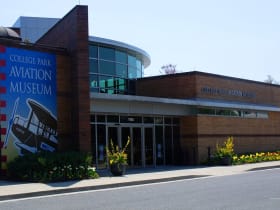
College Park Aviation Museum
12 miles away
Planes to look at, a cockpit to sit in, and real aircraft taking off outside the window make this a strong stop for aviation-minded kids.

Torpedo Factory Art Center
12 miles away
Plenty of people stroll the Alexandria waterfront without realizing the big brick building at the foot of King Street is one of the oldest and largest open artist colonies in the country.

The Capital Wheel at National Harbor
14 miles away
A big enclosed observation wheel makes an easy win with kids, and this one hangs out over the Potomac.
Frying Pan Farm Park
15 miles away
A short drive from the airplane museum, this is the low-key farm-animal antidote for younger kids.

Steven F. Udvar-Hazy Center
17 miles away
This is a jaw-dropper for any kid who likes planes or space. The Udvar-Hazy Center near Dulles Airport in Chantilly is where the Air and Space Museum keeps its giants: a real Space Shuttle, the Enola...