
First Landing State Park
2526 Conservation Ct, Virginia Beach, VA
Virginia Beach, VA
A landscape of bald cypress swamps hung with Spanish moss and a quiet bay beach, on the very ground where English colonists first stepped onto Virginia in 1607.
First Landing State Park protects a startling stretch of wilderness at the edge of Virginia Beach, where trails wind through bald cypress swamps draped in Spanish moss and out to a calm beach on the Chesapeake Bay. It is Virginia's most-visited state park, yet its cypress boardwalks feel a world away from the high-rises of the oceanfront just a few miles south.
The park takes its name from a pivotal moment in American history. In April 1607, the English colonists who would go on to found Jamestown first came ashore on this cape before sailing up the bay to their settlement. That first landing on Virginia soil happened right here, giving the park both a wild natural character and a deep historical weight.
What Travelers Love
- Boardwalk trails winding through cypress swamps draped in Spanish moss
- A calm, uncrowded Chesapeake Bay beach far from the resort crowds
- The chance to stand where the Jamestown colonists first came ashore in 1607
- A surprising sense of wilderness at the edge of a busy beach city
Worth Knowing
- The Bald Cypress Trail is the signature walk, an easy boardwalk loop through the swamp
- This is the northernmost place bald cypress and Spanish moss grow along the coast
- The park is popular, so arrive early on warm weekends for parking and a quiet trail
- Bring bug protection in the warm months for the swampy sections
Learn about First Landing State Park
Where the colonists first stepped ashore
In the spring of 1607, three small English ships carrying about a hundred settlers reached the Virginia capes after a long Atlantic crossing. They came ashore near this cape, which they named Cape Henry, spent several days exploring and gathering fresh water, and had their first, tense encounters with the Native people of the region before sailing on up the bay to establish Jamestown, the first permanent English settlement in North America.
That landing set in motion the sweeping and often painful history that followed, the founding of the Virginia colony, the collision with the Powhatan paramountcy that already governed this land, and the long consequences for Native peoples and, soon after, for the enslaved Africans brought to the colony. The park preserves the wild shoreline much as those colonists might have seen it, a rare surviving glimpse of the coast at the moment of first contact.
The land of the Powhatan
When the English arrived, this coast was not empty. It lay within Tsenacomoco, the domain of the Powhatan paramount chiefdom, a powerful alliance of Algonquian-speaking peoples under the leader the English called Powhatan. The tribes of the region fished the bay, farmed the fertile ground, and had lived along these waters for countless generations before the ships appeared.
Their descendants are still here. Virginia is home to several federally recognized tribes with roots in the Powhatan world, among them the Pamunkey, Chickahominy, Rappahannock, Nansemond, and others, who continue to sustain their communities and cultures today. A visit to First Landing is a chance to remember that the colonists' first landing was also an arrival on land that already had deep and living human history.
Cypress swamps and Spanish moss
The park's natural showpiece is its cypress swamp, a shadowy, watery forest of bald cypress trees with their knobby knees rising from tea-colored water and Spanish moss trailing from the branches. This is about the northernmost place along the Atlantic coast where bald cypress and Spanish moss grow together, giving the park a distinctly southern, almost bayou-like feel far up the mid-Atlantic shore.
The signature Bald Cypress Trail loops through this swamp on a boardwalk, letting visitors walk dry-shod into the heart of a habitat that would otherwise be off limits. Beyond the swamp, the park holds maritime forest, dunes, and salt marsh, a full cross-section of coastal habitats, home to herons, owls, turtles, and countless songbirds along its many miles of trail.
A wild edge to the resort city
What makes First Landing so remarkable is its setting. Just a few miles from the boardwalk, hotels, and crowds of the Virginia Beach oceanfront, the park offers cypress wilderness and a quiet, calm bay beach with none of the resort bustle. It is a green refuge that lets visitors trade the busy oceanfront for a slower, wilder day whenever they want.
That contrast is the park's gift. Families can spend the morning walking cool swamp boardwalks or paddling quiet creeks, then swim off a gentle bay beach, all within reach of the city's restaurants and attractions. It proves that even a major resort city can hold a genuine pocket of wildness, and it draws visitors year after year for exactly that.
Closest Boutels
The closest Boutel™ stays, so you can turn this stop into an overnight. Each is a place we chose through independent editorial review, never a paid placement.
Cape Motel
Honorable Mention26460 Charles M Lankford Jr Memorial Hwy, Cape Charles, VA
21 miles away|Learn More ›
Details
Virginia Beach, VA
Frequently asked questions
What is First Landing State Park?
First Landing State Park, in Virginia Beach on the Virginia coast, is a beautiful and popular park named for the spot where the English colonists who founded Jamestown first landed in sixteen oh seven before continuing on. The park protects a scenic stretch of Chesapeake Bay shoreline along with a rare and lovely maritime forest of cypress swamps, live oaks draped in Spanish moss, and lagoons. It offers beaches, miles of trails, camping, cabins, and paddling amid a striking natural setting. With its bay beaches, maritime forest, trails, and history, First Landing State Park offers a rewarding coastal destination in Virginia.
What can you do at First Landing State Park?
You can relax and swim at the Chesapeake Bay beaches, hike or bike miles of trails through the beautiful maritime forest of cypress, live oaks, and Spanish moss, paddle the lagoons and waters, camp or stay in cabins, fish, birdwatch, and enjoy the scenic coastal and forest setting. The bay beaches and the enchanting forest trails are highlights, offering both shoreline and woodland experiences. With its beaches, maritime forest trails, paddling, and camping, First Landing State Park offers a rewarding outdoor experience in Virginia Beach, Virginia.
What safety tips apply at First Landing State Park?
When swimming in the Chesapeake Bay, watch children closely, be aware there may not be lifeguards on the park beaches, and be cautious of currents and boat traffic. On the trails, wear sturdy shoes, bring water and sun protection, and use insect repellent in the warm months, as the maritime forest can be buggy. Watch for ticks and stay on trails. Being cautious in the water and prepared for the forest conditions ensures a safe and enjoyable visit to First Landing State Park in Virginia Beach, Virginia.
When is the best time to visit First Landing State Park?
Late spring through early fall is popular for the beaches and warm-weather recreation, when the bay is inviting for swimming, though summer is busy and hot, while spring and fall offer pleasant weather and fewer crowds for hiking the maritime forest trails, and fall brings comfortable temperatures. The forest is beautiful year-round. For beach time aim for the warm months, and for the most comfortable hiking with fewer crowds, spring or fall, at First Landing State Park in Virginia Beach, Virginia.
What is near First Landing State Park?
First Landing State Park is in Virginia Beach on the Virginia coast, near the Virginia Beach oceanfront and boardwalk, within reach of the Virginia Aquarium and Marine Science Center, the Cape Charles and Eastern Shore areas across the Chesapeake Bay Bridge-Tunnel, and Fort Monroe and Hampton across Hampton Roads. That makes First Landing State Park a scenic stop to combine with the Virginia Aquarium, the Virginia Beach area, and the other attractions of coastal Virginia on a visit to the state.
Outside the Park

Virginia Aquarium and Marine Science Center
9.5 miles away
A strong rainy-day or hot-day pick a short drive from the oceanfront.
The Chrysler Museum of Art and Glass Studio
14 miles away
A free art museum of this quality surprises people who expect Norfolk to be all Navy.

Fort Monroe
16 miles away
Most people racing to the beaches never learn that a pivotal place in the end of slavery sits quietly in Hampton.
Eastern Shore of Virginia National Wildlife Refuge
16 miles away
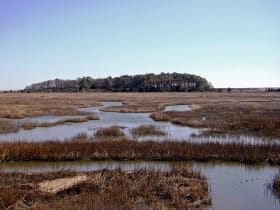
At the very tip of the Delmarva Peninsula, this refuge is one of North America's great fall migration funnels, where millions of songbirds, monarch butterflies, and hawks pile up before crossing the C...
Kiptopeke State Park
18 miles away
Kiptopeke sits at the southern tip of Virginia's Eastern Shore, where nine half-sunk World War II concrete ships line up offshore as a ghostly breakwater.

Virginia Air and Space Science Center
18 miles away
Made for kids who love planes and rockets. The Virginia Air and Space Science Center at 600 Settlers Landing Rd hangs real aircraft from the ceiling, displays an actual Apollo capsule that flew to spa...