
Fern Canyon
Gold Bluffs Beach Rd, off Davison Rd
Orick, CA
A short walk up a creek between sheer walls hung floor to top in ferns, a green world so primeval it stood in for a lost world on film.
Fern Canyon is one of those places that looks impossible until you are standing in it. A modest stream called Home Creek has spent countless years cutting a narrow gorge back into the soft coastal hills, and the near-vertical walls it left behind, fifty to eighty feet high, are hung almost from floor to top in a dense green quilt of ferns. Water seeps and drips down the rock, coastal fog keeps everything damp, and the effect is a cool, glistening slot canyon that feels far older than the world outside it.
That prehistoric feeling is exactly right, because many of the plants clinging to these walls belong to ancient families that have grown on earth for a very long time. The short walk up the canyon floor, crossing and recrossing the creek, is one of the most surprising half-mile strolls anywhere on the California coast, tucked at the end of a rough road in the great redwood parks north of Orick.
What Travelers Love
- Sheer canyon walls draped almost floor to top in ferns, fed by constant seep and coastal fog
- Walking right up the creek bed on planks and footbridges, feeling like you stepped into a lost world
- Spotting Roosevelt elk grazing the meadows and beach flats on the drive in
- The wild black-sand sweep of Gold Bluffs Beach right at the canyon's mouth
Worth Knowing
- A timed day-use vehicle permit is required in the summer season to reach the trailhead, so reserve before you go since entry is capacity-limited
- The last stretch is Davison Road, unpaved gravel with shallow creek crossings, and it bars vehicles over 24 feet long or 8 feet wide and all trailers, so bring a smaller vehicle
- You cross the creek repeatedly, and while summer footbridges help, off season you wade, so plan on wet feet and shoes that can get soaked
- Roosevelt elk roam the road and meadows near the entrance, so give them a wide berth and never approach
Learn about Fern Canyon
How Home Creek carved a canyon of ferns
The canyon is the patient work of Home Creek, which looks too small to have done it. Over the ages the creek sliced down through soft sedimentary soils, leaving behind sheer walls that never dry out. Sea fog rolls in off the nearby Pacific, groundwater seeps steadily through the rock, and that endless moisture is what lets ferns blanket the vertical faces where little else could hold on.
At least five kinds of fern share the walls, among them five-finger, sword, deer, lady, and chain fern, along with mosses and other moisture-loving plants. Some of these are old plant lineages, families that were already ancient when the first flowering plants appeared, so walking the canyon really is a walk back through deep botanical time.
The result is a corridor of living green, cool and quiet, with light filtering down softly and water trickling everywhere. It is small, but it rewards slow looking, close up at the delicate fronds and the drops of water beading on them.
The lost world on film
Fern Canyon's primeval look has made it a favorite of filmmakers looking for a world before people. It stood in as a backdrop in The Lost World, the second Jurassic Park film, and has appeared in the BBC's Walking with Dinosaurs and an IMAX dinosaur feature as well. Its reputation as a place dinosaurs might still be hiding is the story everyone repeats.
But the movies only borrowed what the canyon already had. What makes it look like a lost world is real: the great height of the fern-covered walls, the ancient plant families, the constant water and fog, and the total absence of anything modern once you are inside. You do not need the special effects to feel it.
It is worth going in with fresh eyes rather than only hunting for the film scenes. The canyon is more wonderful as itself, a genuine relic of an older, wetter, greener world, than as a movie set.
Gold Bluffs Beach and the elk
The canyon opens near Gold Bluffs Beach, a long, wild sweep of dark sand backed by golden bluffs. The name comes from the gold rush era, when miners found fine gold in the black beach sand after gold was discovered on this coast around 1850. That rush brought a wave of settlers and was devastating to the Native people who had long lived here, a hard history behind the pretty name.
Today the beach is part of the park, empty and windswept, strewn with driftwood and dunes and worth a walk in its own right. Between the beach and the canyon, big herds of Roosevelt elk graze the meadows and grassy flats, and they often stand in or cross the access road.
These are large wild animals, and while it is a thrill to see them so close, the rule is simple: stay well back, keep quiet, and never approach or get between animals. Watching a herd move across the meadow with the sea behind them is one of the lasting memories of a trip out here.
Getting there and getting your feet wet
The approach is part of the adventure. From Highway 101 just north of Orick you turn onto Davison Road, an unpaved gravel road that winds several miles through redwood forest and out along the beach to the trailhead, with a couple of shallow creek crossings on the way. The road is narrow and slow and strictly limits vehicle size, with no vehicles over about twenty-four feet long or eight feet wide and no trailers at all, so bring a smaller car.
In the summer season a timed day-use vehicle permit is required to enter the Gold Bluffs Beach area and reach Fern Canyon, and it is capacity-limited, so reserve it before you make the drive. Outside those months no permit is needed, though the road and creek can be rougher.
Once at the canyon, expect to cross Home Creek again and again. Summer footbridges and planks keep most people dry, but in the off season you simply wade, so wear closed-toe shoes that can get soaked and count on wet feet. Give the loop a leisurely hour, longer if you connect to the redwood trails above, and treat the whole outing as a half day well spent from a base in Orick.
Closest Boutels
The closest Boutel™ stays, so you can turn this stop into an overnight. Each is a place we chose through independent editorial review, never a paid placement.
Details
Orick, CA
Frequently asked questions
What is Fern Canyon?
Fern Canyon, in Prairie Creek Redwoods State Park on California's far North Coast, is a magical and otherworldly canyon whose steep walls, rising some fifty feet, are completely draped in lush green ferns, mosses, and other plants, with a small creek running along its floor. This enchanting, verdant gorge, so prehistoric-looking that it was used as a filming location for a Jurassic Park movie, is a beloved and unique natural wonder. Walking through the narrow canyon amid the cascading greenery and trickling water feels like stepping into a lost world, making Fern Canyon one of the most memorable and beautiful spots in the redwood parks.
How do you visit Fern Canyon, and do you need a permit?
Fern Canyon is reached via an unpaved road, often requiring driving through shallow creek crossings, that leads to a trailhead, from which a short loop takes you through the canyon. During the busy summer season, a permit or reservation is typically required to access the area to manage crowds, so checking current requirements before you go is essential. The access road may be closed or difficult in winter. Planning for the permit, the rough road, and creek crossings, and confirming current access, helps ensure you can visit this magical canyon.
What should I know before hiking Fern Canyon?
The canyon floor involves walking along and crossing a creek, so expect to get your feet wet, especially outside summer, and wear waterproof or old shoes you do not mind soaking. Seasonal footbridges are installed in summer but removed in the wetter months, making crossings trickier. The trail is short but the footing is uneven and slippery, so watch your step. The setting is cool and damp, so bring layers. Being prepared for wet feet, slippery terrain, and the seasonal conditions, along with any required permit, helps ensure an enjoyable visit to Fern Canyon.
When is the best time to visit Fern Canyon?
Late spring through early fall is the best time, when the access road and creek crossings are most manageable, seasonal footbridges are in place, and the weather is driest, though a permit is typically required in summer. The ferns are lush and green year-round, but winter brings high water, difficult crossings, and possible road closures. For the easiest access and most comfortable visit, aim for summer or early fall, securing any required permit, wearing appropriate footwear, and checking current road and access conditions before you go to this magical canyon.
What is near Fern Canyon?
Fern Canyon is in Prairie Creek Redwoods State Park on California's far North Coast, near the wild Gold Bluffs Beach, the park's redwood groves and Roosevelt elk, the Lady Bird Johnson Grove, and the quirky Trees of Mystery, with Crescent City and Jedediah Smith Redwoods to the north and the town of Orick nearby. That makes Fern Canyon a magical stop to combine with the redwood groves, Gold Bluffs Beach, and the other natural attractions of the Redwood National and State Parks on a visit to California's far North Coast.
Nearby
Prairie Creek Redwoods State Park
1.6 miles away
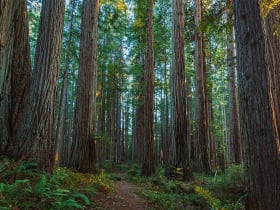
Prairie Creek Redwoods State Park protects old-growth redwoods, the fern-draped walls of Fern Canyon, and herds of wild Roosevelt elk on Elk Prairie, part of the joined Redwood National and State Park...
Lady Bird Johnson Grove
2.9 miles away
Redwood National and State Parks preserve the world's tallest living trees, coast redwoods (Sequoia sempervirens) that can exceed 380 feet in height and 2,000 years in age.

Redwood National Park
7.8 miles away
Home to the tallest trees on Earth, coast redwoods towering over a fog-drenched Pacific shore.
Trees of Mystery
13 miles away
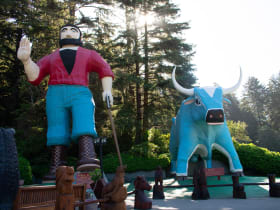
The giant Paul Bunyan and his blue ox Babe have greeted drivers on US-101 near Klamath since the redwood attraction opened in 1946, and Paul's head turns and talks to visitors below.

Redwood National and State Parks
14 miles away
Coast redwoods (Sequoia sempervirens) are the world's tallest trees, with verified heights up to 380.3 feet for a tree named Hyperion in a remote section of Redwood National Park.