
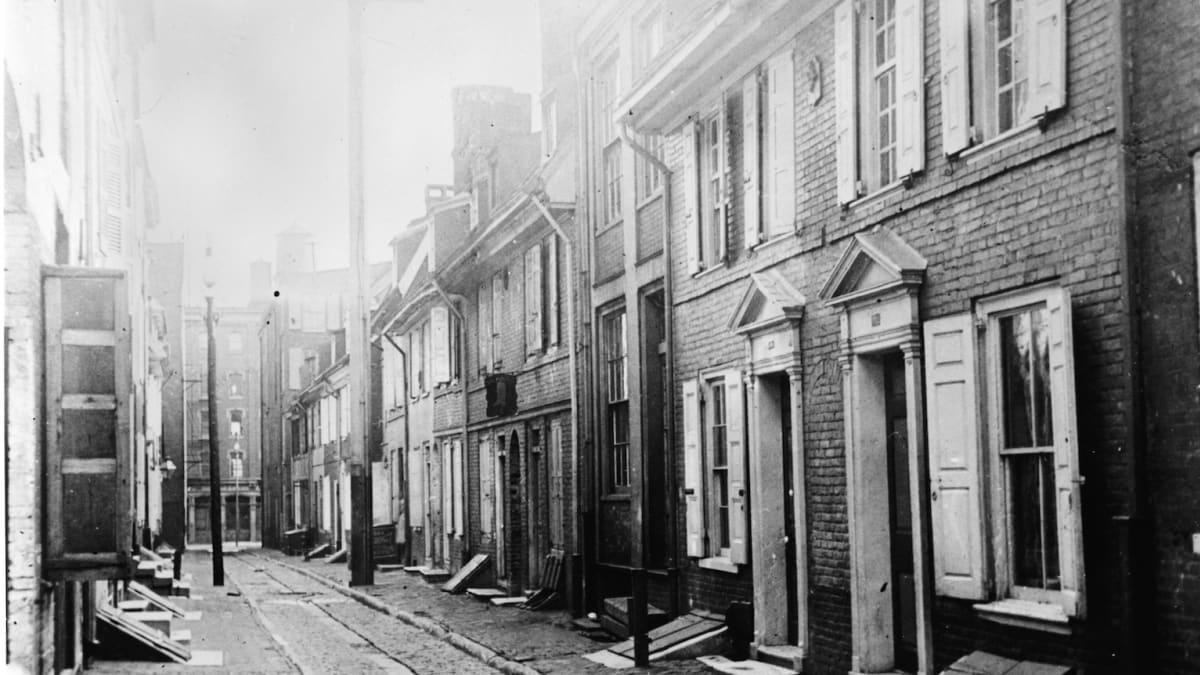
Elfreth's Alley
Elfreth's Alley, Philadelphia, PA
Philadelphia, PA
A narrow cobblestone lane of early-1700s rowhouses in Old City Philadelphia, the oldest continuously inhabited residential street in America.
Elfreth's Alley is one of the most charming and historic little streets in America, a narrow cobblestone lane in Old City Philadelphia lined with small brick rowhouses that have stood since the early 1700s. What makes it truly remarkable is not only its age but its continuity: people have lived here without interruption for more than three hundred years, making Elfreth's Alley the oldest continuously inhabited residential street in the United States. To walk it is to step into a living piece of colonial America.
The alley is not a museum set piece but a real neighborhood, its tidy brick houses still private homes with flower boxes, shutters, and front stoops much as they have always been. In the days of the young nation it was home to tradespeople and artisans, and that everyday, working history gives it a warmth that grander landmarks can lack. Tucked among Philadelphia's famous historic sites, this quiet cobblestone lane is a small, unforgettable window into the past.
What Travelers Love
- The oldest continuously inhabited residential street in America, dating to the early 1700s
- A charming cobblestone lane of tidy brick colonial and Federal rowhouses
- A living neighborhood, still home to real residents after three centuries
- A small museum in two of the historic houses telling the alley's story
Worth Knowing
- This is a private residential street where people live, so visit quietly and respectfully and do not enter or peer into homes
- The alley is free to walk, and a small museum in two of the houses tells its history
- It is a short, easy stroll, best paired with the nearby historic sites of Old City
- Special open-house days each year offer a rare look inside some of the homes
Learn about Elfreth's Alley
Three centuries of continuous life
Elfreth's Alley took shape in the early 1700s, when the lane was laid out and its first small houses were built in what was then the young, bustling port city of Philadelphia. Over the following decades more rowhouses rose along it, in the plain, dignified brick styles of the colonial and Federal eras, and people moved in and made their lives there. They have never stopped: the alley has been lived in continuously ever since, longer than any other residential street in the country.
The alley is named for Jeremiah Elfreth, a blacksmith and property owner who developed part of it in the eighteenth century, and it was long home to the tradespeople and craftspeople who kept the city running, from smiths to shoemakers to seamstresses. That working, everyday character is part of what makes Elfreth's Alley so special, a place shaped not by the famous and powerful but by ordinary families across three hundred years.
A living neighborhood
Unlike most colonial landmarks, Elfreth's Alley is not frozen behind ropes; it is a living street where people still live in the historic houses. The little brick homes, most of them well over two centuries old, remain private residences, their doors and windows dressed with shutters, flower boxes, and the small touches of people who love where they live. That is exactly what makes the alley so charming, and it is also why visitors are asked to treat it with care.
Because it is a real neighborhood, a visit means walking quietly and respectfully down the cobblestones, admiring the houses from the public lane, and never entering, knocking, or peering into private homes. Treated with that courtesy, the alley rewards a visitor richly, offering a genuine and intimate sense of colonial Philadelphia that no reconstruction could match, and its residents have long welcomed those who come with respect.
The museum and the alley's story
Two of the historic houses on Elfreth's Alley are given over to a small museum that tells the story of the street and the generations who have lived on it. Through the rooms and their furnishings, and the tales of the tradespeople, immigrants, and families who called the alley home, the museum brings three centuries of everyday life vividly to life, and it is the best way to learn the alley's history and step, briefly, inside one of its houses.
The alley also hosts special days through the year, including an annual open house when some of the private homes open their doors to visitors, offering a rare glimpse of the interiors and the way modern life fits within these ancient walls. These events, and the museum, deepen a visit beyond the simple pleasure of walking the cobblestones, though that pleasure alone is reason enough to come.
In the heart of historic Philadelphia
Elfreth's Alley sits in the Old City neighborhood of Philadelphia, within easy walking distance of the sites where the United States was born. Independence Hall, the Liberty Bell, and the rest of Independence National Historical Park are close by, as are Benjamin Franklin's haunts, historic churches, and the lively shops, galleries, and restaurants that fill Old City today. The alley makes a perfect small detour amid a day of exploring this storied part of the city.
That setting is part of the alley's appeal: in a few blocks a visitor can move from the grand halls where the nation was founded to a quiet lane where ordinary Americans have lived since colonial times. Together they tell a fuller story of early America, the famous and the everyday side by side, and Elfreth's Alley provides the intimate, human counterpoint to the great public monuments nearby.
Closest Boutels
The closest Boutel™ stays, so you can turn this stop into an overnight. Each is a place we chose through independent editorial review, never a paid placement.
Travelers Rest Motel
Honorable Mention3701 Old Philadelphia Pike, Intercourse, PA
51 miles away|Learn More ›
Details
Philadelphia, PA
Frequently asked questions
What is Elfreth's Alley?
Elfreth's Alley, in the Old City neighborhood of Philadelphia, Pennsylvania, is the oldest continuously inhabited residential street in the United States, a narrow cobblestone lane lined with small brick rowhouses that date to the early 1700s. People have lived on the alley without interruption for more than three centuries, and it remains a real neighborhood of private homes today, its little colonial and Federal houses dressed with shutters and flower boxes. Once home to the tradespeople and artisans of the young city, it offers an intimate, living glimpse of colonial America. Its age, charm, and continuity make it a delightful destination. A charming and historic lane, it delights visitors. With its cobblestones and rowhouses, Elfreth's Alley offers a compelling destination in Pennsylvania.
Why is Elfreth's Alley significant?
Elfreth's Alley is significant as the oldest continuously inhabited residential street in the United States, laid out in the early 1700s and lived in without interruption ever since, longer than any other residential street in the country. Named for an eighteenth-century blacksmith, it was long home to the tradespeople and craftspeople who kept early Philadelphia running, and its houses survive as a rare, intact stretch of everyday colonial and Federal architecture. That combination of great age, continuity, and ordinary human history is what makes it so remarkable. Appreciating this history enriches a visit to Elfreth's Alley in Pennsylvania.
Can you visit Elfreth's Alley, and do people still live there?
Yes, you can visit Elfreth's Alley, and yes, people still live there: it is a real residential street where the historic houses remain private homes. The cobblestone lane is free to walk, and a small museum in two of the houses tells the alley's story, but because it is a living neighborhood, visitors are asked to walk quietly and respectfully, admire the houses only from the public lane, and never enter, knock, or peer into private homes. Special open-house days each year offer a rare look inside some of the homes. Visiting with courtesy makes for a rewarding stop at Elfreth's Alley in Pennsylvania.
When is the best time to visit Elfreth's Alley?
Elfreth's Alley can be enjoyed year-round as a quick, free stroll, with the mild months of spring through fall the most pleasant for walking its cobblestones and admiring the flower boxes and greenery, and the winter holidays bringing their own charm to the historic lane. Special events, including an annual open house when some private homes open their doors, are worth timing a visit around for a rare look inside. For pleasant walking aim for the mild months, or time a visit to a special open-house day, at Elfreth's Alley in Pennsylvania.
What is near Elfreth's Alley?
Elfreth's Alley is in Old City Philadelphia, within easy walking distance of Independence National Historical Park with Independence Hall and the Liberty Bell, the Betsy Ross House a couple of blocks away, the Benjamin Franklin sites nearby, and all the colonial streets, galleries, shops, and restaurants of Old City. That makes Elfreth's Alley a charming detour to combine with Independence Hall and the historic sites of Old City on a visit to Philadelphia, Pennsylvania.
Nearby

Independence Hall and the Liberty Bell
0.4 miles away
This is the founding-story stop, and it works for kids in short, digestible pieces.

Adventure Aquarium
0.8 miles away
A big, full-day aquarium that holds kids of a wide age range. Adventure Aquarium on the Camden waterfront has a large shark tank you cross on a see-through bridge, a pair of hippos, penguins, sea turt...

Battleship New Jersey
1.0 miles away
It is easy to focus on Camdens aquarium and miss the gray steel giant docked beside it.
Philadelphia's Magic Gardens
1.1 miles away
Most visitors chasing the historic district never make it down to South Street to find this.

Eastern State Penitentiary
1.9 miles away
Behind thirty-foot walls in the Fairmount neighborhood sits a ruin most visitors never plan for.

Ridley Creek State Park
16 miles away
A big block of quiet forest a short drive from the city, Ridley Creek State Park near Media wraps 2,600 wooded acres around the valley of Ridley Creek.