

El Paso Zoo
51 S Boone St, El Paso, TX
El Paso, TX
A green oasis of lions, elephants, and Chihuahuan Desert wildlife in the far western corner of Texas, where three states and two countries meet.
The El Paso Zoo is a green, shaded refuge in the middle of a desert city, gathering animals from Africa, Asia, and the Americas into habitats built for the region's fierce sun and dry air. Lions and giraffes range across an African savanna exhibit, elephants roam an Asian grassland, and a whole section is devoted to the Chihuahuan Desert that surrounds El Paso, home to javelina, Mexican wolves, and desert birds that live just beyond the city.
What gives the zoo its character is its setting on the far western tip of Texas, where the state meets New Mexico and Mexico along the Rio Grande. Stand at the right spot and you can take in the Franklin Mountains, the sprawl of El Paso, and Ciudad Juarez across the border in a single sweep. The zoo has grown from a modest municipal menagerie into a modern conservation park, with a strong focus on the wildlife of the desert borderlands it calls home.
What Travelers Love
- African savanna habitats with lions, giraffes, and zebras in open desert light
- Asian grasslands with elephants and other rare species
- A dedicated look at the plants and animals of the Chihuahuan Desert right outside the gates
- A walkable, well-shaded park that stays lively even in the desert heat
Worth Knowing
- Summer afternoons are very hot, so mornings are the coolest and best time for active animals
- Bring sun protection and water, since El Paso is high, dry, and sunny most of the year
- Some animal experiences and feedings run on a schedule, so check the day's program on arrival
- The zoo sits in a walkable central district, so parking can fill on busy weekends
Learn about El Paso Zoo
From city menagerie to conservation park
El Paso's zoo grew out of a small collection of animals kept in a city park in the early twentieth century, the kind of modest municipal menagerie many American cities once had. Over the decades it was reorganized and rebuilt, moving away from bare cages toward larger, more natural habitats grouped by region, a shift that mirrored the broader change in how zoos everywhere think about the animals in their care.
Today the zoo emphasizes conservation, education, and the survival of threatened species, taking part in cooperative breeding programs for rare animals. It has become one of the anchors of family life in El Paso, a place where generations of border-city children have met their first elephant or lion, and a working partner in efforts to protect wildlife both far away and close to home.
Animals of the world and of the desert
The zoo's habitats carry visitors across continents. An African exhibit brings together lions, giraffes, zebras, and other savanna animals, while an Asian section features elephants and species of the region's forests and grasslands. Primates, big cats, reptiles, and birds round out a collection meant to show the variety of life around the planet.
Closest to home is the focus on the Chihuahuan Desert, the vast dryland that stretches across West Texas, New Mexico, and northern Mexico. Here visitors meet the animals of the borderlands, from javelina and Mexican gray wolves to roadrunners and desert reptiles, a reminder that some of the most remarkable wildlife lives right outside the city, adapted to heat, drought, and wide open space.
El Paso, the pass, and the Rio Grande
El Paso takes its name from El Paso del Norte, the pass of the north, where the Rio Grande cuts between mountain ranges and travelers, traders, and armies have crossed for centuries. This was long the country of the Tigua people of Ysleta del Sur Pueblo and other Native communities, and it became a key point on the Spanish colonial route north, the Camino Real, that linked Mexico City to the settlements of New Mexico.
That deep history of crossing and mixing still defines the city. El Paso and Ciudad Juarez form one great binational community along the river, with shared families, food, and culture spanning the border. The zoo's setting in this desert borderland gives even a family day out a sense of standing at a genuine meeting place of peoples, landscapes, and countries.
Visiting through the seasons
El Paso is high desert, sunny and dry through most of the year, so shade, water, and sun protection matter in every season. Spring and fall are the most comfortable times to visit, with warm days, cool mornings, and active animals. Late summer can bring brief, dramatic monsoon storms that green up the desert for a while.
Summer is hot, and the best strategy is an early start before the afternoon sun builds. Winter days are mild and often bright, with cool nights, and the lighter crowds make it a pleasant, relaxed time to wander the habitats. In any season, a morning visit tends to catch the animals at their liveliest.
Closest Boutels
The closest Boutel™ stays, so you can turn this stop into an overnight. Each is a place we chose through independent editorial review, never a paid placement.
Details
El Paso, TX
Frequently asked questions
What is the El Paso Zoo?
The El Paso Zoo, in the city of El Paso in far West Texas, is an accredited zoo home to animals from around the world set amid the desert Southwest landscape. Visitors can see lions, elephants, giraffes, sea lions, monkeys, and many other creatures in themed exhibits representing regions like Africa, Asia, and the Americas, along with a children's zoo and interactive experiences. Focused on conservation and education, the zoo offers a fun and engaging day for families in the borderland city. With its diverse animals, themed exhibits, and family appeal, the El Paso Zoo offers an enjoyable destination in far West Texas.
What animals can you see at the El Paso Zoo?
You can see a wide variety of animals from around the world, including lions, elephants, giraffes, sea lions, monkeys and other primates, tropical birds, reptiles, and species from Africa, Asia, and the Americas, displayed in themed exhibits across the zoo. Interactive experiences and a children's zoo offer close encounters. The variety and the themed regions make it engaging for all ages. With its diverse animals, from big cats to sea lions, and hands-on experiences, the El Paso Zoo offers a fun and educational wildlife experience in far West Texas.
Is the El Paso Zoo good for families?
Yes, the El Paso Zoo is very family-friendly, with a wide variety of animals, a children's zoo, interactive experiences, walkable grounds, and a manageable size that suits a comfortable family visit. The exciting animals and themed exhibits delight children and adults alike, and hands-on encounters add to the fun. Shaded areas and rest spots make a day easy for families. With its engaging animals, children's zoo, and interactive experiences, the El Paso Zoo makes an excellent family destination in far West Texas.
When is the best time to visit the El Paso Zoo?
Fall through spring offers the most comfortable weather for walking the outdoor zoo, with milder temperatures more pleasant than the intense desert summer heat, though mornings are best in the warm months when animals are also most active and the day is cooler. The zoo is open year-round, and checking current hours before you go is wise. Bringing sun protection and water is important in the desert climate. For the best combination of comfortable weather and active animals, aim for fall through spring, or cooler mornings, at the El Paso Zoo in far West Texas.
What is near the El Paso Zoo?
The El Paso Zoo is in the city of El Paso in far West Texas, at the far western tip of the state where Texas meets New Mexico and Mexico, near El Paso's museums and desert parks, and within reach of the Franklin Mountains and the route toward the Guadalupe Mountains and West Texas. That makes the El Paso Zoo a fun family stop to combine with El Paso's attractions and the other sights of far West Texas on a visit to the state.
Nearby
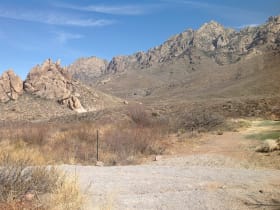
Dripping Springs Natural Area
36 miles away
Most people in Las Cruces have not been to Dripping Springs, which is 10 miles from downtown. The ruins of the Van Patten Mountain Camp, a resort that operated in the 1880s, are at the canyon head.
Lake Lucero Overlook
59 miles away
The overlook is on White Sands National Park's Alkali Flat Trail, accessible as a 5-mile round trip.