
Cimarron Canyon State Park
75 NM-204, Cimarron, NM
Cimarron, NM
A cold trout stream threading a narrow canyon beneath sheer granite palisades in the eastern Sangre de Cristo Mountains.
Cimarron Canyon State Park follows the Cimarron River for several miles through a steep, narrow gorge in the eastern Sangre de Cristo Mountains of northern New Mexico. The word cimarron means wild or untamed in Spanish, and the name fits both the tumbling river and the rugged canyon walls that close in on either side. For much of its length the park is a thin green ribbon of cottonwood and pine pressed between rock and water.
The signature sight is the Palisades Sill, a formation of towering granite columns that rise like organ pipes directly above the river and highway. The canyon has long been prized by anglers for its cold, trout-filled water, and it sits within a much larger protected wildlife area, so it feels far bigger and wilder than a roadside park has any right to feel.
What Travelers Love
- The Palisades Sill, a wall of tall granite columns rising straight above the road and river
- Cold, clear water full of trout, one of northern New Mexico's best-known fishing streams
- Quiet, shaded campgrounds tucked right along the river
- A cool mountain drive on the Enchanted Circle scenic loop
Worth Knowing
- This is high country, generally around 8,000 feet, so afternoons can cool off fast and storms build quickly in summer
- Fishing follows New Mexico state regulations, and stretches of the river have special rules, so check the current guidelines before you cast
- Wildlife is genuinely wild here, including bear, so store food properly and keep a respectful distance
- The canyon road is a designated scenic byway with limited pullouts, so slow down and watch for cyclists and wildlife
Learn about Cimarron Canyon State Park
The canyon and the Santa Fe Trail country
This corner of New Mexico was home to the Jicarilla Apache and the Ute, who moved through these mountains and hunted the high valleys long before ranching came. The wider region also lies along the mountain branch of the Santa Fe Trail, the great wagon road that carried traders and settlers across the plains toward Santa Fe in the 1800s.
The nearby town of Cimarron became a rough frontier crossroads, its old St. James Hotel a byword for gunfights and travelers passing through. The canyon itself became part of the vast Maxwell Land Grant, one of the largest single landholdings in the history of the American West, before eventually passing into public hands as the Colin Neblett Wildlife Area, which now surrounds and protects the state park.
The Palisades and how the rock formed
The Palisades Sill is the geological heart of the canyon. Molten rock once pushed sideways between older layers of sandstone and shale and cooled slowly underground into a hard band of granite-like stone. As it cooled and shrank it fractured into tall vertical columns, and over long ages the softer rock around it wore away, leaving the resistant sill standing exposed above the river.
The result is a wall of stone columns that seems almost built rather than eroded, glowing warm in low light and drawing rock climbers as well as sightseers. The Cimarron River, fed by snowmelt from the high peaks around Eagle Nest Lake, is the tool that cut the canyon down through these layers and keeps carving it a little deeper every year.
The trout river and the fishing
Cimarron Canyon is best known to anglers. The cold, well-oxygenated water holds trout, and the river is managed as a quality trout fishery, with certain reaches carrying special regulations to protect the fish. It is the kind of small mountain stream where you work pockets and riffles rather than open water, casting in the shade of the cottonwoods.
Because rules can change from stretch to stretch and season to season, it is worth checking the current New Mexico fishing regulations before you go rather than assuming. Beyond fishing, the river makes a lovely companion for a walk, its sound filling the whole narrow canyon.
Wildlife, seasons, and the high country
The surrounding Colin Neblett Wildlife Area is home to mule deer, elk, wild turkey, black bear, and mountain lion, along with the songbirds and raptors of a mixed conifer forest. Dippers work the river, and in the early morning and evening the meadows come alive with grazing deer and elk.
Summer is cool and green, a welcome escape from the desert heat below, though afternoon thunderstorms build fast over the peaks. Fall brings gold to the cottonwoods and aspen. Winter closes much of the high country in snow and cold, quiet and beautiful but demanding. Spring runs high and fast with snowmelt off the surrounding mountains.
Closest Boutels
The closest Boutel™ stays, so you can turn this stop into an overnight. Each is a place we chose through independent editorial review, never a paid placement.
Pinon Court by La Fonda
Honorable Mention201 Montezuma Avenue, Santa Fe, NM
83 miles away|Learn More ›
Details
Cimarron, NM
Frequently asked questions
What is Cimarron Canyon State Park?
Cimarron Canyon State Park, in the mountains of northeastern New Mexico between the towns of Eagle Nest and Cimarron, is a beautiful and dramatic park set in a rugged canyon carved by the Cimarron River. The park is renowned for its striking granite cliffs known as the Palisades, which rise sharply above the river and road, and for its excellent trout fishing in the clear Cimarron River. Along with the scenery and fishing, the park offers hiking, camping, and wildlife viewing amid forested mountain canyon scenery. With its dramatic granite Palisades, trout stream, and beautiful setting, Cimarron Canyon State Park offers a scenic and rewarding outdoor destination in the mountains of northeastern New Mexico.
What can you do at Cimarron Canyon State Park?
You can fish for trout in the clear Cimarron River, which is a highlight of the park, hike the trails through the canyon and forest, admire and photograph the dramatic granite Palisades cliffs, camp at the campgrounds, watch for wildlife including deer, elk, and bears, and enjoy the beautiful mountain and canyon scenery. The trout fishing draws many anglers, and the scenic drive through the canyon is lovely. With its excellent fishing, scenic trails, dramatic cliffs, and camping amid gorgeous canyon scenery, Cimarron Canyon State Park offers a rewarding outdoor experience in the mountains of northeastern New Mexico.
What are the Palisades at Cimarron Canyon State Park?
The Palisades are the dramatic, sheer granite cliffs and rock formations that rise steeply along the Cimarron River in Cimarron Canyon State Park, forming one of the park's most striking and photographed features. These towering walls of granite, sculpted by geologic forces and erosion, loom impressively above the river and the road that winds through the canyon, creating spectacular scenery. Popular with sightseers, photographers, and rock climbers, the Palisades give the canyon its dramatic character. Their imposing beauty is a highlight of visiting Cimarron Canyon State Park, making the drive and hikes through the canyon especially scenic and memorable.
When is the best time to visit Cimarron Canyon State Park?
Late spring through fall is ideal for fishing, hiking, and camping, with summer offering a cool mountain escape and good fishing, and fall bringing beautiful golden aspen color to the canyon, while winter brings snow and cold that can limit access but offers quiet beauty. The trout fishing is rewarding through the warmer months. The high elevation keeps summers pleasant. For fishing, hiking, and the scenery, aim for late spring through fall, with fall color being a particular highlight. The canyon's beauty and recreation make it most rewarding in the warmer months at Cimarron Canyon State Park.
What is near Cimarron Canyon State Park?
Cimarron Canyon State Park is in the mountains of northeastern New Mexico between Eagle Nest and Cimarron, near the Eagle Nest Lake State Park, the historic town of Cimarron with its Old West heritage, the Philmont Scout Ranch, and within reach of Taos over the mountains and the high-plains country to the east. That makes Cimarron Canyon State Park a scenic stop to combine with Eagle Nest Lake, the historic town of Cimarron, Philmont, and the other attractions of northeastern New Mexico on a visit to the state.
Outside the Park
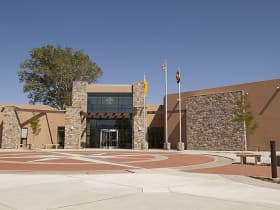
Philmont Scout Ranch Museum
2.5 miles away
Most non-Scouters drive past Philmont without stopping. The Villa Philmonte tours are free, run on a schedule from June through August, and show a house that has been preserved as it was in the 1940s...
Tinaja Overlook on US-64
8.1 miles away
The pull-off at the eastern canyon exit on US-64 is the best single viewpoint on the drive. The canyon has been tight for 9 miles.
Dorsey Mansion
26 miles away
The fun of the Dorsey Mansion is how out of place it is: a fancy Victorian mansion with a tower and a fountain courtyard, standing alone on empty grassland miles from anywhere.