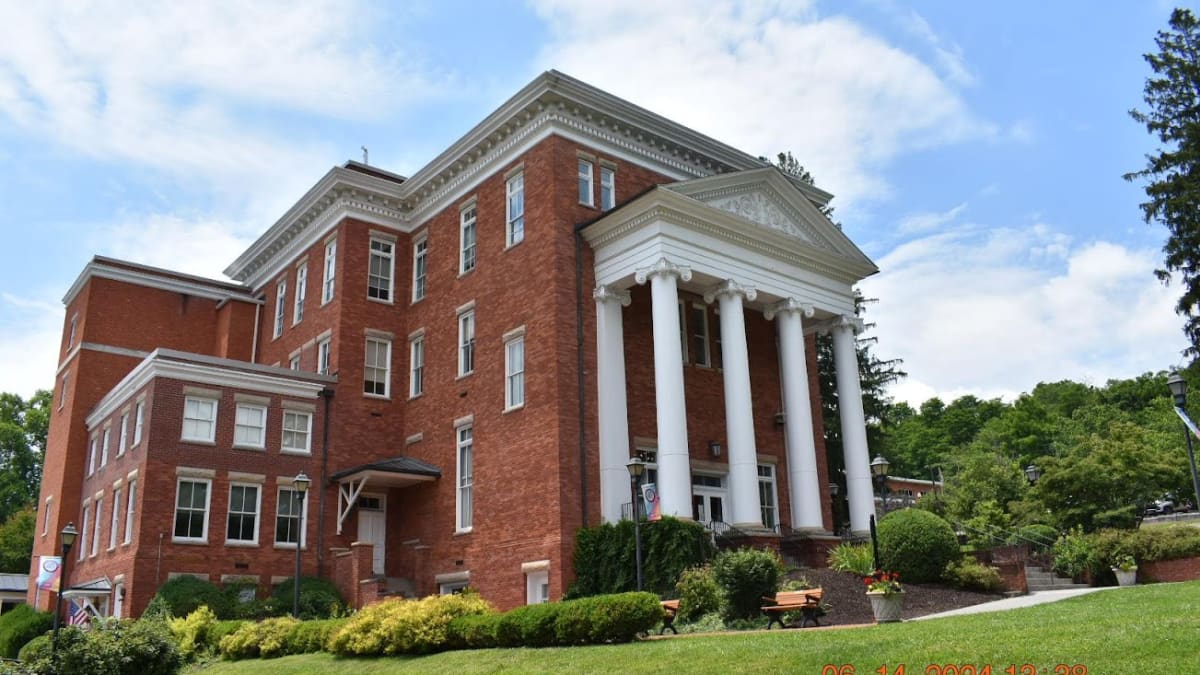
Carnegie Hall
878 Washington St W, Lewisburg, WV
Lewisburg, WV
One of the only Carnegie Halls in the world still in continuous use, a grand arts hall anchoring the walkable historic streets of Lewisburg.
Carnegie Hall in Lewisburg is a rare survivor. It is one of only a handful of Carnegie Halls anywhere in the world still in continuous use, built with funding from the industrialist and philanthropist Andrew Carnegie in the early 1900s and serving its community ever since. The grand hall began life on the campus of a women's college and has grown into a full performing-arts center at the heart of one of West Virginia's most beloved small towns.
Today the hall keeps a year-round calendar of concerts, theater, films, art exhibitions, and classes, making it the cultural anchor of the Greenbrier Valley. Its home town of Lewisburg is regularly named among the most charming small towns in America, with a walkable downtown of historic buildings, galleries, and restaurants, and Carnegie Hall sits right in the middle of it, a beautifully preserved venue that gives the town its artistic heart.
What Travelers Love
- One of only a few Carnegie Halls anywhere still in continuous use as an arts venue
- A year-round calendar of concerts, plays, films, and classes
- Its setting in Lewisburg, a town often praised as one of the country's most charming small towns
- The historic architecture and intimate performance spaces
Worth Knowing
- It is a working arts center, so checking the events calendar helps you catch a performance
- Beyond ticketed shows, it offers galleries, classes, and community events
- The hall sits within easy walking distance of Lewisburg's shops and restaurants
- It anchors a lively arts scene that makes Lewisburg a cultural hub for the region
Learn about Carnegie Hall
Andrew Carnegie's gift
In the early 1900s, Andrew Carnegie funded thousands of libraries and a smaller number of concert and lecture halls across the English-speaking world as part of his vast philanthropy. The hall in Lewisburg was among these gifts, built to serve the Lewisburg Female Institute, a women's college, and named in Carnegie's honor. Of the several Carnegie Halls once built, only a few remain in continuous use, and Lewisburg's is one of them.
That continuity is the source of its distinction. Where many such halls were demolished, repurposed, or fell silent, the Lewisburg hall has kept its doors open and its stage active for well over a century. It has evolved from a college auditorium into an independent, nonprofit performing-arts center, but the thread of continuous use, and Carnegie's name, has never been broken.
A working arts center
Carnegie Hall today is a busy, multi-use cultural venue. Its calendar runs year-round, with touring musicians, theater productions, film screenings, dance, and lectures filling its stage, while galleries within the building host rotating art exhibitions. Classes and workshops in music, art, and dance draw local participants, making the hall a place where the community both watches and makes art.
For visitors, the best way to experience the hall is to check the events calendar and catch a performance, but the building rewards a look even between shows, with its historic architecture and gallery spaces. It functions as the cultural hub of the Greenbrier Valley, punching well above the weight of the small town around it.
Lewisburg, a most charming town
The hall's setting is a large part of its appeal. Lewisburg is one of the oldest towns in this part of the state, settled in the 1700s along a route through the mountains, and its historic downtown has been carefully preserved. Brick buildings house galleries, bookshops, restaurants, and cafes, and the town has earned a national reputation as one of America's most charming small towns.
The Greenbrier Valley around it was long the ancestral homeland and shared hunting ground of the Shawnee, the Cherokee, and other peoples, none federally recognized in West Virginia today, with descendant nations continuing elsewhere. The valley's rich soil and mild setting drew early settlement, and Lewisburg grew as a crossroads. That deep history gives the town, and its Carnegie Hall, a genuine sense of place.
The valley around
Carnegie Hall makes a natural centerpiece for a visit to the Greenbrier Valley, which offers far more than a single evening's entertainment. The famous Greenbrier resort at White Sulphur Springs lies a short drive east, and the caverns, state parks, and farm country of the valley spread out around Lewisburg in every direction.
The town and the hall are rewarding in any season, though the fuller performance calendar tends to run through the cooler months, and fall brings color to the surrounding mountains and a lively arts season. A stay in Lewisburg pairs an evening at Carnegie Hall with a walkable, cultured small town and easy access to the natural attractions of southeastern West Virginia.
Closest Boutels
The closest Boutel™ stays, so you can turn this stop into an overnight. Each is a place we chose through independent editorial review, never a paid placement.
Grey Pine Lodge
Honorable Mention494 Three Notched Mountain Hwy, Waynesboro, VA
88 miles away|Learn More ›
Details
Lewisburg, WV
Frequently asked questions
What is Carnegie Hall in Lewisburg?
Carnegie Hall, in the historic town of Lewisburg in southeastern West Virginia, is a beautifully restored historic performing arts and cultural center, one of only a handful of buildings named Carnegie Hall still in continuous use in the country. Built in the early twentieth century with support from the philanthropist Andrew Carnegie, the elegant hall hosts concerts, theater, dance, films, art exhibits, classes, and cultural events, serving as a vibrant arts hub for the Greenbrier Valley. A cornerstone of Lewisburg's celebrated arts scene, it blends history with living culture. With its historic architecture and performances, Carnegie Hall offers a delightful destination in West Virginia.
What can you do at Carnegie Hall in Lewisburg?
You can attend concerts, theater, dance, film screenings, and cultural events in the historic hall, view art exhibitions in its galleries, take part in classes and workshops, and admire the beautifully restored early-twentieth-century architecture. The performances, exhibitions, and the historic building are the highlights, making it a cultural centerpiece of the arts-loving town of Lewisburg. Because events are scheduled, checking the current calendar is wise if you wish to catch a performance. With its performances, exhibits, and historic charm, Carnegie Hall offers an engaging cultural experience in Lewisburg, West Virginia.
Why is there a Carnegie Hall in West Virginia?
There is a Carnegie Hall in Lewisburg because it was one of many cultural and educational buildings funded in part by the philanthropist Andrew Carnegie in the early twentieth century, built here in connection with a local school. Remarkably, it is one of only a small number of buildings bearing the Carnegie Hall name still in continuous use today, and it has grown into a beloved regional performing arts and cultural center. This heritage and its enduring role in the arts make Carnegie Hall a special and historic destination in Lewisburg, West Virginia.
When is the best time to visit Carnegie Hall in Lewisburg?
The best time to visit Carnegie Hall is when a performance, exhibition, or event you wish to attend is on the calendar, so checking the current schedule is the key to planning, while the historic building and galleries can often be enjoyed during regular hours. The charming town of Lewisburg and the Greenbrier Valley are especially pleasant to explore in spring through fall around a visit. For the fullest experience, plan around the events calendar at Carnegie Hall in Lewisburg, West Virginia.
What is near Carnegie Hall in Lewisburg?
Carnegie Hall is in the historic town of Lewisburg in the Greenbrier Valley of southeastern West Virginia, within reach of Lost World Caverns, the Greenbrier resort area, the New River Gorge region, and Pipestem Resort State Park. That makes Carnegie Hall a delightful cultural stop to combine with Lost World Caverns, the Greenbrier Valley, and the other attractions of southeastern West Virginia on a visit to the state.
Nearby
Lost World Caverns
2.2 miles away
Most people passing through Lewisburg never realize a full show cave sits a few miles up the road.

Sandstone Falls
25 miles away
This is the widest waterfall on the New River, and reaching it is refreshingly easy.

Grandview
34 miles away
For the widest single view of the New River Gorge, Grandview near Beckley is hard to beat.

New River Gorge National Park
39 miles away
A rugged whitewater gorge spanned by one of the longest single-arch bridges in the hemisphere.

Blue Ridge Parkway
44 miles away
America's Favorite Drive, a 469-mile mountain parkway with no trucks or billboards, running the crest of the southern Appalachians from Shenandoah to the Great Smokies.