
Caprock Canyons State Park
850 Caprock Canyons Park Rd, Quitaque, TX
Quitaque, TX
Wild bison graze among rust-red cliffs where the flat High Plains break away into a maze of canyons at the edge of the Llano Estacado.
Caprock Canyons is where the Texas Panhandle stops being flat. For miles the High Plains run level to the horizon, and then the land simply breaks apart into a country of red-rock canyons, spires, and side gorges carved into the edge of the Llano Estacado, the great tableland the Spanish named the Staked Plains. The rock here is a vivid rust red, striped with white gypsum and orange clay, and it turns almost to fire in low morning and evening light.
The park's other headline is alive and on the move. Caprock is home to the official Texas State Bison Herd, a living remnant of the southern buffalo that once darkened these plains by the millions. The animals roam free across much of the park, so a drive to the trailhead can turn into a slow crawl behind a bull crossing the road. It is one of the few places in Texas where you meet wild bison on their own ground.
What Travelers Love
- Wild bison grazing loose along the park roads, sometimes right beside your car
- The deep rust-red and orange canyon walls that glow at sunrise and sunset
- The Caprock Canyons Trailway, a long rail-to-trail path through a lit railroad tunnel
- Big, dark night skies with the Milky Way arching over the canyons
Worth Knowing
- The bison are wild and can be dangerous; keep well back, stay in your vehicle when they are close, and never approach or feed them
- Summer heat is intense and shade is scarce, so carry more water than you think you need
- Trails are rugged and rocky, with real climbs in and out of the canyons
- Cell service is spotty, so download maps and tell someone your plans before a long hike
Learn about Caprock Canyons State Park
The last of the Southern Plains buffalo
The bison at Caprock trace back to one of the last wild herds on the Southern Plains. In the 1870s, as commercial hunters slaughtered the great southern herd nearly to extinction, the rancher Charles Goodnight and his wife Mary Ann began sheltering a handful of orphaned calves on their JA Ranch in the Palo Duro country. That small nucleus grew into the Goodnight herd, one of only a few private herds that kept genuine Southern Plains bison alive through the years when the animals had all but vanished from the wild.
In 1997 the descendants of that herd were donated to Texas Parks and Wildlife and moved to Caprock Canyons, where they were later declared the official Texas State Bison Herd. Careful management and new genetics have since grown the herd and let the animals range freely across the park, restoring, in a small but real way, the ancient partnership between bison and the shortgrass plains.
Comancheria and the people of the plains
This canyon country sits in the heart of what was long Comancheria, the vast homeland the Comanche controlled across the Southern Plains, following the bison herds and ranging over the Llano Estacado on horseback. The Kiowa and Apache peoples also moved through this country, and the canyons offered shelter, water, and game in a land that looked from above like nothing but grass.
That way of life ended in the fighting of the 1870s, when the United States Army campaigned to drive the Southern Plains tribes onto reservations in Indian Territory. The Comanche, Kiowa, and their relatives were removed from the plains they had held for generations, and today their descendants are enrolled in nations centered in what is now Oklahoma. The red canyons remain a place of deep meaning in that history.
How the caprock and canyons formed
The flat surface of the High Plains is capped by a hard layer of caliche and sandstone that resists erosion, which is why the tableland stays so level. Where streams cut through that cap, the softer red rock beneath is exposed and washes away quickly, and the land unravels into canyons. The result is the Caprock Escarpment, a long, broken cliff line that marks the eastern edge of the Llano Estacado.
The colorful rock layers you see in the canyon walls were laid down over hundreds of millions of years, from ancient red mudstones to bands of white gypsum left by evaporating seas. Little Red River and its side creeks continue the work, slowly widening the canyons grain by grain, so the landscape you walk through is still, very slowly, being carved.
Wildlife, trails, and the seasons
Besides the bison, the canyons hold mule deer, pronghorn, aoudad sheep on the high ledges, coyotes, roadrunners, and, at dusk, a famous evening flight of Mexican free-tailed bats from a nearby cave. Golden eagles and hawks ride the updrafts along the escarpment, and the park is a rewarding place for birders working the canyon brush and grassland edges.
Trails range from short canyon-rim walks to the long Caprock Canyons Trailway, a converted rail line that runs for miles across bridges and through the Clarity Tunnel, an old railroad tunnel now home to a bat colony. Spring and fall bring the most comfortable weather and the best light, summer is fiercely hot and best hiked at dawn, and winter is quiet and cold, with the red rock striking against a low sun.
Closest Boutels
The closest Boutel™ stays, so you can turn this stop into an overnight. Each is a place we chose through independent editorial review, never a paid placement.
Details
Quitaque, TX
Frequently asked questions
What is Caprock Canyons State Park?
Caprock Canyons State Park, in the Texas Panhandle near the town of Quitaque, is a stunning park of rugged red-rock canyons, cliffs, and badlands where the flat high plains break away into colorful, dramatic gorges. The park is famous as the home of the official Texas State Bison Herd, descendants of the last Southern Plains bison, which roam the park and can often be seen. Along with the bison and vivid scenery, it offers excellent hiking, biking, horseback riding, camping, and a long rail-trail. With its colorful canyons, free-roaming bison herd, and rugged trails, Caprock Canyons State Park offers a spectacular destination in the Texas Panhandle.
Can you see bison at Caprock Canyons State Park?
Yes, Caprock Canyons is home to the official Texas State Bison Herd, and these magnificent animals roam freely throughout the park, often seen grazing near the roads, campgrounds, and trails, making sightings common though never guaranteed. Because the bison are wild and roam free, it is essential to keep a safe distance, never approach or feed them, stay in your vehicle when they are near, and give them plenty of room, as they are large, powerful, and can be dangerous. Observing the free-roaming bison from a respectful distance is a highlight of a visit to Caprock Canyons State Park in the Texas Panhandle.
What safety tips apply at Caprock Canyons State Park?
Keep a safe distance from the free-roaming bison, never approaching or feeding them, as they are wild and dangerous, and stay in your vehicle when they are close. The canyon country can be extremely hot with little shade, so carry plenty of water, avoid strenuous hiking in the heat of summer, and wear sun protection. Watch your footing on rocky trails, stay back from cliff edges, and be alert for snakes. Respecting the bison, the heat, and the terrain ensures a safe visit to Caprock Canyons State Park in the Texas Panhandle.
When is the best time to visit Caprock Canyons State Park?
Fall through spring offers the most comfortable weather for hiking, biking, and exploring the canyons, with milder temperatures far more pleasant than the intense summer heat, when the exposed, shadeless terrain becomes dangerously hot. The cooler months are ideal for the trails and for enjoying the colorful scenery and bison. Spring can bring wildflowers, and the low light of morning and evening is beautiful on the red rock. For the best combination of comfortable weather and safe hiking, aim for fall through spring, avoiding summer midday heat, at Caprock Canyons State Park in the Texas Panhandle.
What is near Caprock Canyons State Park?
Caprock Canyons State Park is in the Texas Panhandle near the town of Quitaque, within reach of Palo Duro Canyon State Park and Amarillo with Cadillac Ranch and the Panhandle-Plains Historical Museum to the northwest, and the plains country of the region. That makes Caprock Canyons a spectacular stop to combine with Palo Duro Canyon, the Panhandle-Plains Historical Museum, and the other attractions of the Texas Panhandle on a visit to the state.
Outside the Park

Palo Duro Canyon State Park
50 miles away
Lighthouse Trail: 5.6 miles round trip to the canyon's signature spire - moderately strenuous but the most rewarding hike in the park.
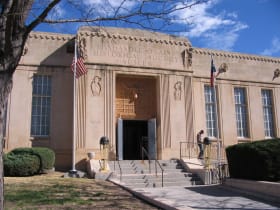
Panhandle-Plains Historical Museum
63 miles away
Recommended for ages 5+. Highlights: dinosaur fossil gallery, Pioneer Hall with general store and blacksmith shop you can walk through, Transportation Gallery with old cars and planes, and hands-on pr...
American Quarter Horse Hall of Fame & Museum
69 miles away
Recommended for ages 6 and up, especially horse-minded kids. Highlights: life-size bronze horses out front, a short film, and galleries on famous horses and the working ranch. Admission is charged.