

Palo Duro Canyon State Park
Canyon, TX
Canyon, TX
A vast red-rock canyon that opens without warning in the flat Panhandle plains, the second-largest in the country and the site of a decisive battle in Comanche history.
Palo Duro Canyon is one of the great surprises of Texas: a vast red-rock canyon that opens without warning in the flat, featureless plains of the Panhandle, plunging some thousand feet down into layered walls of red, orange, and white. Roughly 120 miles long, it is the second-largest canyon in the United States, and its scale and color have earned it the nickname the Grand Canyon of Texas.
The canyon was carved by the Prairie Dog Town Fork of the Red River cutting down through the soft rock of the Llano Estacado over millions of years. Long a refuge for people and wildlife on the exposed plains, it holds a somber place in history as the site of a decisive 1874 battle that broke the free life of the Southern Plains tribes, and today it is one of the most beloved parks in the state.
What Travelers Love
- The sudden reveal of a thousand-foot canyon in flat plains country
- Hiking or riding to the Lighthouse, the park's iconic rock spire
- Layered red-and-orange rock walls that glow at sunrise and sunset
- The outdoor musical drama staged in the canyon on summer nights
Worth Knowing
- Summers are very hot down in the canyon, so hike early and carry plenty of water
- Flash floods can fill the canyon floor quickly, so heed warnings and avoid low crossings in storms
- The Lighthouse Trail is exposed with little shade, so plan for sun and heat
- The park can fill on holidays and during the summer show, so arrive early or reserve ahead
Learn about Palo Duro Canyon State Park
The canyon's deep history
Palo Duro has sheltered people for many thousands of years, drawn by its water, shade, and game in a land otherwise short on all three. In the centuries before European contact and after, it was a stronghold of the Southern Plains peoples, above all the Comanche and Kiowa, who wintered in the canyon and knew every spring and side draw. The Apache had ranged the region before them. The canyon was a heartland, not a backdrop.
That way of life ended violently here. In 1874, during the Red River War, United States cavalry under Colonel Ranald Mackenzie descended into the canyon in a surprise attack, destroyed the Comanche, Kiowa, and Cheyenne camps and stores of food and shelter, and slaughtered the tribes' great herd of horses, more than a thousand animals, on the plains above. Deprived of horses and provisions on the edge of winter, the free bands soon surrendered to the reservations. The battle is remembered as a turning point that ended the era of the free Southern Plains tribes.
How the canyon was carved
The canyon was cut by water, specifically the Prairie Dog Town Fork of the Red River, working down through the layered rock of the Llano Estacado over roughly the last million years. The plains here are made of soft, easily eroded sediments, and once the river began to bite into them it carved fast and deep, opening the great gorge and its many side canyons.
The exposed walls read like a book of deep time, banded in colors that mark different ages of rock, from bright red-orange claystones to pale layers of gypsum and caliche. Hoodoos, pinnacles, and spires stand out where harder rock has resisted the erosion, the most famous being the Lighthouse, a slender rock column that has become the symbol of the park and the goal of its best-loved hike.
Trails, riding, and the summer drama
The park is threaded with trails for hikers, mountain bikers, and horseback riders, ranging from easy strolls along the canyon floor to longer routes climbing toward the rims and buttes. The signature hike is the Lighthouse Trail, which leads out across the canyon to the base of that iconic spire, an exposed and unforgettable walk best done in the cool of morning. Riding stables in the park let visitors explore the canyon on horseback, as people have for centuries.
On summer nights the canyon hosts an outdoor musical drama staged against the towering rock walls, a long-running Panhandle tradition that tells the story of Texas settlement with music, horses, and fireworks under the stars. Watching a performance with the red cliffs glowing in the last light and then darkening overhead is a Panhandle rite of passage.
Wildlife and the seasons
The canyon is an oasis of life in the dry plains. Wild turkey, mule deer, and roadrunners are common, along with the small, curved-horn Texas longhorn cattle kept as part of the state herd, and the endangered Texas horned lizard turns up in the sandy washes. Golden eagles and hawks ride the updrafts along the rims, and songbirds fill the cottonwoods along the river.
Spring and fall are the finest seasons, mild and clear, ideal for hiking the exposed trails. Summer is hot down in the canyon, where temperatures run higher than on the rim, so early starts and plenty of water are essential, and afternoon storms can send flash floods down the washes. Winter is cold and often quiet, with the low sun deepening the red of the rock and a chance of snow dusting the canyon into something strange and beautiful.
Closest Boutels
The closest Boutel™ stays, so you can turn this stop into an overnight. Each is a place we chose through independent editorial review, never a paid placement.
Details
Canyon, TX
Frequently asked questions
What is Palo Duro Canyon State Park?
Palo Duro Canyon State Park, in the Texas Panhandle near Amarillo, protects the second-largest canyon in the United States, a spectacular gorge of colorful, layered rock walls, hoodoos, and rugged formations carved by the Prairie Dog Town Fork of the Red River. Often called the Grand Canyon of Texas, its dramatic red-and-orange cliffs plunge hundreds of feet below the flat plains, revealing millions of years of geologic history. The park offers hiking, biking, horseback riding, camping, scenic drives, and an outdoor musical drama in summer. With its stunning colorful canyon, trails, and dramatic scenery, Palo Duro Canyon State Park offers an unforgettable destination in the Texas Panhandle.
What can you do at Palo Duro Canyon State Park?
You can drive the scenic road down into the colorful canyon, hike trails including the route to the famous Lighthouse rock formation, bike, ride horseback, camp, picnic, take in the dramatic overlooks, and in summer attend the popular outdoor musical drama performed in the canyon. The vivid rock scenery, the Lighthouse hike, and the overlooks are highlights. Wildlife and the geology add to the experience. With its scenic drive, canyon hiking, horseback riding, camping, and summer show, Palo Duro Canyon State Park offers a spectacular outdoor experience near Amarillo in the Texas Panhandle.
What safety tips apply at Palo Duro Canyon State Park?
The canyon can be extremely hot, especially in summer, with little shade on many trails, so carry plenty of water, avoid strenuous hiking in the heat of the day, wear sun protection, and know that the temperature at the canyon floor runs hotter than the rim. Watch your footing on rocky and steep trails, stay back from cliff edges, and be alert for flash floods in the river bed during storms, as well as snakes. Bring more water than you expect to need. Respecting the heat, terrain, and weather ensures a safe visit to Palo Duro Canyon State Park in the Texas Panhandle.
When is the best time to visit Palo Duro Canyon State Park?
Spring and fall are the most comfortable times to visit, with milder temperatures ideal for hiking and exploring the canyon, while summer brings intense heat that makes strenuous trails hazardous, though summer evenings draw crowds to the outdoor musical drama. Winter is cooler and quieter but can be pleasant for hiking. The colorful rock is beautiful year-round, and low light at morning and evening deepens the hues. For the best combination of comfortable weather and safe hiking, aim for spring or fall, avoiding summer midday heat, at Palo Duro Canyon State Park in the Texas Panhandle.
What is near Palo Duro Canyon State Park?
Palo Duro Canyon State Park is in the Texas Panhandle near Amarillo, within reach of the Cadillac Ranch, the Amarillo Botanical Gardens, the American Quarter Horse Hall of Fame, the Panhandle-Plains Historical Museum at Canyon, and Caprock Canyons State Park to the southeast. That makes Palo Duro Canyon a spectacular stop to combine with Cadillac Ranch, the Panhandle-Plains Historical Museum, and the other attractions of the Texas Panhandle on a visit to the state.
Outside the Park
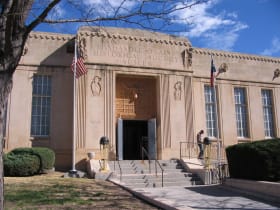
Panhandle-Plains Historical Museum
15 miles away
Recommended for ages 5+. Highlights: dinosaur fossil gallery, Pioneer Hall with general store and blacksmith shop you can walk through, Transportation Gallery with old cars and planes, and hands-on pr...
American Quarter Horse Hall of Fame & Museum
20 miles away
Recommended for ages 6 and up, especially horse-minded kids. Highlights: life-size bronze horses out front, a short film, and galleries on famous horses and the working ranch. Admission is charged.
Amarillo Botanical Gardens
23 miles away
Most visitors pass Amarillo on the interstate without knowing this is a block off the route.