Cahokia Mounds State Historic Site
30 Ramey St, Collinsville, IL
Collinsville, IL
The largest ancient city north of Mexico, a Mississippian metropolis of great earthen mounds on the Mississippi floodplain, ancestral to living Native nations.
Cahokia Mounds is the site of the largest and most sophisticated ancient city north of Mexico, a Mississippian metropolis that flourished on the Mississippi floodplain from roughly the year 1050. At its height it was a planned city of great earthen mounds, plazas, and thousands of homes, its population rivaling the largest cities in Europe at the time. This is not a ruin of a vanished people but the ancestral city of nations who are very much alive today.
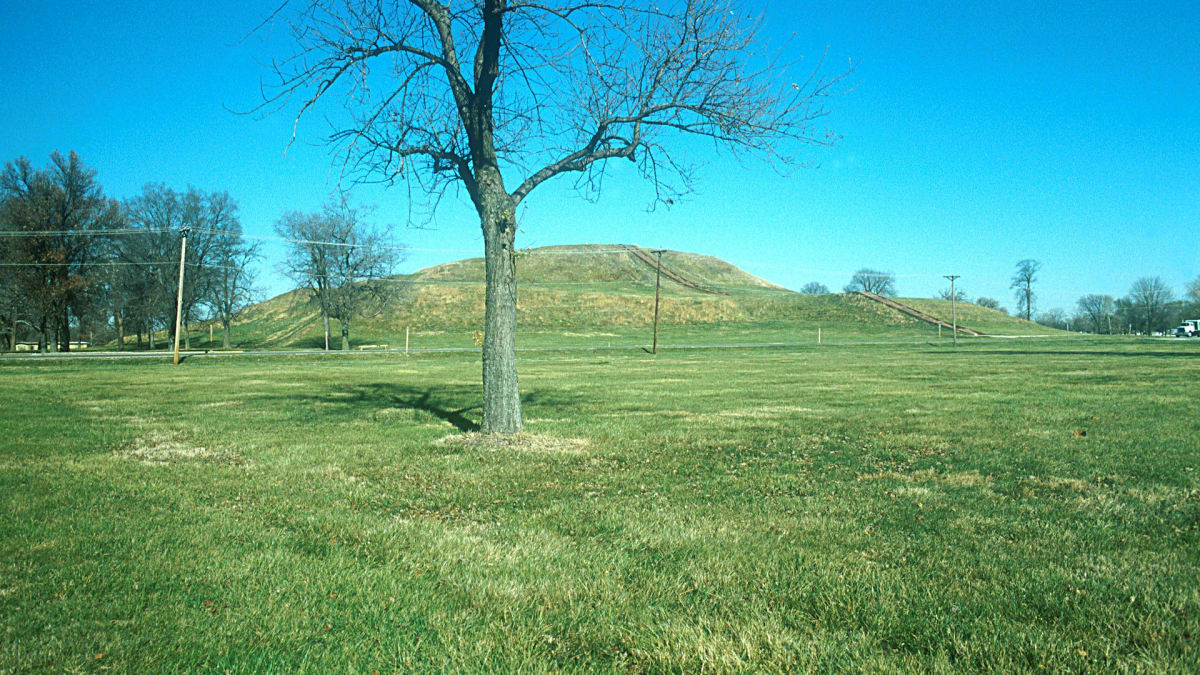
The heart of the site is Monks Mound, a colossal earthen platform that remains the largest such mound in the Americas, built basket-load by basket-load over generations. Around it once stood a great plaza, a wooden sun calendar known today as Woodhenge, and a wooden palisade enclosing the city center. Now a UNESCO World Heritage Site, Cahokia is one of the most important archaeological places in North America.
What Travelers Love
- Climbing Monks Mound, the largest earthen mound in the Americas, for a wide view
- Standing within the reconstructed Woodhenge, an ancient wooden sun calendar
- The interpretive center's immersive recreation of the ancient city's life
- Grasping the sheer scale of a city that once rivaled the great cities of its era
Worth Knowing
- This is a sacred ancestral place to living Native nations; treat the mounds with respect
- Climbing Monks Mound means a long stair to the summit, so pace yourself
- The site is large and open, so bring water, sun protection, and comfortable shoes
- Start at the interpretive center to understand what you are seeing before you walk
Learn about Cahokia Mounds State Historic Site
A great Mississippian city
Beginning around the year 1050, the people archaeologists call the Mississippians built at Cahokia a true city, laid out with purpose around great mounds and open plazas. It was a center of trade, religion, and power whose influence reached far across the continent, and at its peak it may have held tens of thousands of people, making it larger than many contemporary European cities.
The city was a marvel of organization. Its builders raised more than a hundred mounds of different shapes and purposes, aligned structures to the movements of the sun, and drew in goods and people from across a vast region. Cahokia stands as proof, written in earth, of the scale and complexity of Native civilization in the ancient Midwest.
A place ancestral to living nations
Cahokia is not the work of a mysterious lost people. It is ancestral to living Native nations, connected to the many peoples of the Mississippian world and to the tribes of this region, including the peoples of the Illinois Confederacy, whose descendants today are enrolled in the Peoria Tribe of Indians of Oklahoma, and others whose histories reach back into this land. The mounds are a sacred inheritance, and the descendants of the mound builders continue their cultures today.
The name Cahokia comes from a later tribe who lived in the area when the French arrived, not from the city's original builders, whose own name for their city is not known. The site should be approached with the respect due to a holy and living heritage, a place of ancestors, not a curiosity of the distant past.
Monks Mound and Woodhenge
Monks Mound is the great centerpiece, an enormous earthen platform covering many acres at its base and rising in broad terraces to a flat summit that once held a large building at the city's political and spiritual heart. It was built entirely by hand, one carried basket of earth at a time, over many generations, and it remains the largest prehistoric earthwork in the Americas. A stair climbs to the top, where the view takes in the whole floodplain and, on a clear day, the modern skyline of St. Louis beyond.
Nearby stands the reconstructed Woodhenge, a great circle of tall wooden posts that the Cahokians used to mark the movements of the sun through the year, aligning to the sunrise at the solstices and equinoxes. Standing within it makes plain how deeply the builders understood the sky, and how carefully they wove astronomy into the life of their city.
Walking the ancient city
The interpretive center is the place to begin, with exhibits and a full-scale recreation of a Mississippian village that bring the ancient city to life before you set out to walk it. From there, trails and roads lead among the surviving mounds, across the open ground where the grand plaza once lay, and up the slopes of Monks Mound.
The site is broad and largely open to the sky, so it rewards time and good preparation, water, sun protection, and sturdy shoes. Walking the grounds, mound to mound and plaza to plaza, is the way to feel the true scale of what the Cahokians built, a whole city shaped from the earth of the river bottom.
Closest Boutels
The closest Boutel™ stays, so you can turn this stop into an overnight. Each is a place we chose through independent editorial review, never a paid placement.
Details
Collinsville, IL
Frequently asked questions
What is the Cahokia Mounds State Historic Site?
The Cahokia Mounds State Historic Site, near Collinsville in southwestern Illinois across the river from St. Louis, preserves the remains of the largest ancient Native American city north of Mexico, a monumental site of profound significance and a designated World Heritage Site. Centuries ago, a great city of the Mississippian culture flourished here, home to a large population who built enormous earthen mounds, plazas, and structures, including Monks Mound, one of the largest earthen mounds in the world. The site preserves these remarkable mounds along with an interpretive center, telling the story of this sophisticated ancient civilization. It is a place of great importance and reverence. A monumental and sacred ancient site, it awes and moves visitors. With its ancient mounds, the site offers a compelling destination in Illinois.
Who built Cahokia and why is it significant?
Cahokia was built by Native peoples of the Mississippian culture centuries ago, who created the largest ancient city north of Mexico, a sophisticated society with a large population who raised enormous earthen mounds, plazas, and structures. It is significant as one of the greatest achievements of ancient North America, a World Heritage Site whose scale, organization, and engineering, including the immense Monks Mound, testify to the advanced culture that built it, and it remains significant to Native peoples today. Understanding this heritage deepens a visit to the Cahokia Mounds State Historic Site in Illinois.
What can you see at the Cahokia Mounds State Historic Site?
You can see the remarkable ancient earthen mounds, including the immense Monks Mound which you can climb by stairs for views, walk the grounds among the mounds and plazas, and visit an interpretive center with exhibits and artifacts telling the story of the great Mississippian city. The ancient mounds, Monks Mound, the interpretive center, and the artifacts are the draws, offering a fascinating and respectful look at this ancient civilization. The great mounds and their story are highlights. Approaching the site with respect for its significance enriches a visit to Cahokia Mounds in Illinois.
How should visitors treat the Cahokia Mounds State Historic Site?
Because Cahokia Mounds is an ancient, sacred site of profound significance to Native peoples and a World Heritage Site, visitors should treat it with respect and reverence, staying on designated paths and stairs, not climbing on or disturbing the mounds except where permitted, such as the Monks Mound stairs, and appreciating them as the significant and sacred works they are. Honoring the achievement of the peoples who built the city, and their descendants, respects the site. Approaching Cahokia with respect ensures a meaningful visit in Illinois.
What is near the Cahokia Mounds State Historic Site?
The Cahokia Mounds State Historic Site is near Collinsville in southwestern Illinois, across the river from St. Louis, within reach of the World's Largest Catsup Bottle in Collinsville, the Alton area with the Piasa Bird and Robert Wadlow statue, and the other attractions of southwestern Illinois. That makes Cahokia Mounds a compelling stop to combine with the other attractions of southwestern Illinois on a visit to the state.
Nearby
World's Largest Catsup Bottle
4.0 miles away
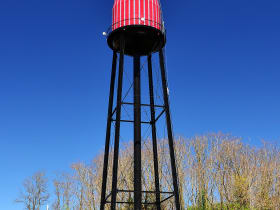
It looks exactly like a catsup bottle, because that is the whole point.

Tram to the Top
6.9 miles away
The Tram to the Top carries visitors up inside the Gateway Arch in small capsule cars to an observation deck 630 feet above St. Louis.

The Gateway Arch
6.9 miles away
The Gateway Arch is a 630-foot stainless steel arch on the St. Louis riverfront, the tallest man-made monument in the United States and a symbol of the nation westward expansion.

Gateway Arch National Park
7.0 miles away
The 630-foot stainless-steel arch on the St. Louis riverfront, monument to the nation's westward expansion.

Museum at the Gateway Arch
7.0 miles away
The Museum at the Gateway Arch lies beneath the arch, telling the story of St.
The Old Courthouse
7.1 miles away
The Old Courthouse is a historic domed courthouse a few blocks from the Gateway Arch, where the Dred Scott case, a pivotal fight over slavery and freedom, was first tried in the 1840s and 1850s.

City Museum
7.7 miles away
Nothing prepares you for this place, and that is the joy of it.
Old Chain of Rocks Bridge
9.4 miles away
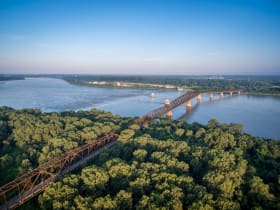
A historic steel bridge over the Mississippi just north of St. Louis, built in the 1920s and once carrying Route 66 across the great river, famous for the sharp bend in the middle of its span.

Missouri Botanical Garden
11 miles away
Founded in 1859, this is one of the oldest and finest botanical gardens in the country, and it rewards a slow visit.

Ulysses S. Grant National Historic Site
17 miles away
This quiet green house on the edge of the metro carries a heavier story than most visitors expect.

Robert Wadlow Statue
18 miles away
Nothing prepares you for standing next to it. The Robert Wadlow statue in Alton is a life-size bronze of the tallest human being ever recorded, a hometown boy who reached 8 feet 11 inches and was stil...
Piasa Bird Mural
19 miles away
Drive the Great River Road north out of Alton and a monster is watching you from the bluff.