
Caesar Creek State Park
8570 OH-73, Waynesville, OH
Waynesville, OH
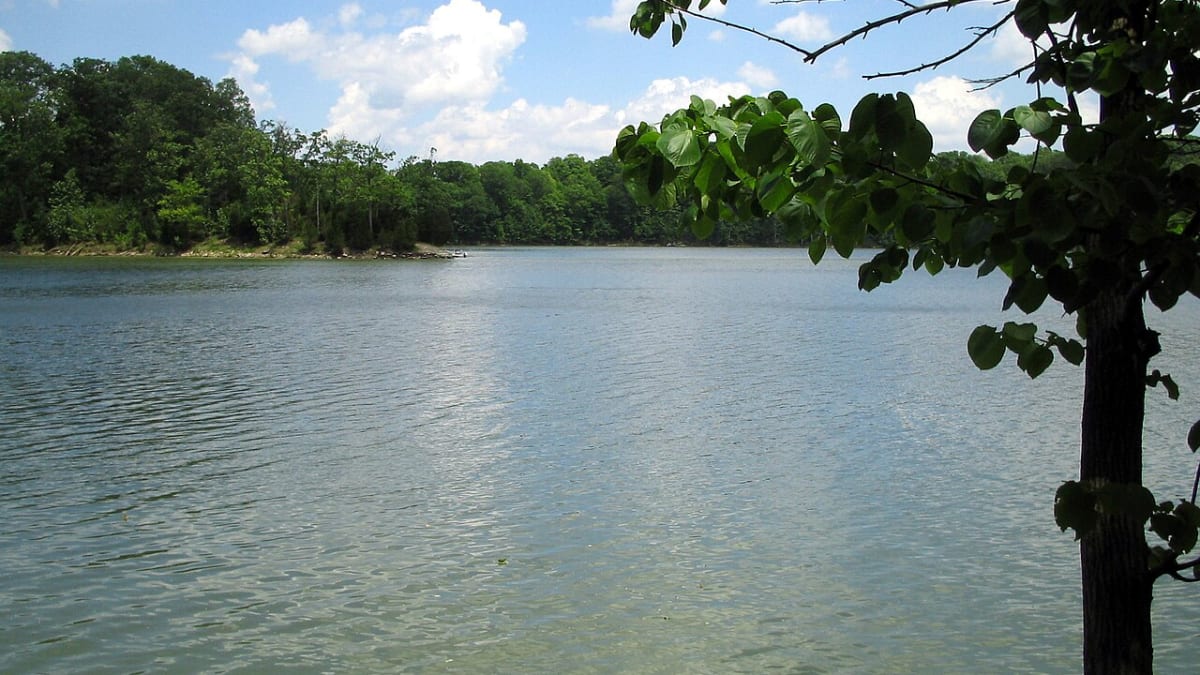
A clear blue reservoir ringed by trails and a swimming beach, with an exposed spillway where anyone can pick fossils out of ancient sea-floor rock.
Caesar Creek is a clear, deep reservoir in southwestern Ohio, ringed by wooded trails and edged with a broad swimming beach, but its real fame lies in the rock below the dam. The spillway there slices through layers of stone laid down on an ancient sea floor, and it is one of the most productive and accessible fossil-collecting sites in the country, where visitors with a simple permit can pick up brachiopods, trilobites, and corals hundreds of millions of years old.
The reservoir was created in the 1970s when the Army Corps of Engineers dammed Caesar Creek for flood control, and the excavation that formed it and its emergency spillway laid bare the fossil-rich Ordovician bedrock. The result is a park that works as both an outdoor playground and an open-air geology lesson, with a pioneer village added for a taste of early Ohio history.
What Travelers Love
- Hunting for real marine fossils in the exposed rock below the dam spillway
- A large sandy swimming beach on a clear reservoir
- Miles of trails for hiking, mountain biking, and horseback riding around the lake
- The restored pioneer village that preserves early Ohio log cabins and buildings
Worth Knowing
- Collecting fossils at the spillway requires a permit from the visitor center, and rules limit what you can take
- The reservoir was built for flood control, so water levels change with the season and after storms
- Wear sturdy shoes for the spillway; the rock is uneven, loose, and can be slick
- Trails are shared by hikers, cyclists, and riders in places, so watch for horses and bikes
Learn about Caesar Creek State Park
A sea floor turned to stone
The fossils here date to the Ordovician period, roughly 450 million years ago, when the land that is now Ohio lay beneath a warm, shallow tropical sea south of the equator. The sea teemed with life, and as those creatures died their shells and skeletons settled into the mud of the sea floor, which slowly hardened into the limestone and shale you can crack open at the spillway today.
The most common finds are brachiopods, small clam-like shellfish, along with the fanned columns of crinoids, colonial corals, snails, and, prized above all, trilobites, the segmented armored creatures that crawled the ancient sea bottom. Because the layers were exposed by the dam's construction and continue to weather out, the spillway keeps yielding fresh fossils, and a permit and a few rules keep the collecting sustainable.
Building the reservoir
Caesar Creek State Park exists because of flood control. After destructive floods, the Army Corps of Engineers dammed the creek in the 1970s to hold back high water and protect the towns downstream along the Little Miami River. The dam created the reservoir, and the state built the surrounding park for recreation.
The name reaches back to local legend. Caesar Creek is said to be named for an enslaved man called Caesar who, according to tradition, was captured by the Shawnee, adopted into the tribe, and given the creek valley as his hunting ground. The story is part of the folklore of a valley that was Shawnee and Miami homeland before American settlement pushed those nations westward, and their descendant nations continue today, largely in Oklahoma.
The pioneer village and Quaker country
Within the park stands Caesar Creek Pioneer Village, a cluster of early Ohio log cabins, barns, and a covered bridge gathered and preserved to show how the first settlers lived. Several of the structures were moved here to save them, and volunteers keep the heritage crafts and traditions of the frontier era alive on the site.
The surrounding countryside was heavily settled by Quakers, who founded the nearby village of Waynesville and other communities and who opposed slavery, making this stretch of Ohio a corridor of the Underground Railroad. Waynesville today is famous for its antique shops and its autumn sauerkraut festival, a taste of the region's old agricultural and craft roots.
The lake, trails, and seasons
The reservoir is the summer heart of the park, with a large sandy beach, boating, and fishing for bass, crappie, and other species in the clear water. Trails circle the lake and thread the surrounding woods and prairie plantings, open to hikers, mountain bikers, and horseback riders, and the wetlands and fields draw deer, waterfowl, herons, and songbirds.
Spring and fall are prime for fossil hunting and hiking, with mild air and, in fall, color across the hardwood hills. Summer fills the beach and boat ramps, and winter empties the park to a quiet, stark beauty, though the exposed spillway can be cold and slick and water levels run low. Because the lake is drawn down for flood control, its edges shift through the seasons.
Closest Boutels
The closest Boutel™ stays, so you can turn this stop into an overnight. Each is a place we chose through independent editorial review, never a paid placement.
Details
Waynesville, OH
Frequently asked questions
What is Caesar Creek State Park?
Caesar Creek State Park, in southwestern Ohio near Waynesville, is a popular park surrounding a large, clear reservoir, offering water recreation, trails, and famous fossil hunting. The park centers on scenic Caesar Creek Lake, with a swimming beach, boating, fishing, miles of hiking, biking, and horseback trails, camping, and a nature center, while the exposed rock around the lake is renowned for its abundant fossils, which visitors can hunt for with a permit. Its clear lake, trails, and fossils make it a beloved destination. A popular and versatile lake park, it delights visitors. With its lake and fossils, Caesar Creek State Park offers a rewarding destination in Ohio.
Can you hunt for fossils at Caesar Creek State Park?
Yes, Caesar Creek is famous for fossil hunting, as the exposed rock around the lake, especially in the spillway area, is rich in ancient marine fossils from a time when the region was covered by a shallow sea, and visitors can collect certain fossils with a free permit obtained from the visitor center. Because collecting is allowed only in designated areas and under the rules of the permit, checking the current fossil-collecting rules and getting the permit before you go are important. Following the rules and getting a permit ensure a fun, lawful fossil hunt at Caesar Creek State Park in Ohio.
What can you do at Caesar Creek State Park?
You can swim at the beach, boat and fish on the lake, hike, bike, and ride horseback on the trails, camp, visit the nature center, and hunt for fossils in the designated areas with a permit. The lake recreation, the trails, the camping, and the famous fossil hunting are the draws, making it a versatile and fun destination. The clear lake and the fossil hunting are highlights. With its recreation and fossils, Caesar Creek State Park offers a rewarding experience in Ohio.
When is the best time to visit Caesar Creek State Park?
The warm months of late spring through early fall are the prime time for swimming, boating, and lake recreation, when the weather is warm and the water inviting, while spring and fall are lovely for hiking, biking, and fossil hunting in milder temperatures. Because the swimming season and some features are seasonal, checking current information before you go is wise. For water recreation aim for the warm months, or for trails and fossils enjoy spring and fall, at Caesar Creek State Park in Ohio.
What is near Caesar Creek State Park?
Caesar Creek State Park is in southwestern Ohio near Waynesville, within reach of Kings Island to the west, the routes toward Cincinnati and Dayton, and the other attractions of southwestern Ohio. That makes Caesar Creek State Park a rewarding stop to combine with Kings Island and the other attractions of southwestern Ohio on a visit to the state.
Outside the Park

Kings Island
15 miles away
Kings Island splits neatly for families: big kids and teens chase the coasters while younger ones have one of the largest kiddie-ride areas in the country.
Pyramid Hill Sculpture Park and Museum
29 miles away
This one rewards travelers who like their art with a hike. Pyramid Hill spreads more than 70 giant sculptures across 470 acres of rolling Butler County hills and forest, so you experience the work the...

Westcott House
33 miles away
Ohio has exactly one Frank Lloyd Wright Prairie house, and hardly anyone outside Springfield knows it is here.