
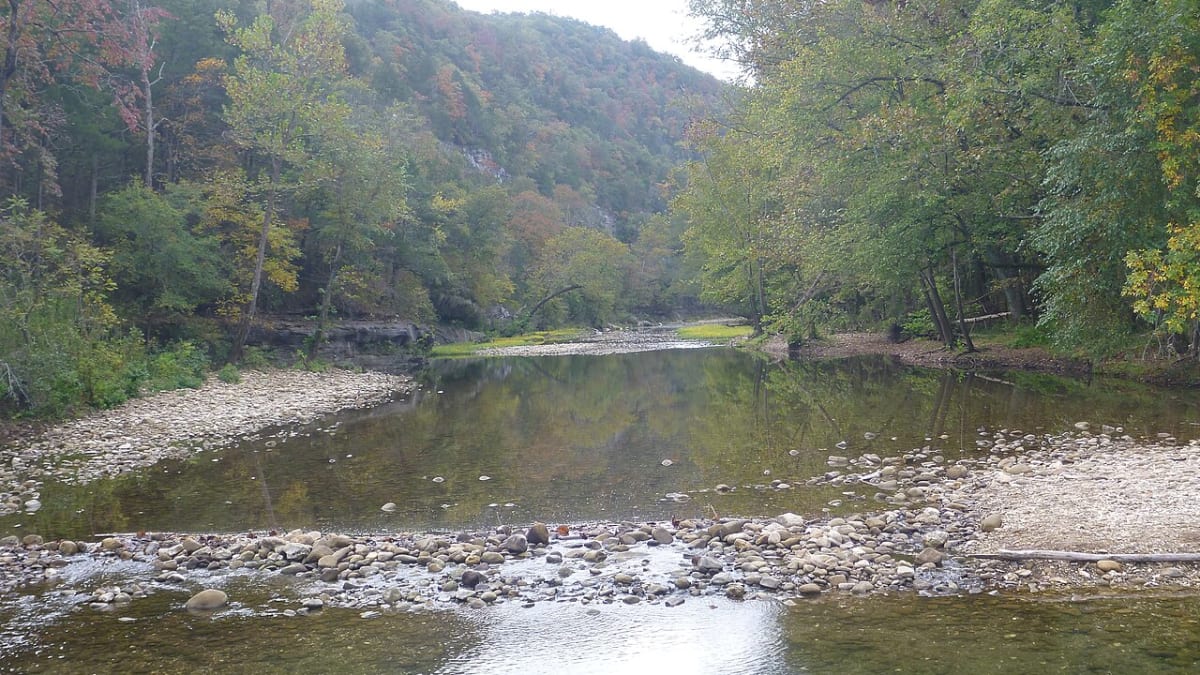
Buffalo National River at Ponca
200 NC 8000, Jasper, AR
Ponca, AR
The wild upper reaches of the first national river in the country, where towering bluffs rise over clear water and elk graze in the misty valley meadows.
The Buffalo River was the first stream in the country to be named a national river, protected in 1972 so that it would run free and undammed through the Arkansas Ozarks. Its upper reaches around Ponca are the wildest and most dramatic, where the clear green water curls beneath limestone bluffs that rise hundreds of feet straight up from the bank.
This is a landscape of high adventure and deep quiet. In spring the upper river runs high enough to float through its most spectacular canyon, past bluffs like the great Big Bluff. In the meadows of the nearby Boxley Valley, a wild elk herd grazes in the mist, and the surrounding wilderness holds waterfalls, caves, and some of the finest hiking in the mid-South.
What Travelers Love
- Towering limestone bluffs rising straight from the clear river
- Wild elk grazing in the meadows of the Boxley Valley at dawn and dusk
- Spring floating through the wild, undammed upper canyon
- Hiking to the tall waterfalls and overlooks in the surrounding wilderness
Worth Knowing
- The upper river is best floated in spring when the water is high, and can run too low by summer
- Give the wild elk plenty of room and never approach or feed them
- Trails to falls and bluffs can be steep, rugged, and slippery, so wear proper footwear
- Cell service is spotty in the canyon, so plan your route and access points in advance
Learn about Buffalo National River at Ponca
The first national river
By the mid-twentieth century, dams had been proposed that would have flooded the Buffalo's canyons. A long grassroots campaign to save the free-flowing river succeeded when Congress made it the first national river in 1972, placing it under the National Park Service and preserving more than a hundred miles of undammed water through the Ozarks.
That protection kept the upper Buffalo wild in a way few rivers in the eastern half of the country remain. There are no dams, no reservoirs, and no development along most of its length, so the river still rises and falls with the rains and runs clear and green between its bluffs, much as it has for ages.
Bluffs, water, and the deep canyon
The upper river around Ponca cuts the deepest and most dramatic canyon on the Buffalo. Sheer limestone bluffs, layered rock laid down when this land lay beneath ancient seas, rise in great walls above the water, and the river winds beneath them past gravel bars, deep pools, and swift riffles.
The most famous of these is Big Bluff, one of the tallest bluff faces between the Appalachians and the Rockies, with a narrow ledge trail called the Goat Trail traversing its face high above the river. Floating the canyon in spring, with the walls towering overhead, is one of the classic experiences of the Ozarks.
Elk in the Boxley Valley
Elk once ranged across Arkansas but were gone by the 1800s. In the 1980s they were reintroduced along the upper Buffalo, and today a wild herd grazes the open meadows of the Boxley Valley just upstream from Ponca. At dawn and dusk, especially in the fall, elk gather in the valley fields, and in autumn the bulls' bugling carries across the misty bottoms.
Watching the elk from a safe distance along the valley road has become one of the region's great wildlife draws. The animals are wild and can be dangerous, so viewers keep their distance and stay near their vehicles, but the sight of a herd in the morning fog beneath the Ozark ridges is unforgettable.
Hiking, seasons, and the wilderness around Ponca
The country around Ponca is threaded with trails leading to waterfalls, caves, and bluff-top overlooks, much of it within designated wilderness. Hikes lead to the towering Hemmed-in Hollow, home to one of the tallest waterfalls between the Rockies and the Appalachians, and to countless smaller falls that run best in the wet months.
Spring is the prime season, with high water for floating and the falls at full roar amid blooming dogwood and redbud. Summer brings warm swimming holes but lower water on the upper river. Fall paints the hardwood ridges and brings the elk rut, while winter strips the woods bare and reveals the bluffs and the ice-hung falls in the quiet cold.
Closest Boutels
The closest Boutel™ stays, so you can turn this stop into an overnight. Each is a place we chose through independent editorial review, never a paid placement.
Details
Ponca, AR
Frequently asked questions
What is the Buffalo National River at Ponca?
The Buffalo National River at Ponca, in the Ozark Mountains of northern Arkansas, is a spectacular stretch of America's first national river, famous for its towering bluffs, crystal-clear water, and outstanding paddling amid stunning scenery. The Buffalo River flows free and undammed through the Ozarks, and the section around Ponca is renowned for its dramatic multicolored bluffs rising above the clear river, popular for canoeing and kayaking, along with hiking trails, waterfalls, an elk herd in the nearby valley, and pristine wilderness. A crown jewel of Arkansas's natural beauty, it delights paddlers, hikers, and nature lovers. With its river, bluffs, and scenery, the Buffalo National River at Ponca offers a spectacular destination in Arkansas.
What can you do at the Buffalo National River at Ponca?
You can canoe or kayak the clear river beneath the towering bluffs, hike the trails to waterfalls, overlooks, and scenery, watch for the elk herd in the nearby valley, camp, fish, and take in the pristine Ozark wilderness. The paddling beneath the dramatic bluffs, the hiking and waterfalls, the elk viewing, and the beautiful clear river are the draws, making it a premier natural destination. Floating the river past the bluffs is a signature experience. With its river and scenery, the Buffalo National River at Ponca offers a rewarding experience in Arkansas.
What should I know before paddling the Buffalo National River at Ponca?
The Ponca section can range from gentle to more challenging depending on water levels, which vary greatly with the season and rainfall, so checking current river conditions and levels before you go is essential, as the upper river is best paddled in spring and after rains and can be too low in summer. Wearing a life jacket, going with appropriate skill or a guide or outfitter, watching for hazards, and being prepared are important for safety. Local outfitters offer rentals and shuttles. Checking conditions and coming prepared ensure a safe paddle on the Buffalo National River at Ponca in Arkansas.
When is the best time to visit the Buffalo National River at Ponca?
Spring is prime for paddling the upper river near Ponca, when snowmelt and rains provide good water levels and wildflowers bloom, while fall is spectacular for the foliage and elk viewing, and both offer beautiful scenery, though the upper river can be too low for paddling in summer. Elk are often best seen at dawn and dusk in the cooler seasons. For paddling near Ponca aim for spring, or visit in fall for foliage and elk, at the Buffalo National River in Arkansas.
What is near the Buffalo National River at Ponca?
The Buffalo National River at Ponca is in the Ozark Mountains of northern Arkansas, within reach of the Ozark wilderness, the Boxley Valley elk herd, the northern Arkansas mountain region, and the routes toward Eureka Springs and the Ozark towns. That makes the Buffalo National River at Ponca a spectacular natural stop to combine with the other attractions of the northern Arkansas Ozarks on a visit to the state.
Nearby

Turpentine Creek Wildlife Refuge
30 miles away
This is a sanctuary, not a zoo, and the difference is the whole point.

Christ of the Ozarks
33 miles away
You can spot it from miles off, a giant white figure floating above the Ozark treeline.
Basin Spring Park
34 miles away
Basin Spring Park is the place to stand where Eureka Springs began.