
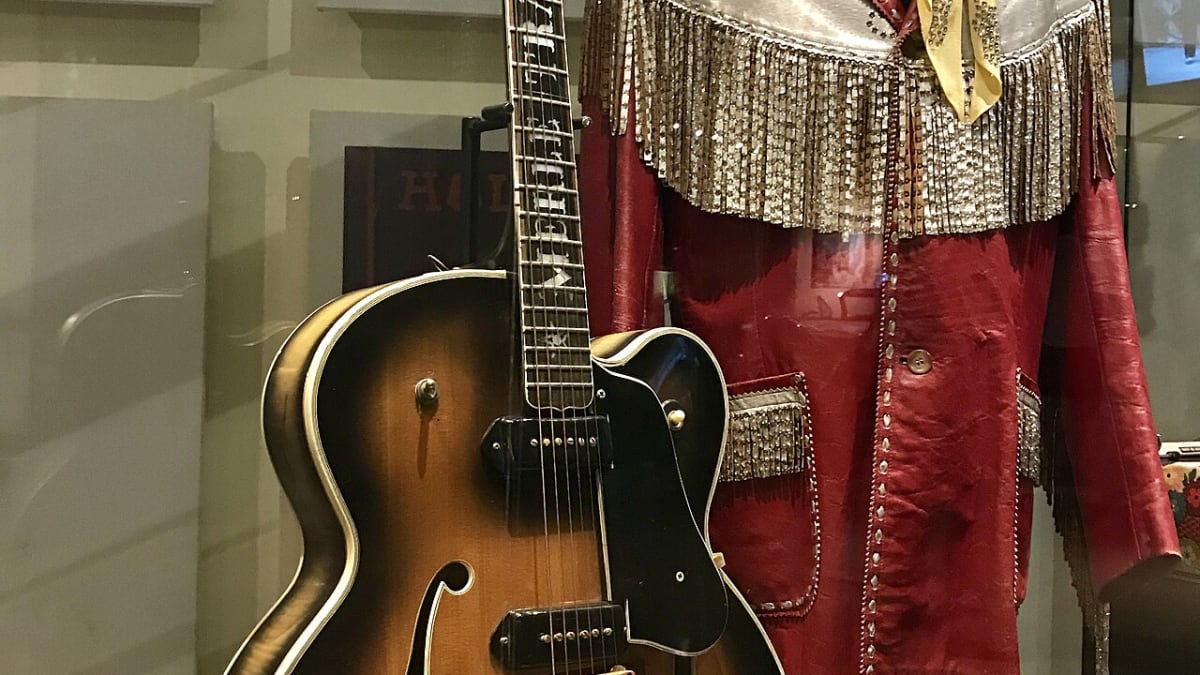
Birthplace of Country Music Museum
101 Country Music Wy, Bristol, VA
Bristol, VA
The museum that tells how a few days of recording in 1927 turned a twin-state railroad town into the cradle of country music.
The Birthplace of Country Music Museum in Bristol tells the story of a handful of summer days in 1927 that changed American music forever. Over about two weeks that July and August, a talent scout named Ralph Peer set up recording equipment in a Bristol storefront and captured the voices of local mountain musicians, sessions that first brought the Carter Family and Jimmie Rodgers to the world. Those recordings are widely called the Big Bang of country music.
Part of the Smithsonian's affiliate network, the museum uses films, listening stations, and interactive exhibits to place you inside that pivotal moment and trace the music that flowed out of it. It stands in the heart of Bristol, a town famously split down the middle by the Tennessee-Virginia state line, in a region that has been making old-time and bluegrass music for generations.
What Travelers Love
- Standing in the town where the very first country recordings were made
- Interactive exhibits that let you mix tracks and hear the old sessions come alive
- The story of the Carter Family and Jimmie Rodgers, discovered here in 1927
- A theater and radio studio that keep live mountain music playing today
Worth Knowing
- The museum is on the Virginia side of the line, but Bristol is truly one town in two states
- It is an easy stop on any trip through the Tri-Cities or along the Blue Ridge
- Music lovers should check whether a live performance or broadcast is scheduled during their visit
- Bristol's downtown State Street, split by the state line, is worth a walk after your visit
Learn about Birthplace of Country Music Museum
The 1927 Bristol Sessions
In the summer of 1927 the Victor Talking Machine Company sent Ralph Peer to Bristol to find and record regional musicians for the growing market in what was then called hillbilly music. He placed newspaper ads, set up temporary recording gear in a building on State Street, and over about two weeks captured dozens of songs from performers who came in from the surrounding mountains and valleys. The technology was new, the electrical microphone barely a few years old, and the results carried a clarity earlier recordings had lacked.
Among those who recorded were the Carter Family from just over the Virginia line and a young railroad worker named Jimmie Rodgers, and both went on to become foundational figures in country music. Because those sessions gathered so much of the music's future in one place at one time, historians came to call them the Big Bang of country music, and the phrase gives the museum its purpose.
Inside the museum
The museum blends artifacts, archival photographs, and film with hands-on stations that let visitors dig into the music itself. You can listen to the original Bristol recordings, watch documentaries on the region's musical roots, and experiment with mixing and instrumentation to understand how the songs were built. A central theater runs a film that sets the 1927 sessions in the wider story of American roots music.
As a Smithsonian affiliate, the museum reaches beyond the sessions themselves to the deep well of old-time, gospel, blues, and bluegrass that fed them, and to the country, bluegrass, and Americana that grew from them in the century since. The effect is to connect a single Bristol storefront to a whole national tradition.
A living tradition
The museum is not only about the past. It houses a performance theater and a working radio station that broadcasts and hosts live music, keeping the region's playing tradition audible rather than sealed behind glass. Special performances, listening events, and an annual music festival draw players and fans back to Bristol to keep the sound alive.
This corner of northeast Tennessee and southwest Virginia remains genuine mountain music country, where old-time and bluegrass are still played on porches and in halls. Visiting the museum is a way to understand a tradition that never really stopped.
A town in two states
Bristol is one of the most unusual towns in the country, a single community divided down the middle by the Tennessee-Virginia state line, which runs right along the center of State Street. A large sign arching over the street proclaims Bristol a good place to live, and pedestrians can literally stand with one foot in each state. The museum sits on the Virginia side, a short walk from the line.
That split personality has long been part of Bristol's identity, from the railroad era through the recording sessions to today. A stroll down State Street, with shops and eateries on both sides and two states under your feet, is the natural companion to a museum visit.
Closest Boutels
The closest Boutel™ stays, so you can turn this stop into an overnight. Each is a place we chose through independent editorial review, never a paid placement.
Details
Bristol, VA
Frequently asked questions
What is the Birthplace of Country Music Museum?
The Birthplace of Country Music Museum, in Bristol on the Tennessee-Virginia border, celebrates the historic Bristol recording sessions, often called the big bang of country music, that helped launch the genre. In these landmark early recording sessions, held in Bristol, pioneering artists including the Carter Family and Jimmie Rodgers were recorded, a pivotal moment credited with giving birth to commercial country music, and the museum tells this story through engaging exhibits, recordings, films, and interactive displays. Its rich history and Bristol's claim as the birthplace of country music make it a fascinating destination. A compelling and historic music museum, it delights visitors. With its heritage, the museum offers a compelling destination in Tennessee.
Why is Bristol called the birthplace of country music?
Bristol is called the birthplace of country music because of the historic Bristol recording sessions, landmark early recordings in which pioneering artists like the Carter Family and Jimmie Rodgers were captured, a moment often called the big bang of country music for its role in launching the genre commercially. These sessions helped bring the music of the region to a wide audience and shaped the future of country music. The museum honors this pivotal heritage. Understanding this history enriches a visit to the Birthplace of Country Music Museum in Tennessee.
What can you see at the Birthplace of Country Music Museum?
You can explore engaging exhibits on the historic Bristol recording sessions and the birth of country music, hear recordings, watch films, see artifacts, and enjoy interactive displays celebrating the music and its pioneers. The story of the Bristol sessions, the recordings and films, the artifacts, and the interactive exhibits are the draws, offering a rich experience for music lovers. The tale of country music's birth is the highlight. With its exhibits, the museum offers a rewarding visit in Bristol, Tennessee.
When is the best time to visit the Birthplace of Country Music Museum?
As an indoor museum, the Birthplace of Country Music Museum is enjoyable year-round in any weather, making it a great stop in any season, with special events and Bristol's music festivals adding appeal at times. Because hours can vary, checking the current schedule before you go is wise. Because it is indoors, the museum makes a rewarding stop any time of year in Bristol, Tennessee.
What is near the Birthplace of Country Music Museum?
The Birthplace of Country Music Museum is in Bristol on the Tennessee-Virginia border, within reach of Bristol Motor Speedway, the historic Bristol area, Roan Mountain to the south, and the routes across northeastern Tennessee. That makes the museum a compelling stop to combine with Bristol Motor Speedway and the other attractions of northeastern Tennessee on a visit to the state.
Nearby

Bristol Motor Speedway
6.9 miles away
Even people who do not follow racing come away stunned by the scale of this place.

Barter Theatre
14 miles away
This is a genuine piece of American theater history hiding in a small mountain town.
Roan Mountain State Park
30 miles away
Roan Mountain is one of the wonders of the southern Appalachians, and the state park is its gateway.

Blue Ridge Parkway
40 miles away
America's Favorite Drive, a 469-mile mountain parkway with no trucks or billboards, running the crest of the southern Appalachians from Shenandoah to the Great Smokies.