
Big Brutus
6509 NW 60th St, West Mineral, KS
West Mineral, KS
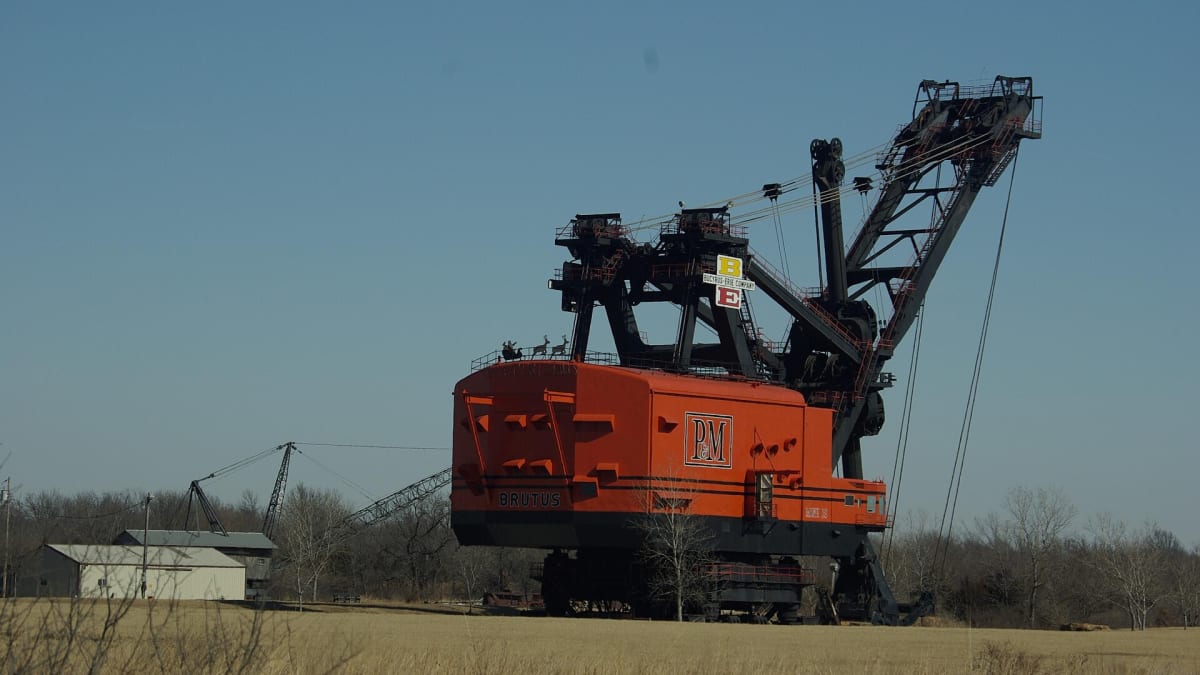
A coal shovel taller than a sixteen-story building stands alone above the southeast Kansas prairie, a machine so huge it became a monument to the miners who worked here.
Big Brutus is one of the largest electric coal-mining shovels ever built, a bright orange and black machine that stands about sixteen stories tall and weighs roughly eleven million pounds. It worked the strip mines of southeast Kansas from the early 1960s until the mid-1970s, scooping away the earth over shallow coal seams, its great bucket able to bite up a load the size of a small house.
When mining ended the shovel was left in place, far too big and costly to move, and the community turned it into a museum instead. Today it towers alone above the reclaimed prairie near West Mineral, a monument both to the machine itself and to the generations of miners, many of them immigrants, who worked the coal country of southeast Kansas.
What Travelers Love
- Standing at the base of a machine sixteen stories tall and craning up at the boom
- Climbing the stairs up into the cab for a wide view over the old mining country
- The museum that tells the story of the men who dug this coal by hand and by machine
- The sheer, unexpected scale of it, alone on the flat southeast Kansas prairie
Worth Knowing
- There are a lot of stairs if you want to climb up into the machine, and no elevator
- The site is open to the sky and the metal gets hot in summer, so bring water and sun protection
- It sits in a remote corner of the state, so plan your fuel and route
- Photography is best in the low light of morning or evening when the shadows show the scale
Learn about Big Brutus
Coal, miners, and the little Balkans
Southeast Kansas sat over shallow coal seams, and from the late 1800s the region drew waves of immigrant miners from across Europe, so many nationalities that the district earned the nickname the little Balkans. They dug the early mines by hand and by pick in dangerous underground works, and the towns that grew up around the mines carried a mix of languages, foods, and union traditions.
By the mid-1900s, deep mining gave way to strip mining, where enormous machines like Big Brutus stripped off the overburden to reach the coal beneath. The shovel could do the work of hundreds of men, and its arrival marked the last chapter of an industry that had shaped the region for generations. When the accessible coal ran out, the mining stopped, and the towns turned to remembering their history.
The machine itself
Big Brutus is an electric shovel, powered not by its own engine but by electricity fed through heavy cables, drawing the power of a small town when it worked. Its bucket could scoop up many cubic yards of earth in a single bite and swing it aside, exposing the coal seam below for smaller machines to load.
Building something this size on site took months of assembly, and moving it was never really an option, which is exactly why it survived. Where most such machines were cut up for scrap when their working days ended, Big Brutus stayed put and became a rare, complete example of the giant shovels that reshaped America's coal country.
The land the mining left
Strip mining tore up the surface of southeast Kansas, but much of that broken ground has since been reclaimed and healed into something new. The old pits filled with water to become lakes and ponds, and woods grew up over the spoil ridges, so the country around Big Brutus is now a mix of prairie, timber, and water.
That reclaimed land, protected in places as public wildlife area, has become surprisingly rich habitat for fish, birds, and deer. The mining scars have turned, over decades, into a mosaic of quiet water and young forest, a reminder that even heavily worked land can recover.
Visiting and the view from the cab
The heart of a visit is walking up to the base and feeling how small you are beside it, then climbing the stairs up into the operator's cab and the machinery deck. From up in the boom you get a wide view across the flat, green country that this and machines like it once stripped bare.
The museum on the grounds fills in the human story with tools, photographs, and displays on the mining life, and the site is a popular stop on drives through the corner of the state. It is the kind of place that looks like a curiosity from the road and turns out to carry a whole regional history.
Closest Boutels
The closest Boutel™ stays, so you can turn this stop into an overnight. Each is a place we chose through independent editorial review, never a paid placement.
Details
West Mineral, KS
Frequently asked questions
What is Big Brutus?
Big Brutus, near West Mineral in southeastern Kansas, is a colossal electric coal-mining shovel, one of the largest of its kind in the world and a beloved regional landmark towering over the prairie. Standing many stories tall and weighing thousands of tons, this enormous machine was used to strip away earth to reach coal seams in the mid-twentieth century, and after its mining days ended it was preserved as a museum and monument to the area's coal-mining heritage. Visitors can marvel at its immense scale, climb up into it, and learn the history of coal mining in the region. A staggering feat of industrial engineering, it awes visitors. With its giant mining shovel, Big Brutus offers a fascinating destination in Kansas.
What can you do at Big Brutus?
You can marvel at the colossal mining shovel up close, climb up into the machine to see its cab and inner workings and take in views from its great height, explore the museum on the region's coal-mining history, and appreciate the staggering scale of the engineering. The enormous shovel, the chance to climb inside, the mining history, and the sheer scale are the draws, making it a memorable and awe-inspiring stop. Standing at the base of the giant machine is unforgettable. With its giant shovel and museum, Big Brutus offers a rewarding experience in Kansas.
What is the history of Big Brutus?
Big Brutus was built in the mid-twentieth century as a giant electric mining shovel used to strip away the earth covering coal seams in the mining region of southeastern Kansas, one of the largest such machines ever made. After the mining operations ended, rather than being scrapped, the enormous shovel was preserved as a museum and monument to the area's coal-mining heritage and the workers who ran it. It now stands as a proud symbol of the region's industrial past. Understanding this history enriches a visit to Big Brutus in Kansas.
When is the best time to visit Big Brutus?
The mild months of spring through fall offer the most pleasant weather for exploring and climbing the outdoor machine, while the indoor museum offers an option in various weather. Summer can be warm, so mornings help, and the metal machine can heat up in the sun. Because hours can vary, checking the current schedule before you go is wise. For the most comfortable weather to climb and explore Big Brutus, aim for spring through fall near West Mineral, Kansas.
What is near Big Brutus?
Big Brutus is near West Mineral in southeastern Kansas, within reach of the Route 66 attractions in Galena, the fried chicken restaurants of Pittsburg, the Mined Land Wildlife Area, and the Fort Scott National Historic Site to the north. That makes Big Brutus a fascinating stop to combine with the Route 66 attractions in Galena and the other attractions of southeastern Kansas on a visit to the state.
Nearby
Mined Land Wildlife Area
7.1 miles away
Mined Land Wildlife Area: multiple access points off US-69 and county roads west of Pittsburg. Free, open year-round. Over 150 fishing lakes - no license required for youth under 16.
Fried Chicken Rivalry of Pittsburg
19 miles away
The dueling fried chicken houses sit facing each other on a gravel lane just north of Pittsburg near Frontenac, both tracing back to a single 1930s coal-camp kitchen before a family falling-out split...

Cars on the Route and Route 66 Kansas
23 miles away
Cars on the Route: 119 N Main St, Galena. A 1930s filling station with a rusty 1951 tow truck out front that inspired Mater in the Pixar movie Cars, a sure hit with kids who know the film.