
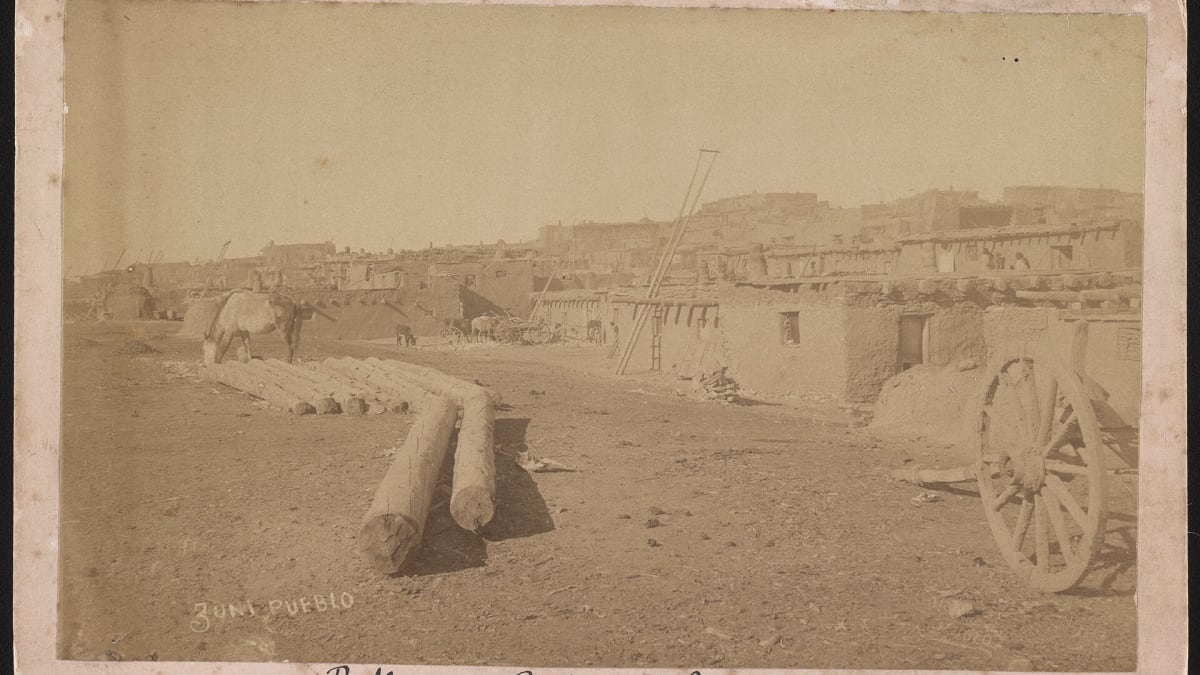
Zuni Pueblo
18c Sunshine St, Zuni, NM
Zuni, NM
A living Puebloan community in the high country of western New Mexico, home for many centuries and renowned the world over for its silverwork, carved fetishes, and pottery.
Zuni Pueblo, known to its people as A:shiwi, is a living Puebloan community in the high country of western New Mexico, the largest of the state's nineteen Pueblos and one of the most culturally intact. The Zuni have lived in this region for a very long time, farming, holding their ceremonies, and speaking a language unrelated to any other, along the Zuni River beneath their sacred mesa, Dowa Yalanne.
Zuni is famous the world over for its art, especially its distinctive silver-and-stone inlay jewelry, its finely carved animal fetishes, and its pottery, made and sold by artists throughout the community. A visit here is not a stop at a monument but a chance to encounter a thriving, self-governing Native nation, and it asks to be made with care, humility, and respect for a people whose traditions are very much alive.
What Travelers Love
- The chance to visit a living Puebloan community with a deep, unbroken heritage
- World-renowned Zuni art, from inlaid silverwork to carved stone fetishes and pottery
- The Zuni tribal museum and heritage center, which help visitors understand the culture
- Buying jewelry and carvings directly from the artists who make them
Worth Knowing
- Zuni is a sovereign nation and a living community, so photography and access are restricted and require permission
- Register at the visitor center first, and take a guided tour to see the historic village respectfully
- Sacred ceremonies and dances have their own rules, and some are closed to visitors, so always ask and follow guidance
- Buy directly from Zuni artists and cooperatives to support the community and ensure authentic work
Learn about Zuni Pueblo
A living Puebloan nation
The Zuni are a Puebloan people whose ancestors have lived in this part of the Southwest for many centuries, farming corn and other crops in a dry land and building a rich ceremonial and social life. They speak the Zuni language, called Shiwi'ma, which is unrelated to any other language in the world, a marker of the community's deep and distinct roots.
Zuni was among the first pueblos encountered by Spanish explorers, drawn by tales of wealthy cities, and the Zuni have endured through the centuries of colonization, conflict, and change while keeping their language, religion, and traditions remarkably intact. Today Zuni is a sovereign nation governing its own affairs, and the community remains deeply tied to its ceremonies, its farming, and its sacred landscape.
The art of Zuni
Zuni is one of the great art-making communities of the Native Southwest, and its work is prized by collectors and museums worldwide. Zuni silversmiths are especially known for intricate inlay and needlepoint jewelry, setting many small pieces of turquoise, coral, jet, and shell into precise silver designs, a style instantly recognizable as Zuni.
The Zuni are also renowned for carving fetishes, small animal figures worked from stone, shell, and other materials, which carry cultural and spiritual meaning and are made with great skill. Pottery, painting, and other arts round out a tradition that supports many families in the community. Buying directly from Zuni artists, cooperatives, and the tribally run trading post ensures the work is authentic and that the money goes to the makers themselves.
Visiting with respect
Zuni welcomes respectful visitors, but it is a living community and a sovereign nation, not a public attraction, and visiting responsibly matters. Travelers should begin at the visitor center, where guided tours of the historic middle village and the old mission church can be arranged, and where the rules for the community are made clear.
Photography, sketching, and recording are restricted and generally require a permit, and some areas and all sacred activities are off limits to outsiders. Certain ceremonies and dances may be open to respectful visitors at times, but they follow their own protocols, so it is essential to ask, to follow the community's guidance, and never to photograph or intrude on ceremony. Approached this way, a visit becomes a genuine and welcome cultural exchange.
The land and the wider region
Zuni sits in a landscape of red and buff mesas, pinyon-juniper hills, and the Zuni River, watched over by Dowa Yalanne, the mesa that has served as a refuge and a sacred place throughout Zuni history. The surrounding country is high, dry, and beautiful, part of the broader Colorado Plateau country of western New Mexico.
Nearby, El Morro National Monument preserves a great bluff carved with inscriptions left by ancestral peoples, Spanish colonists, and later American travelers, and the Zuni Mountains rise to the east toward Grants. Together with the pueblo, they make this quiet corner of the state, far from the crowds, one of its most rewarding and culturally rich regions to explore, always with respect for the living community at its heart.
Closest Boutels
The closest Boutel™ stays, so you can turn this stop into an overnight. Each is a place we chose through independent editorial review, never a paid placement.
Details
Zuni, NM
Frequently asked questions
What is Zuni Pueblo?
Zuni Pueblo, in western New Mexico near the Arizona border, is the largest of New Mexico's nineteen pueblos and home to the Zuni people, who have inhabited the area for well over a thousand years and maintain a rich and distinctive culture, language, and traditions. Renowned worldwide for their exquisite jewelry, especially fine inlay and needlepoint silverwork, and their carved animal fetishes and pottery, the Zuni are master artisans. The pueblo welcomes respectful visitors to learn about its culture, history, and art, visit the historic mission church, and buy authentic handmade crafts. With its deep heritage and celebrated artistry, Zuni Pueblo offers a meaningful cultural experience in western New Mexico.
What can you do at Zuni Pueblo?
You can visit the Zuni visitor center and museum to learn about the pueblo's history and culture, take a guided tour, including tours of the historic Our Lady of Guadalupe mission church with its remarkable murals, browse and buy authentic Zuni jewelry, fetishes, and pottery directly from the artisans and shops, and, at certain times, learn about or observe cultural events open to visitors. Buying directly supports the artists. Approaching the visit with respect enriches the experience. With its celebrated art, rich culture, mission church, and welcoming community, Zuni Pueblo offers a rewarding and authentic cultural experience in western New Mexico.
What should visitors keep in mind at Zuni Pueblo?
Zuni is a living community and sacred place, so visitors must be respectful and follow the pueblo's rules, which typically include restrictions on photography, sketching, and recording, often requiring permits or prohibiting them entirely in certain areas, and prohibitions on entering restricted or ceremonial areas. Some ceremonies are private and closed to outsiders. Checking with the visitor center about current rules and what is open is important. Buying art directly supports the community. Respecting the traditions, sacred sites, and rules of the Zuni people ensures a considerate and welcome visit to this culturally rich pueblo.
When is the best time to visit Zuni Pueblo?
Spring through fall generally offers pleasant weather for visiting, with the visitor center, tours, and shops available, while checking the current schedule is important since the pueblo may close to visitors for ceremonial days and hours can vary. Certain cultural events, when open to visitors, offer special experiences but come with their own rules. For pleasant weather and to ensure the pueblo is open and tours are available, aim for the milder months and confirm the schedule in advance. Approaching any visit with respect and flexibility makes for a rewarding experience at Zuni Pueblo.
What is near Zuni Pueblo?
Zuni Pueblo is in western New Mexico near the Arizona border, close to the El Morro National Monument with its inscription rock, the Zuni Mountains, El Malpais National Monument, and within reach of Gallup with its Native American arts and Route 66 heritage, and Grants. That makes Zuni Pueblo a meaningful cultural stop to combine with El Morro, El Malpais, Gallup, and the other attractions of western New Mexico on a visit to the state.
Nearby
Zuni Mountains
28 miles away
Zuni Mountains access: FR-49 from NM-53 near Ramah (paved), or FR-50 from Grants (unpaved, high clearance recommended in wet conditions).
El Morro National Monument
29 miles away
El Morro is routinely passed by people rushing between Albuquerque and Gallup, which is a mistake. The inscriptions are the point: you are reading the oldest graffiti in North America.

Window Rock
44 miles away
A great natural arch of red sandstone, sacred in Navajo tradition, that gives its name to the capital of the Navajo Nation in northeastern Arizona.

Petrified Forest National Park
53 miles away
Rainbow-colored fossil logs from a 200-million-year-old forest, set in the painted badlands.