
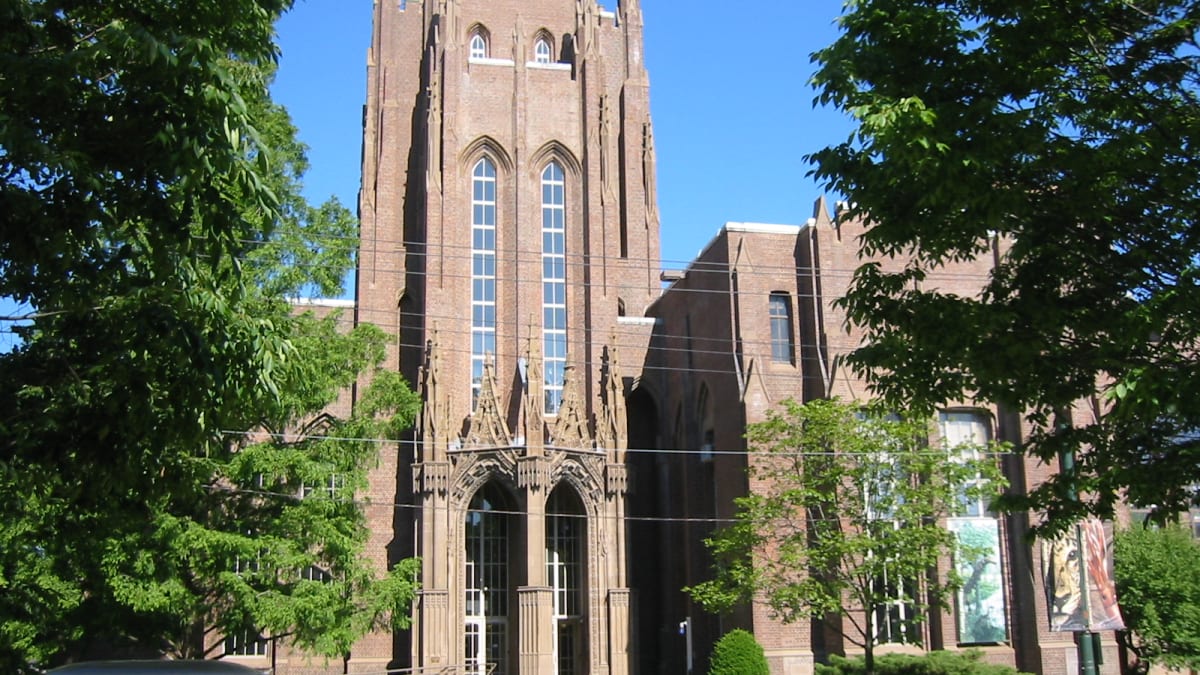
Yale Peabody Museum
170 Whitney Avenue
New Haven, CT
One of the world's foremost natural history museums, where the Great Hall of Dinosaurs stands beneath a Pulitzer-honored mural and the fossils that started the Bone Wars fill the cases.
The Yale Peabody Museum is one of the oldest and most important natural history museums in the world, and for generations of New England families it has meant one thing above all: dinosaurs. Its Great Hall gathers towering mounted skeletons, many of them collected by Yale scientists during the great fossil rushes of the 1800s, beneath the Age of Reptiles, a mural stretching more than a hundred feet that ranks among the largest paintings anywhere and won its creator a Pulitzer citation. To walk in is to stand at the center of how Americans learned to imagine the deep past.
The museum was founded in 1866 through the gift of the philanthropist George Peabody, at the urging of his nephew, the pioneering Yale paleontologist O. C. Marsh. Marsh's expeditions filled the museum with fossils that reshaped the science of evolution, including specimens at the heart of his fierce rivalry with Edward Drinker Cope. After a sweeping multi-year renovation, the Peabody reopened in 2024 refreshed and, for the first time, free to everyone, cementing its role as a public treasure as much as a university collection.
What Travelers Love
- The Great Hall of Dinosaurs, with towering mounted skeletons under one roof
- The vast Age of Reptiles mural, one of the largest paintings in the world
- Fossils tied to the legendary 19th-century Bone Wars discoveries
- A newly renovated museum that is now free to all visitors
Worth Knowing
- After a multi-year renovation the museum reopened in 2024 with free general admission
- It belongs to Yale but is fully open to the public, not just students
- Weekend and school-vacation days are busiest, so mornings are calmer
- Allow a couple of hours; the collections run from dinosaurs to minerals to human cultures
Learn about Yale Peabody Museum
Peabody, Marsh, and the Bone Wars
The museum owes its existence to a family connection between money and science. The financier George Peabody, one of the great philanthropists of the 19th century, endowed the museum in 1866 at the urging of his nephew Othniel Charles Marsh, who became one of the founding figures of American paleontology.
Marsh led and funded expeditions into the American West that returned with an astonishing haul of fossils, including early birds with teeth, ancient horses, and enormous dinosaurs, discoveries that provided some of the strongest early physical evidence for evolution. Many of those specimens remain the pride of the Peabody's collection.
Marsh is equally remembered for the Bone Wars, his bitter competition with the rival paleontologist Edward Drinker Cope. In their race to name new dinosaurs the two men described dozens of species, sometimes sloppily and sometimes underhandedly, and the feud, for all its rancor, vastly expanded what the world knew of prehistoric life. The fossils that fueled it are woven through the museum's halls.
The Great Hall and the Age of Reptiles
The Peabody's signature space is the Great Hall of Dinosaurs, where mounted skeletons of giant plant-eaters and predators loom over visitors, a lineup assembled largely from Marsh's own discoveries. For many children it is a first, unforgettable encounter with the scale of the prehistoric world.
Running the length of the hall is the Age of Reptiles, a mural more than a hundred feet long painted by Rudolph Zallinger between 1943 and 1947. It sweeps across hundreds of millions of years of life in a single continuous scene, a feat of both art and science that earned Zallinger a Pulitzer fellowship and became one of the most reproduced images in the history of paleontology.
The recent renovation reworked how these icons are displayed, updating the mounts to reflect current science while preserving the mural and the sense of awe the hall has always delivered.
Beyond the dinosaurs
The Peabody is far more than a dinosaur hall. Its collections span minerals and meteorites, birds and mammals, ancient Egypt and the peoples of the Americas and the Pacific, and dioramas of North American and other habitats, making it a whole natural and cultural history museum under one roof.
In presenting human cultures, the renovated museum has worked to tell those stories in partnership with descendant communities and in the present tense, reflecting living peoples rather than treating them as relics of the past. That includes attention to the Native peoples of Connecticut and New England whose histories the collections touch.
With its 2024 reopening the museum made general admission free, opening this vast scientific inheritance to every visitor and reaffirming a mission that reaches well beyond the Yale campus into the wider public it has served since 1866.
Planning a visit
Following its multi-year renovation, the Peabody reopened in 2024 with free general admission, and though it belongs to Yale it is fully open to the public rather than just students. The collections run from dinosaurs to minerals to human cultures, so it is worth allowing a couple of hours and picking a few halls to linger in.
Weekends and school-vacation days bring the biggest crowds to the Great Hall, so mornings are the calmer window. Sitting on Whitney Avenue at the edge of campus, the museum pairs easily with the Yale University Art Gallery a few blocks away and with the restaurants and pizzerias of downtown New Haven.
Closest Boutels
The closest Boutel™ stays, so you can turn this stop into an overnight. Each is a place we chose through independent editorial review, never a paid placement.
Details
New Haven, CT
Frequently asked questions
What is the Yale Peabody Museum?
The Yale Peabody Museum, in New Haven, Connecticut, is one of the oldest and finest natural history museums in the country, part of Yale University and renowned for its dinosaurs and vast scientific collections. The museum is famous for its magnificent dinosaur fossils, including historic specimens that helped shape the science of paleontology, along with a celebrated mural of prehistoric life, and extensive exhibits on evolution, minerals, wildlife, ancient cultures, and the natural world. Its remarkable collections and dinosaurs make it a world-class destination for science lovers and families. A superb and historic natural history museum, it delights visitors. With its collections, the Yale Peabody Museum offers a compelling destination in Connecticut.
What can you see at the Yale Peabody Museum?
You can see magnificent dinosaur fossils, including historic specimens, a celebrated mural of prehistoric life, and extensive exhibits on evolution, minerals and gems, wildlife dioramas, ancient cultures, and the natural world. The famous dinosaurs, the prehistoric-life mural, the mineral and wildlife exhibits, and the vast collections are the draws, making it a fascinating and educational visit. The dinosaurs are the signature highlight. With its collections, the Yale Peabody Museum offers a rewarding visit in New Haven, Connecticut.
Is the Yale Peabody Museum good for families?
Yes, the Yale Peabody Museum is wonderful for families, with its dramatic dinosaurs, wildlife dioramas, minerals, and natural-history exhibits that fascinate and educate children and adults alike. The dinosaurs especially captivate kids, making it a favorite family destination, and its indoor setting is comfortable in any weather. Its rich collections offer a full and enriching visit. Its family appeal makes the Yale Peabody Museum a delightful destination in Connecticut.
When is the best time to visit the Yale Peabody Museum?
As an indoor museum, the Yale Peabody Museum is enjoyable year-round in any weather, making it a great stop in any season, with weekdays generally less crowded than busy weekends. Because hours and any special exhibitions can vary, checking the current schedule before you go is wise. Because it is indoors, the Yale Peabody Museum makes a rewarding stop any time of year in New Haven, Connecticut.
What is near the Yale Peabody Museum?
The Yale Peabody Museum is on the Yale University campus in New Haven, Connecticut, within reach of the Yale University Art Gallery, the Yale campus, East Rock Park, and downtown New Haven. That makes the Yale Peabody Museum a compelling stop to combine with the Yale University Art Gallery and the other attractions of New Haven on a visit to Connecticut.
Nearby
Yale University Art Gallery
0.7 miles away
Visitors chase the campus tours and miss that Yale runs the oldest college art museum in the country, and it costs nothing to enter.

East Rock Park
1.0 miles away
East Rock is the red cliff that looms over New Haven, a wall of traprock left by ancient volcanic activity that rises about 350 feet straight off the coastal plain.
Thimble Islands
9.6 miles away
Most people driving the shoreline never learn that a maze of tiny private islands sits just off Branford.
Henry Whitfield State Museum
13 miles away
Few realize the oldest stone house in all of New England sits quietly in Guilford.
Hammonasset Beach State Park
19 miles away
This is the big family beach on the Connecticut shore, and it earns the title.