Wheeler Peak Cirque Glacier
Wheeler Peak Scenic Dr
Baker, NV
Nevada's one and only glacier, hiding in a shadowed cirque beneath a 13,000-foot peak, reached past some of the oldest trees on Earth.
Tucked into a shadowed rock cirque below 13,063-foot Wheeler Peak is the only glacier in Nevada, and one of the southernmost in the United States. Small and stubborn, it survives because the towering peak keeps it in shade and funnels avalanche snow onto it, letting it hang on in a desert state where glaciers seem impossible.
The glacier is often described as a rock glacier, a slow-moving mass of ice buried and armored under a mantle of rock debris that insulates it from the sun. It covers only a couple of acres and is shrinking, and scientists expect it may not last many more decades. The trail to reach it, through a forest of ancient bristlecone pines, is one of the great short hikes in the Great Basin.
What Travelers Love
- Standing at the foot of the only glacier in Nevada, in a stark rock amphitheater under Wheeler Peak
- Walking through a grove of ancient bristlecone pines, some over 3,000 years old, on the way in
- The huge sense of remoteness and quiet in one of the least crowded national parks
- Dark night skies so clear the park runs astronomy programs
Worth Knowing
- The trail starts near 10,000 feet and climbs higher, so the thin air makes it feel much harder than the distance suggests
- The upper trail crosses loose rock and can hold snow into summer, so sturdy footwear and caution matter
- The high country and the Wheeler Peak road are typically only open and snow-free from roughly late spring into fall
- Afternoon thunderstorms are common in summer, so start early and be off exposed ground by midday
Learn about Wheeler Peak Cirque Glacier
A glacier where there should be none
Nevada is the driest state in the country, so a glacier here is a genuine surprise. This one survives on geography: Wheeler Peak rises steeply to over 13,000 feet, and its north-facing cirque stays cold and shadowed while avalanches and wind pile extra snow into the bowl each winter. That combination has kept ice alive at the foot of the peak long after the last ice age ended.
Researchers classify it as a rock and ice glacier, its surviving ice largely hidden beneath a protective blanket of rock. It covers only about two acres and is retreating, and estimates suggest it may vanish within a few decades. Seeing it now, in a raw amphitheater of gray rock beneath the summit, feels like visiting a small ice-age remnant on borrowed time.
Walking past the oldest trees on Earth
The Bristlecone and Glacier Trail first climbs through a grove of Great Basin bristlecone pines, gnarled, wind-sculpted trees that are among the oldest living things on the planet. Some in this area are over 3,000 years old, and the species includes individuals elsewhere that have passed 4,000 years, older than the pyramids.
Bristlecones survive by growing slowly in harsh, exposed places where little else can compete, their dense wood resistant to rot and insects. A short interpretive loop lets you walk among them before the trail continues over boulders and scree to the glacier. It is a rare thing to pass some of the oldest life on Earth on the way to some of the oldest ice in the desert.
The roof of the Great Basin
Great Basin National Park protects an entire mountain range rising out of the desert, and the climb up Wheeler Peak passes through life zone after life zone. Sagebrush flats give way to pinyon and juniper, then aspen and fir, then the bristlecone krummholz near timberline, and finally bare alpine rock.
Wildlife shifts with the elevation. You may see mule deer and marmots, pikas calling from the talus, and Clark's nutcrackers working the high pines, with the chance of a distant golden eagle overhead. Wheeler Peak itself, the second highest point in Nevada, can be climbed by a long, strenuous trail for those wanting to stand on the roof of the park.
When and how to go
The trailhead sits near the top of the Wheeler Peak Scenic Drive at roughly 10,000 feet, and the high country is generally only accessible and snow-free from about late spring into fall. Even then the upper trail can hold snow, and the thin air makes the modest distance feel much harder, so pace yourself and carry water and layers.
Summer afternoons bring fast-building thunderstorms over the high peaks, so start early and plan to be off exposed rock by midday. Far from any city, the park has some of the darkest skies in the country and runs astronomy programs, so if you can linger into the evening, the stars over Wheeler Peak are as memorable as the glacier below it.
Closest Boutels
The closest Boutel™ stays, so you can turn this stop into an overnight. Each is a place we chose through independent editorial review, never a paid placement.
Details
Baker, NV
Frequently asked questions
What is the Wheeler Peak cirque glacier?
The Wheeler Peak cirque glacier, in Great Basin National Park in eastern Nevada, is a small rock glacier nestled in a high mountain cirque beneath towering Wheeler Peak, notable as one of the only glaciers in the state and among the southernmost in the country. Tucked in a shaded, high-elevation bowl carved by ancient ice, the glacier and the dramatic cirque around it are reached by a rewarding mountain trail that also passes through ancient bristlecone pine groves. Set amid spectacular alpine scenery near the second-highest peak in Nevada, it offers a striking high-country destination. With its rare glacier and alpine scenery, the Wheeler Peak cirque glacier offers a spectacular destination in Nevada.
What can you do at the Wheeler Peak cirque glacier?
You can hike the mountain trail to the glacier and its dramatic high cirque beneath Wheeler Peak, passing through groves of ancient bristlecone pines along the way, take in the spectacular alpine scenery, and view the rare rock glacier in its shaded high bowl. The rewarding hike, the ancient bristlecone pines, the striking cirque, and the rare glacier are the draws, offering a memorable high-country experience in Great Basin National Park. The trail combines several of the park's highlights. With its glacier and alpine trail, the Wheeler Peak cirque glacier offers a rewarding experience in Nevada.
Is the hike to the Wheeler Peak glacier difficult?
The hike to the Wheeler Peak cirque glacier is moderately strenuous, made challenging chiefly by the very high elevation, which means thinner air, intense sun, and cold, changeable mountain weather, so acclimating, pacing yourself, carrying water and layers, and starting early are important. The rocky trail climbs to the high cirque, so sturdy shoes help, and afternoon thunderstorms are a summer hazard at altitude, making an early start wise. The trail is snow-free only in the warmer months. Coming prepared for the altitude and weather ensures a safer hike to the Wheeler Peak cirque glacier in Nevada.
When is the best time to visit the Wheeler Peak cirque glacier?
The high trail to the glacier is generally accessible only in the warm months, roughly summer through early fall, once the mountain snow has melted, with summer offering the best access though afternoon thunderstorms are a hazard, so early starts are wise, and early fall bringing crisp, clear weather. The scenic mountain road that reaches the trailhead is seasonal and closed in winter. For the best and safest access to the glacier trail, aim for summer through early fall, starting early, at the Wheeler Peak cirque glacier in Nevada.
What is near the Wheeler Peak cirque glacier?
The Wheeler Peak cirque glacier is in Great Basin National Park in eastern Nevada, near Lehman Caves and the park's bristlecone pines and alpine lakes, within reach of Ely with the Nevada Northern Railway and the Ward Charcoal Ovens, and the Great Basin desert crossed by US Route 50. That makes the Wheeler Peak cirque glacier a spectacular stop to combine with Great Basin National Park, Lehman Caves, and the other attractions of eastern Nevada on a visit to the state.
Nearby
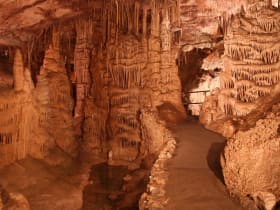
Lehman Caves
5.2 miles away
Lehman Caves is a marble and limestone cave formed when acidic groundwater dissolved the rock over millions of years, then decorated with mineral deposits as the cave dried.