

Weir Farm National Historical Park
735 Nod Hill Road
Wilton, CT
The only unit of the national park system devoted to American painting, a working artists' farm where J. Alden Weir found his light and you can still set up an easel in the same fields.
Weir Farm is unique in the entire national park system: it is the only unit devoted to American painting. The rolling fields, stone walls, woods, and small pond you walk through are the very landscapes that the Impressionist Julian Alden Weir painted again and again after he acquired the farm in 1882, and the National Park Service preserves not only his house and studio but the scenery itself, protected so that the views in his canvases still exist to be seen and painted.
Weir was a central figure in American Impressionism, and his farm became a gathering place for a whole circle of painters and, later, sculptors, spanning three generations of working artists on the same ground. That living tradition continues today: the park lends visitors easels and art supplies and invites them to set up in the same fields, making it one of the few national parks where you are encouraged not just to look at the art but to make your own.
What Travelers Love
- The rare chance to stand in the exact landscapes an American Impressionist painted
- Weir's preserved studio and the farmhouse where three generations of artists worked
- A lending program that hands visitors art supplies to paint the scenery themselves
- Quiet stone-walled fields, woods, and a pond, all free to explore
Worth Knowing
- The grounds and trails are open daily and free; the historic buildings are seen by tour on limited days
- It is the only national park site dedicated to American painting
- You can borrow paints and an easel to work outdoors through the park's art program
- It spans two towns, Wilton and Ridgefield, so mapping apps may list either
Learn about Weir Farm National Historical Park
How Weir got his farm
Julian Alden Weir came to the property in 1882 in one of the more charming trades in art history. He acquired the Connecticut farm, the story goes, in exchange for a painting he had grown tired of and a modest sum of money, gaining a country retreat that would reshape his art.
Trained in the academic tradition, Weir was at first skeptical of the loose, light-filled Impressionism coming out of France, but over the years spent at the farm his style loosened and brightened until he became one of the leading American Impressionists. The everyday scenery around him, the barns, orchards, stone walls, and changing seasons, became his great subject.
The farm drew other artists into Weir's orbit, including fellow Impressionists and friends who painted alongside him, and after his death the tradition carried on through his family and later the sculptor Mahonri Young, who married into it. For more than a century the property remained a place where artists lived and worked.
A landscape preserved as a painting
What makes Weir Farm extraordinary is that the subjects of the art survive. Rather than only hanging finished canvases on a wall, the park protects the actual fields, trees, walls, and the small pond Weir dammed, so a visitor can stand where his easel stood and see the same composition he saw.
The park preserves Weir's studio, the farmhouse, and a second studio used by Mahonri Young, along with gardens and outbuildings, giving a full picture of a working artists' homestead. Guided tours on open days take visitors inside these spaces, where the tools, light, and atmosphere of the creative life are kept intact.
The grounds themselves are laced with easy trails and marked painting sites, and the Park Service has documented exactly where Weir and his circle set up, so you can carry a reproduction to a spot and compare the scene then and now.
Paint it yourself
Weir Farm leans fully into its identity as a place for making art, not just admiring it. Through its Take Part in Art program the park lends visitors art supplies and easels, inviting anyone, experienced or not, to sit in the fields and paint or draw the landscape the Impressionists loved.
That openness has made the park a beloved spot for amateur and professional artists alike, and on fair days you may find easels dotted across the meadows. It is a fitting continuation of a place whose entire history is about people responding to this particular Connecticut light.
The setting, quiet and rural despite being an hour from New York City, also draws walkers and birders who simply want an unhurried loop through preserved farm country, one of the increasingly rare open landscapes in busy Fairfield County.
Planning a visit
The grounds, trails, and marked painting sites are open daily and free, so you can walk the fields and follow Weir's footsteps any day of the week. The historic buildings, including his studio and the farmhouse, are seen by guided tour on limited days, so check the park schedule if going inside matters to you.
Spring through fall is the natural season for painting outdoors, when the Take Part in Art program lends easels and supplies, and the same months bring the fullest color to the meadows and woods. The park straddles the Wilton and Ridgefield town line, so mapping apps may list either town, and a visit combines well with historic Ridgefield and its Aldrich contemporary art museum just up the road.
Closest Boutels
The closest Boutel™ stays, so you can turn this stop into an overnight. Each is a place we chose through independent editorial review, never a paid placement.
Details
Wilton, CT
Frequently asked questions
What is Weir Farm National Historical Park?
Weir Farm National Historical Park, in Wilton and Ridgefield, Connecticut, is a beautiful historic farm and artists' retreat that was the home and inspiration of a leading American Impressionist painter, and one of the few national park sites dedicated to American painting. The park preserves the farm, home, and studios of the artist and the generations of painters drawn to its lovely landscape of fields, woods, stone walls, and gardens, which inspired countless works of American Impressionism. Visitors can tour the studios, walk the scenic grounds that appear in famous paintings, and even paint themselves. Its beauty and artistic heritage make it a delightful destination. A lovely and inspiring historic park, it delights visitors. With its landscape and art, Weir Farm offers a compelling destination in Connecticut.
What can you do at Weir Farm National Historical Park?
You can tour the historic home and painting studios, walk the scenic grounds of fields, woods, stone walls, and gardens that inspired American Impressionist paintings, see the landscapes that appear in famous works, and even try painting yourself with the park's art program. The historic studios, the beautiful landscape, the connection to American Impressionism, and the chance to make art are the draws, making it a delightful and inspiring visit. The lovely grounds and the artistic heritage are highlights. With its landscape and art, Weir Farm offers a rewarding experience in Connecticut.
Why is Weir Farm significant to American art?
Weir Farm is significant to American art because it was the beloved home and retreat of a leading American Impressionist painter, whose landscapes of the farm helped shape American Impressionism, and it drew generations of artists inspired by its beauty. As one of the few national park sites dedicated to American painting, it preserves this artistic legacy and the very landscapes that appear in celebrated works. Its role in American art history makes it special. Understanding this heritage enriches a visit to Weir Farm National Historical Park in Connecticut.
When is the best time to visit Weir Farm National Historical Park?
The mild months of spring through fall are the loveliest for walking the scenic grounds and gardens and enjoying the landscape, with spring blooms, summer green, and fall foliage all beautiful, while the studios and visitor programs are generally most active in the warm season. Because access and programs can be seasonal, checking current information before you go is wise. For the loveliest landscape and fullest programs, aim for spring through fall at Weir Farm National Historical Park in Connecticut.
What is near Weir Farm National Historical Park?
Weir Farm National Historical Park is in Wilton and Ridgefield, Connecticut, within reach of the Aldrich Contemporary Art Museum in Ridgefield, the towns of Fairfield County, and the routes toward the Connecticut coast. That makes Weir Farm a compelling stop to combine with the Aldrich Contemporary Art Museum and the other attractions of the Ridgefield area on a visit to Connecticut.
Nearby

Aldrich Contemporary Art Museum
3.7 miles away
A cutting-edge contemporary art museum in a 1783 white clapboard building is the kind of contrast Ridgefield does well.
Lockwood-Mathews Mansion Museum
10 miles away
Most people driving past on I-95 have no idea this survives. The Lockwood-Mathews Mansion at 295 West Ave in Norwalk is a 62-room Second Empire chateau finished in 1868, one of the earliest grand coun...

Stepping Stones Museum for Children
10 miles away
This is the go-to rainy-day and any-day stop for younger kids in lower Fairfield County.
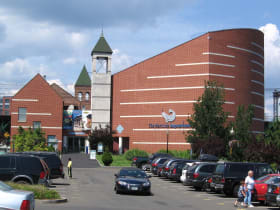
Maritime Aquarium at Norwalk
11 miles away
This aquarium is all about the water right outside the door, Long Island Sound, which makes it feel local rather than generic.

Sherwood Island State Park
11 miles away
This was Connecticuts very first state park, and it packs a lot of Long Island Sound into one point in Westport.