
Vore Buffalo Jump
369 Old Hwy 14, Sundance, WY
Sundance, WY
A grassy sinkhole that holds centuries of bison hunts in its depths, one of the great archaeological treasures of the northern plains.
Vore Buffalo Jump looks at first like nothing more than a grassy sinkhole beside the highway, but it is one of the most important archaeological sites on the northern plains. For roughly three centuries, Native peoples used this natural pit as a buffalo jump, driving herds of bison over its rim so that the trapped animals provided the meat, hides, and materials essential to life.
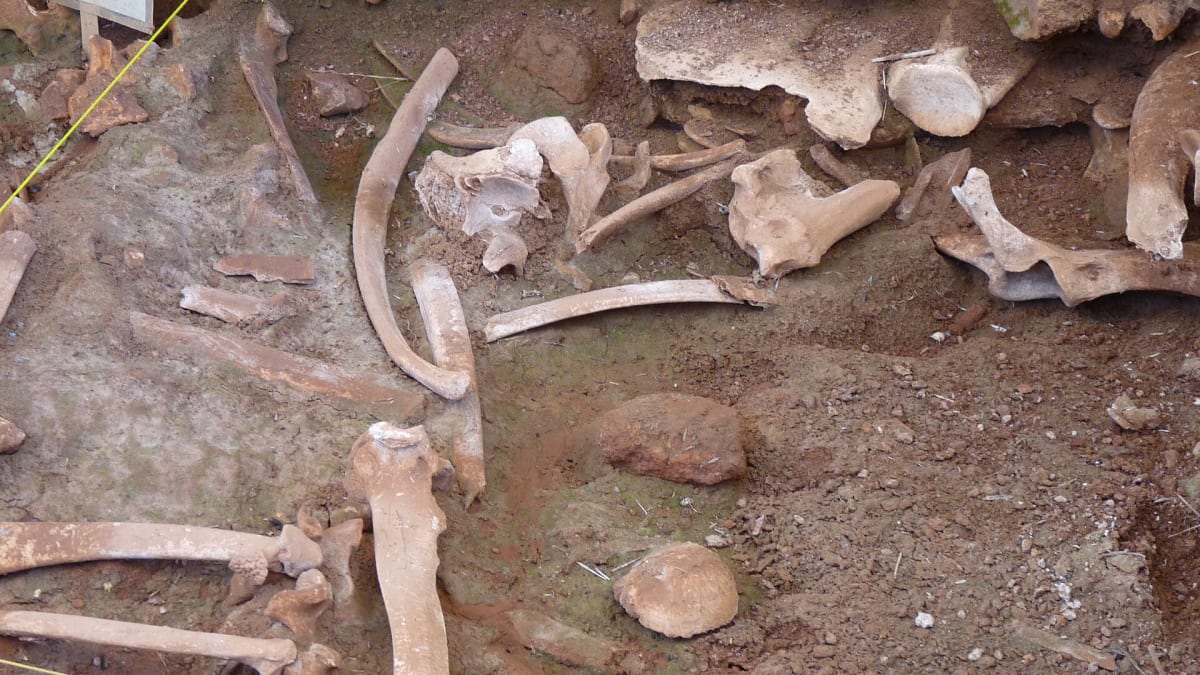
Layer upon layer of bison bones filled the sinkhole over the generations, preserving a remarkable record of how Plains tribes hunted, and of the bison themselves. Today the site is protected and interpreted, offering a window into a way of life built on deep knowledge of the land and the great herds that once covered it.
What Travelers Love
- The story of centuries of communal bison hunts held in one natural trap
- Deep bone beds that make it a nationally important archaeological site
- Learning how Plains tribes used the land with skill and knowledge
- A quiet, uncrowded site with a strong sense of the deep past
Worth Knowing
- The interpretive site is seasonal, generally open in the warmer months; check before visiting
- It is an active archaeological and educational site, so follow staff guidance
- Approach the site with respect for its deep meaning to Native peoples
- It is an easy stop just off Interstate 90 between Sundance and the state line
Learn about Vore Buffalo Jump
A natural trap in the plains
The jump is a steep-sided sinkhole formed naturally in the underlying rock, a hidden pit in otherwise open, rolling country. Its steep walls made it an effective trap, and its position along ancient travel and hunting routes made it a place tribes returned to again and again.
Because the animals could not see the drop until it was too late, hunters could guide herds toward the concealed rim and into the pit. The same geology that created the sinkhole also helped preserve what fell into it, sealing the record of centuries beneath layers of soil and bone.
Centuries of the hunt
For roughly three hundred years, from the fifteenth into the eighteenth century, Plains peoples used the Vore site as a communal bison jump. Driving a herd required careful planning, cooperation, and deep understanding of the animals and the land, and the results sustained whole communities.
The bison provided far more than food. Hides became shelter and clothing, bones and sinew became tools and bindings, and nearly every part of the animal was used. The jump reflects a sophisticated hunting culture in which people and the great herds were bound together across generations.
A treasure for archaeology
The layered bone beds within the sinkhole, many feet deep, make Vore Buffalo Jump one of the richest and most significant archaeological sites of its kind on the northern plains. Excavations here have taught researchers a great deal about ancient hunting methods and about the bison of past centuries.
The site was discovered during highway construction in the twentieth century and has since been protected and studied. Because the layers can be read like pages, the jump offers a rare, datable record of the hunts and the changing herds, a scientific treasure as well as a cultural one.
Visiting with respect
The Vore Buffalo Jump is now an interpretive and educational site, generally open in the warmer months, where visitors can learn the story and see the excavations and exhibits. It is run with care for both its science and its meaning to Native peoples.
This is sacred and significant ground to the tribes whose ancestors hunted here, and visitors are asked to treat it with respect. Set near the Black Hills and the town of Sundance, it makes a thoughtful, uncrowded stop that connects travelers to the deep human history of the plains.
Closest Boutels
The closest Boutel™ stays, so you can turn this stop into an overnight. Each is a place we chose through independent editorial review, never a paid placement.
Details
Sundance, WY
Frequently asked questions
What is the Vore Buffalo Jump?
The Vore Buffalo Jump, in northeastern Wyoming near the town of Sundance, is a remarkable archaeological site, a natural sinkhole that Native peoples used for centuries as a buffalo jump, driving herds of bison over the edge to fall into the pit as a means of hunting. Over generations this created deep layers of bison bones and artifacts, making the site one of the most important records of Plains Indian hunting culture in the region. Now an interpretive site, it lets visitors learn about this ancient hunting practice and the Native cultures behind it. With its rich archaeology and cultural history, the Vore Buffalo Jump offers a fascinating destination in northeastern Wyoming.
How did a buffalo jump work?
A buffalo jump was an ingenious communal hunting method used by Plains Indian peoples for thousands of years, in which hunters would carefully guide and drive a herd of bison toward a cliff edge or, at the Vore site, a natural sinkhole, causing the animals to stampede over the edge and fall, providing meat, hides, and other materials essential for survival. This required deep knowledge, teamwork, and skill, and the practice was central to Plains cultures before the horse became widespread. The Vore site preserves deep bone layers from this ancient practice. Learning about it offers a profound window into Native hunting culture in northeastern Wyoming.
What can you see at the Vore Buffalo Jump?
You can see the natural sinkhole where bison were driven, view the excavated bone layers and artifacts that reveal centuries of hunting, explore interpretive exhibits explaining the archaeology and the Plains Indian cultures that used the site, and learn how researchers study the layers to understand the past. Guided information and displays bring the site's significance to life. It is an important and moving cultural and scientific site. With its ancient buffalo-jump sinkhole, bone beds, and interpretation of Plains Indian hunting culture, the Vore Buffalo Jump offers a fascinating and educational experience near Sundance in northeastern Wyoming.
When is the best time to visit the Vore Buffalo Jump?
The Vore Buffalo Jump is typically open seasonally in the warmer months, generally from around late spring through early fall, so those are the times to visit, with summer offering the fullest access and interpretive programs, while the site is closed in winter. Checking current seasonal hours before you go is wise, as they can vary. Summer on the open plains can be warm and sunny, so bring water and sun protection. For the best access and interpretation, aim for the summer season at the Vore Buffalo Jump near Sundance in northeastern Wyoming.
What is near the Vore Buffalo Jump?
The Vore Buffalo Jump is in northeastern Wyoming near the town of Sundance, within reach of Devils Tower National Monument, Keyhole State Park, Black Hills National Forest, and the South Dakota Black Hills to the east. That makes the Vore Buffalo Jump a fascinating cultural stop to combine with Devils Tower, Keyhole State Park, Black Hills National Forest, and the other attractions of northeastern Wyoming on a visit to the state.
Nearby

Black Hills National Forest
7.5 miles away
The Black Hills National Forest extends west from South Dakota into Wyoming, with ponderosa pine forest, granite outcrops, and the Bearlodge Mountains surrounding Sundance.
Spearfish Canyon Scenic Byway
15 miles away
Spearfish Canyon Scenic Byway: US-14A between Spearfish and Cheyenne Crossing, about 22 miles. Free, open year-round though winter conditions can close sections.

Devils Tower National Monument
28 miles away
Devils Tower is an 867-foot igneous rock column that rises from the flat Wyoming prairie with no geological transition - a vertical wall of columnar basalt emerging from the earth.
Prairie Dog Town
30 miles away
A large prairie dog town flanks WY-24 approaching Devils Tower from the south, and the animals are completely habituated to car traffic - they stand upright on their mounds barking alarm calls as vehi...