
The Wetlands Institute
612-604 42nd St, Avalon, NJ
Avalon, NJ
A window onto one of the largest salt marshes on the East Coast, alive with herons, terrapins, and horseshoe crabs, and dedicated to understanding and protecting it.
The Wetlands Institute is a coastal research and education center perched on the edge of a vast salt marsh in southern New Jersey, one of the largest tracts of tidal wetland left on the East Coast. Founded to study and protect these marshes, it opens a window onto an ecosystem most beachgoers race past on their way to the shore, and shows just how alive and important it is.
From the institute's tower and trails, the marsh spreads to the horizon in every direction, threaded with tidal creeks and cut off from development. It is a nursery for fish and crabs, a feeding ground for great flocks of herons, egrets, and migrating shorebirds, and home to the diamondback terrapin and the ancient horseshoe crab, two creatures at the heart of the institute's celebrated research and rescue programs.
What Travelers Love
- A tower and trails with sweeping views over one of the largest salt marshes on the coast
- Up-close encounters with diamondback terrapins, horseshoe crabs, and marsh wildlife
- Exhibits and programs that make the salt marsh come alive for all ages
- A meaningful, hands-on stop just minutes from the beaches of Stone Harbor and Avalon
Worth Knowing
- The institute is a donation-supported nonprofit; your visit helps fund its research and conservation work
- It keeps seasonal hours that vary; check the site before planning a visit
- Bring binoculars and insect protection for the marsh trails, especially in the warmer months
- Programs and live-animal encounters are the highlight, so time a visit to catch them
Learn about The Wetlands Institute
A center for the marsh
The Wetlands Institute was founded in the late 1960s, at a time when coastal marshes up and down the East Coast were being drained and filled for development. Recognizing that these wetlands were among the most productive ecosystems on earth, its founders set out to study, teach about, and protect the great marsh that surrounds it. The land it sits on and watches over is preserved from development, a rare thing on the crowded Jersey Shore.
This coast is part of the ancestral homeland of the Lenape people, who fished, gathered shellfish, and traveled the tidal creeks of these marshes for thousands of years before European settlement. Their descendants, including the state-recognized Nanticoke Lenni-Lenape community, remain a living part of New Jersey today, and the marshes the institute protects are landscapes their ancestors knew intimately.
Today the institute combines active scientific research with public education. Its scientists study the health of the marsh, track its wildlife, and run programs to protect species under pressure, while its exhibits, trails, and live-animal encounters bring visitors face to face with an ecosystem they might otherwise overlook. It is that rare place where serious conservation science and a fun family outing meet in the same building.
The institute is best known for two of its long-running programs. It has worked for decades to protect the diamondback terrapin, a marsh turtle whose nesting females are often killed on coastal roads, rescuing eggs and raising hatchlings. And it studies and helps protect horseshoe crabs, whose spawning on the bay beaches is a globally important event, feeding migrating shorebirds and supplying a compound vital to human medicine.
The tower, trails, and exhibits
The centerpiece for visitors is the view. An observation tower rises above the institute, and from it the salt marsh opens out for miles, a shimmering plain of grass, water, and sky where you can watch herons stalk the shallows and ospreys hunt from platform nests. Boardwalk trails lead out over the marsh and along the tidal creeks, bringing you right down into the grass and mud where the life of the wetland unfolds.
Inside, aquariums and exhibits introduce the creatures of the marsh, and live-animal programs let visitors, especially children, meet terrapins, horseshoe crabs, and other marsh residents up close. Hands-on activities, touch tanks, and guided programs make the salt marsh, easy to dismiss from a car window, suddenly vivid and full of story. It is education by encounter rather than by placard.
The life of the salt marsh
The salt marsh the institute watches over is one of the richest habitats on the coast. Twice a day the tides flood and drain it, and the grasses, cordgrass and salt hay, feed a web of life from tiny invertebrates up to the great wading birds. The marsh is a nursery where young fish, crabs, and shrimp grow up sheltered from the open sea, which is why it matters so much to the health of the whole coastal ocean.
For birders it is a treasure. Herons, egrets, ibis, and terns feed in the creeks, ospreys nest on platforms across the marsh, and in migration the mudflats and beaches fill with clouds of shorebirds. The horseshoe crab spawn on nearby Delaware Bay beaches draws hungry migrating birds by the tens of thousands, one of the great wildlife spectacles of the region, and the institute is at the center of the effort to understand and protect it.
Season by season
Spring is a spectacular time, when the horseshoe crabs spawn, migrating shorebirds pour through by the thousands, and the marsh comes alive with returning herons and ospreys. It is arguably the institute's richest season for wildlife.
Summer is warm and busy, with the marsh at its greenest, terrapins nesting, and family programs in full swing. It is a lively time, though the marsh can be buggy, so come prepared.
Fall brings the return migration of shorebirds and raptors, cooler air, and thinning crowds, along with beautiful low light over the golden marsh grass. It is a fine season for birding and quiet walks.
Winter is stark and peaceful, the marsh browned and windswept, with wintering ducks, raptors, and the occasional snowy owl to reward the hardy visitor. The institute's indoor exhibits keep the experience rich even in the cold.
Closest Boutels
The closest Boutel™ stays, so you can turn this stop into an overnight. Each is a place we chose through independent editorial review, never a paid placement.
Details
Avalon, NJ
Frequently asked questions
What is the Wetlands Institute?
The Wetlands Institute, in Stone Harbor on the southern New Jersey shore, is a wonderful nature and education center dedicated to the coastal wetlands and their wildlife, set amid the vast salt marshes of the region. The institute offers exhibits, aquariums, a saltmarsh trail and observation tower, and programs that let visitors explore the ecology of the marshes, learn about the creatures that live there, and, famously, about the diamondback terrapins the institute helps protect. Its hands-on, educational approach and beautiful marsh setting make it a delightful family destination. A charming and educational nature center, it delights visitors. With its wetlands focus, the Wetlands Institute offers a compelling destination in New Jersey.
What can you do at the Wetlands Institute?
You can explore exhibits and aquariums on coastal wetland life, walk the saltmarsh trail and climb the observation tower for marsh views, learn about diamondback terrapins and the institute's conservation work, watch for birds and marsh creatures, and enjoy hands-on programs. The wetland exhibits, the saltmarsh trail and tower, the terrapin conservation, and the birdwatching are the draws, making it a fun and educational visit. The chance to learn about the marsh and its terrapins is a highlight. With its exhibits and marsh, the Wetlands Institute offers a rewarding experience in New Jersey.
Why are the salt marshes important?
The salt marshes protected and studied by the Wetlands Institute are among the most important and productive natural habitats on the coast, serving as nurseries for fish and shellfish, feeding grounds for countless birds, and buffers that protect the shore, while supporting a rich web of life. The institute helps visitors understand and appreciate these vital wetlands and the need to protect them, including the diamondback terrapins that depend on them. Understanding their importance enriches a visit to the Wetlands Institute in New Jersey.
When is the best time to visit the Wetlands Institute?
The warm months of late spring through early fall are the prime time to visit, when the institute's full programs, the marsh life, and the birds are most active and the weather is pleasant for the trail and tower, with summer especially lively. Because programs and hours can be seasonal, checking the current schedule before you go is wise. For the fullest programs and active wildlife, aim for late spring through early fall at the Wetlands Institute in New Jersey.
What is near the Wetlands Institute?
The Wetlands Institute is in Stone Harbor on the southern New Jersey shore, within reach of the Stone Harbor and Avalon beaches, the Cape May area to the south, the Wildwoods, and the southern Jersey Shore. That makes the Wetlands Institute a compelling stop to combine with the other attractions of the southern Jersey Shore and the Cape May area on a visit to New Jersey.
Nearby

Cape May County Park and Zoo
4.6 miles away
A full zoo that costs nothing to enter is a rare thing, and this is a good one.

Wildwood Beach
8.4 miles away
The widest beach on the Jersey Cape, so deep the sand can run nearly a thousand feet from the boardwalk to the surf, and it charges no beach tag.

The Doo Wop Motel District
9.4 miles away
Most people speed past not realizing they are driving through a protected architectural district.

Wildwood Crest Beach
9.5 miles away
One of the very few free beaches on the Jersey Shore, and the widest on the Cape, a soft white expanse that keeps quietly growing while other shore beaches shrink.
Emlen Physick Estate
14 miles away
This one house is the reason Cape May still looks like Cape May.
Cape May Beach and Promenade
15 miles away
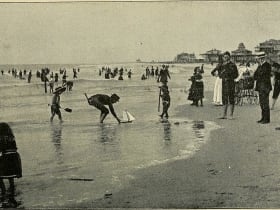
America's oldest seaside resort skips the wooden boardwalk for a smooth, paved Promenade that runs nearly two miles along a seawall above a wide, gently sloping beach.
Sunset Beach and the Cape May Diamonds
16 miles away
Two oddities meet on one small beach at the end of New Jersey.

Cape May Lighthouse
16 miles away
An 1859 seacoast tower at the very tip of New Jersey, still lit and open to climb: 199 steps of the original spiral stair lead to a view over the Atlantic, Delaware Bay, and the beach towns.