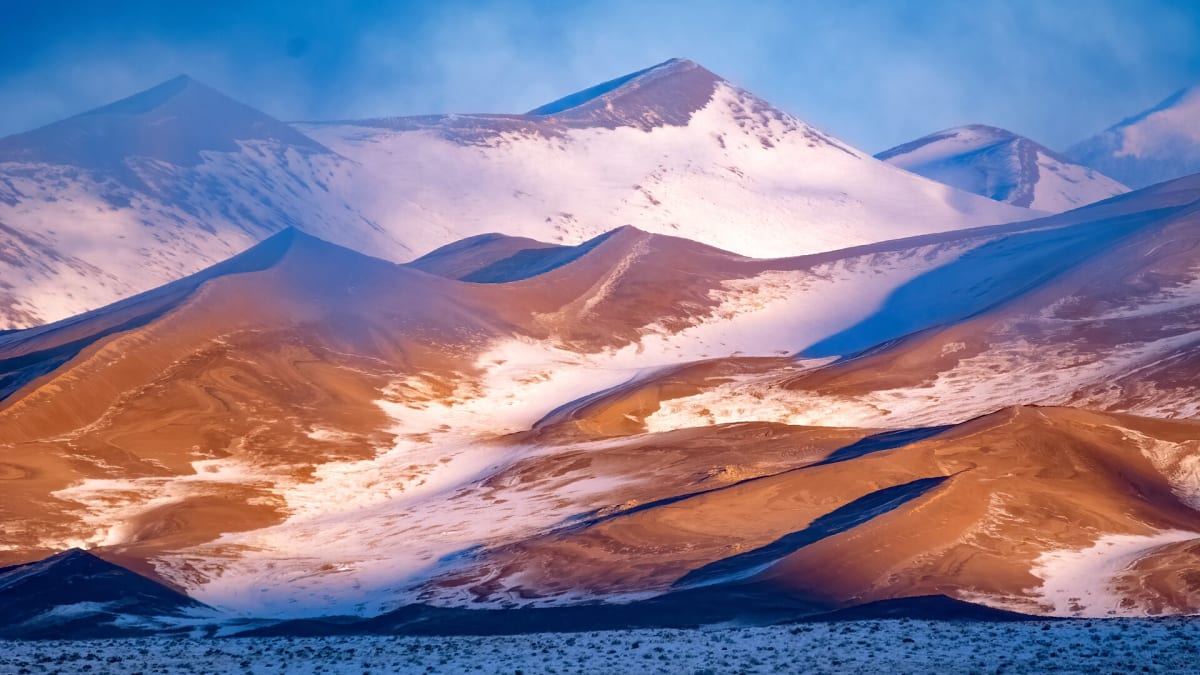
Star Dune
Star Dune, Great Sand Dunes National Park, CO
Mosca, CO
Climb roughly 741 feet of shifting sand to the highest dune crest on the continent.
Star Dune is the tallest dune in North America, rising roughly 741 feet from its base deep in the heart of the Great Sand Dunes field. Reaching it is a serious undertaking, a long, trailless trek across soft, shifting sand that leaves the crowds far behind, but those who make the climb are rewarded with a profound sense of solitude and a commanding view over the entire sea of dunes and the surrounding mountains.
For dedicated dune hikers, Star Dune is a bucket-list goal, best attempted in the cooler months or the cool of the morning. The route follows the high ridgelines that thread deep into the dune field, and simply standing atop the highest sand on the continent, with the Sangre de Cristo peaks on one side and the vast San Luis Valley on the other, is an unforgettable reward.
What Travelers Love
- Standing atop the tallest dune in North America, about 741 feet high
- Deep solitude far from the crowds near the parking area
- Commanding views over the whole dune field and mountains
- A true adventure for dedicated dune hikers
Worth Knowing
- It is inside Great Sand Dunes National Park, so an entrance pass is needed
- The trek is long, strenuous, and trailless across soft sand
- Allow several hours and start early; carry ample water
- Summer sand can be scorching; spring and fall are more comfortable
Learn about Star Dune
Reaching the top
There is no trail to Star Dune. Hikers cross the bed of Medano Creek and then follow the high ridges deep into the dune field, a route that winds and climbs for several miles round trip and can take four to six hours or more depending on conditions and fitness. The soft sand makes every step harder, and the distance and heat demand real preparation.
The effort buys something rare: solitude. While the dunes near the parking area can be busy, few venture all the way to Star Dune, so the reward is often a quiet summit with sweeping, uninterrupted views in every direction.
Planning the trek
Because of the distance and the extreme summer heat of the sand, the best conditions are the cooler months or an early start on a summer day, well before the sand heats up past 140 degrees Fahrenheit by midday. There is no water and no shade anywhere on the dunes, so carrying several liters of water per person is essential.
Afternoon thunderstorms are common in summer, and being caught high on the dunes in a lightning storm is dangerous, so plan to be off the crests by early afternoon. Sturdy shoes, sun protection, and awareness of the wind, which can whip up blinding blown sand, all make the trek safer and more enjoyable.
Closest Boutels
The closest Boutel™ stays, so you can turn this stop into an overnight. Each is a place we chose through independent editorial review, never a paid placement.
Details
Mosca, CO
Frequently asked questions
What is Star Dune?
Star Dune is the tallest dune in North America, standing about 741 feet from base to crest deep within the Great Sand Dunes field in Colorado. A star dune is a type of dune with arms radiating from a central peak, formed where winds blow from several directions, which lets it grow especially tall. Reaching it requires a long, strenuous, trailless trek across soft sand from the main parking area, so it is far less visited than the closer High Dune. Those who make the climb are rewarded with deep solitude and commanding views over the whole dune field, the Sangre de Cristo Mountains, and the vast San Luis Valley. It is a bucket-list goal for serious dune hikers.
How long does it take to hike to Star Dune?
Hiking to Star Dune and back typically takes about four to six hours or more, depending on your fitness, the conditions, and the exact route. The round trip covers several miles across trailless, soft, shifting sand, which is far more tiring than hiking on solid ground, and involves significant climbing to reach the roughly 741-foot summit. Most hikers follow the high ridgelines deep into the dune field. Because of the distance, heat, and lack of water or shade, it is important to start early, carry several liters of water per person, wear sun protection, and turn back if you are running low on time, water, or energy. It is one of the most demanding day outings in the park.
Is Star Dune really the tallest in North America?
Yes, Star Dune is generally recognized as the tallest dune in North America, rising about 741 feet from its base. In recent years, careful measurements have shown that a nearby dune, sometimes called Hidden Dune, may be a few feet taller, so the exact title can shift slightly with wind and surveying, but Star Dune remains the famous and classic high point of the Great Sand Dunes field. The dunes here are the tallest in North America overall, built up over thousands of years as winds carried sand across the San Luis Valley and piled it against the Sangre de Cristo Mountains. Reaching Star Dune's summit is a genuine achievement and a highlight for dedicated hikers.
How do I prepare for the Star Dune hike?
Preparing for the Star Dune hike means planning around heat, distance, and the lack of water. Start early, ideally at dawn, especially in summer, because the sand can exceed 140 degrees Fahrenheit by midday, which is dangerous for feet and pets. Carry several liters of water per person, since there is no water anywhere on the dunes, along with sun protection, sturdy closed shoes, and snacks. Watch the forecast for afternoon thunderstorms, common in summer, and plan to be off the high crests by early afternoon to avoid lightning. Spring and fall offer much milder temperatures. Because there is no trail, keep track of your route and turn back if you run short on water, time, or energy.
Nearby
High Dune
4.6 miles away
High Dune is the classic climb at Great Sand Dunes National Park, the tall crest rising straight ahead from the main parking area and the goal of most visitors who venture onto the dunes.

Medano Creek
5.3 miles away
Medano Creek is a wide, shallow stream that flows along the base of the Great Sand Dunes each spring and early summer, creating a natural sandy beach in the middle of the Colorado high desert.

Mosca Pass Trail
5.5 miles away
The Mosca Pass Trail climbs from the forests near the visitor center up a mountain creek to Mosca Pass, offering a cool, green contrast to the great dune field below.