
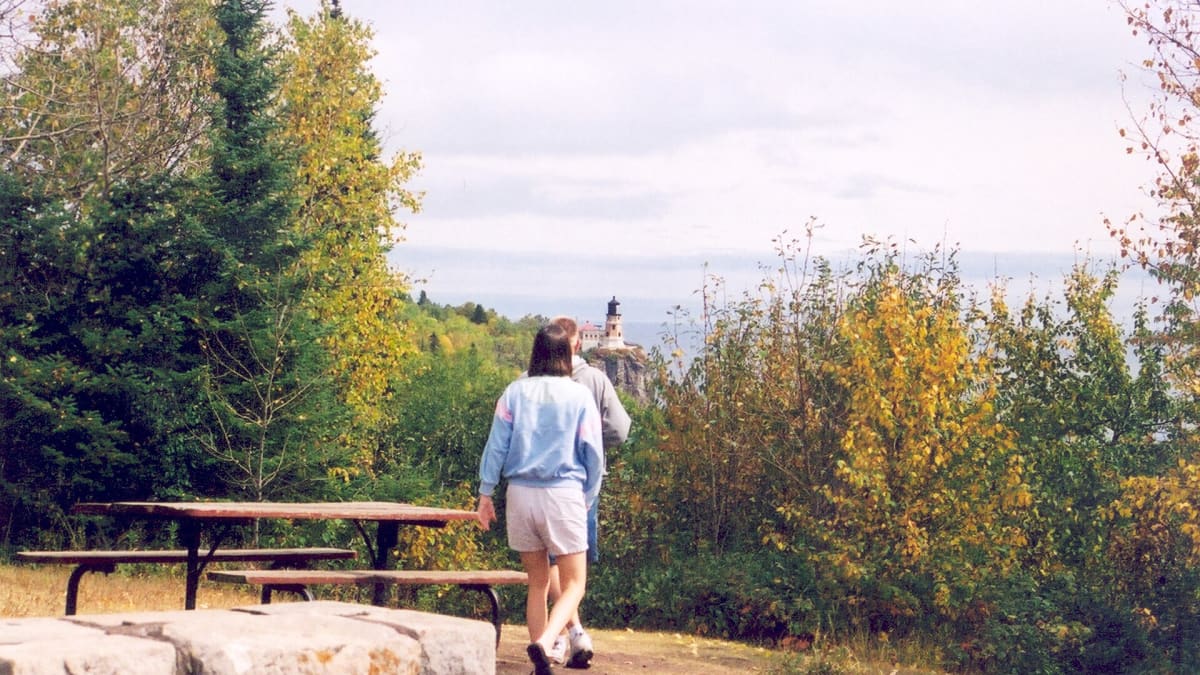
Split Rock Lighthouse
3713 Split Rock Lighthouse Rd, Two Harbors, MN
Two Harbors, MN
One of the most photographed lighthouses in the country, perched on a sheer cliff above Lake Superior, built after a single storm wrecked a fleet of ore boats.
Split Rock Lighthouse rises from the top of a sheer cliff on the North Shore of Lake Superior, one of the most photographed and beloved lighthouses in the United States. Completed in 1910, it was built to guide the ore boats hauling iron from the Minnesota ranges down the great lake, in a stretch of shore made treacherous by fog, storms, and, oddly, the local iron itself.
The lighthouse owes its existence to a single terrible night. In November 1905 a ferocious storm battered Lake Superior and wrecked or damaged a whole fleet of ships along this coast, and the outcry that followed pushed the government to build a light here. Today the tower, its keepers' houses, and the fog signal are preserved as a state historic site, drawing visitors to one of the most photogenic spots in Minnesota.
What Travelers Love
- The lighthouse perched dramatically on a sheer cliff above the great lake
- Restored keepers' houses and the fog signal building at the site
- Trails down to the pebble beach with the classic view up at the tower
- The story of the 1905 storm that led to the lighthouse being built
Worth Knowing
- The classic photo comes from the shoreline below, reached by trail from the state park
- Fall color along the North Shore draws crowds, so weekends can be busy
- The site is open seasonally with guided tours; check ahead before planning a tour
- Lake Superior is cold and its shore is rocky, so mind footing near the water
Learn about Split Rock Lighthouse
The storm of 1905 and the light that followed
In late November 1905 a savage gale swept Lake Superior, one of the deadliest storms in the lake's history. Along the North Shore it wrecked or crippled a fleet of ore carriers, with ships driven onto the rocks and lives lost, and the disaster laid bare how dangerous this shore had become to the growing traffic of iron ore. The shipping companies pressed hard for a lighthouse, and the government agreed.
There was a particular reason this coast was so treacherous. The high cliffs here are laced with iron-bearing rock, which threw off compasses and made navigation unreliable just where the shore was steepest. Built high on the cliff and lit in 1910, Split Rock gave mariners a fixed light and fog signal to steer by. Getting the materials up the cliff was itself a feat, hauled from boats below by a hoist because there were no roads.
The Ojibwe shore of Gitche Gumee
This is the homeland of the Ojibwe, the Anishinaabe, whose Grand Portage, Fond du Lac, and other communities have lived along Lake Superior for generations. The Ojibwe know the great lake as Gitche Gumee, the shining big-sea-water, and the North Shore has been part of their world through the fur-trade era and into the present, with the Grand Portage community farther up the coast holding one of the great old canoe routes to the interior.
The state name itself comes from the Dakota, Mni Sota Makoce, and the northern lake country carries a shared Dakota and Ojibwe history. The lighthouse, the ore boats, and the mining that drove them all belong to a later chapter written onto that older Ojibwe landscape, and the shore remains a place of deep cultural meaning as well as scenic fame.
Keepers, tower, and the restored site
For decades keepers lived at Split Rock, tending the light, sounding the fog signal in bad weather, and raising families in the trio of keepers' houses on the cliff top. It was isolated work, especially before a road reached the site, and the keepers' way of life is a central part of the story told here. The light was eventually automated and then retired from service as navigation technology changed.
The Minnesota Historical Society now preserves the site, and visitors can climb the tower, tour a keeper's house furnished to its early years, and see the fog signal building and the hoist that once lifted supplies from the lake. Guides in period dress bring the daily rhythm of the station to life, and the restored buildings give a full picture of what it meant to keep this light burning above the cold water.
The view, the park, and the seasons
The most famous view of Split Rock is not from the tower but from below, along the shoreline where the lighthouse stands high on its cliff against the sky and water. Trails from the surrounding state park lead down to a pebble beach and to overlooks that frame the classic shot, and many visitors come as much for that vista as for the buildings.
The seasons transform the shore. Summer brings warm days and the busiest crowds, while fall lights the North Shore woods in brilliant color and is the signature time to visit, drawing photographers from all over. Winter turns the cliff and the lake harsh and beautiful, with ice building along the shore, and each November the light is lit in memory of the ships lost in the 1905 storm that gave it life.
Closest Boutels
The closest Boutel™ stays, so you can turn this stop into an overnight. Each is a place we chose through independent editorial review, never a paid placement.
The Cliff Dweller on Lake Superior
Honorable Mention6452 MN-61, Tofte, MN 55615, USA, Tofte, MN
40 miles away|Learn More ›
Details
Two Harbors, MN
Frequently asked questions
What is Split Rock Lighthouse?
Split Rock Lighthouse, on the North Shore of Lake Superior in Minnesota, is one of the most iconic and picturesque lighthouses in the country, perched dramatically atop a sheer cliff rising above the great lake. Built in the early twentieth century after a series of shipwrecks on the treacherous shore, the beautifully preserved lighthouse and its historic buildings now form a state park and historic site, offering tours, exhibits on its history and the ships it guided, and breathtaking views over Lake Superior. Its clifftop setting makes it a symbol of the North Shore. With its historic lighthouse and stunning setting, Split Rock Lighthouse offers a spectacular destination in Minnesota.
What can you do at Split Rock Lighthouse?
You can tour the historic lighthouse and its restored keeper's buildings, learn about its history and the shipwrecks that led to its construction from exhibits and guides in period costume, take in breathtaking views of Lake Superior from the cliff and overlooks, hike the trails, and photograph the iconic tower from famous vantage points below. The lighthouse tour and the spectacular views are highlights. It is a beloved and much-photographed landmark. With its historic lighthouse, exhibits, trails, and stunning Lake Superior views, Split Rock Lighthouse offers a memorable experience on Minnesota's North Shore.
What safety tips apply at Split Rock Lighthouse?
The lighthouse sits atop steep cliffs above Lake Superior, so stay on designated trails, overlooks, and stairs, keep well back from cliff edges, and watch children closely near the drop-offs. If you hike down to the shoreline for the famous view, use caution on the stairs and rocks, which can be slippery, and be aware that Lake Superior's water is dangerously cold year-round and its waves can be powerful, so stay safely back from the water. Respecting the cliffs, stairs, and cold lake ensures a safe visit to Split Rock Lighthouse on Minnesota's North Shore.
When is the best time to visit Split Rock Lighthouse?
Late spring through fall offers the most pleasant weather for touring the lighthouse and enjoying the views, with fall especially spectacular when the North Shore forests blaze with color, framing the lighthouse beautifully, a favorite time that draws crowds. Summer is popular and mild. The site is open in winter too, with the lighthouse sometimes lit for a special commemoration, though it is cold. For the best weather aim for summer, and for stunning fall color, autumn, at Split Rock Lighthouse on Minnesota's North Shore, checking current hours before you go.
What is near Split Rock Lighthouse?
Split Rock Lighthouse is on the North Shore of Lake Superior in Minnesota, within reach of Gooseberry Falls State Park, Tettegouche State Park, Palisade Head, the Superior Hiking Trail, and the town of Two Harbors. That makes Split Rock Lighthouse a spectacular stop to combine with Gooseberry Falls, Tettegouche State Park, and the other attractions of Minnesota's North Shore on a visit to the state.
Nearby

Gooseberry Falls State Park
6.4 miles away
Gooseberry Falls State Park: on MN-61 about 13 miles northeast of Two Harbors.

Palisade Head
11 miles away
Palisade Head: the turnoff is off Highway 61 around milepost 57, a few miles northeast of Silver Bay.
Tettegouche State Park
12 miles away
Tettegouche packs the best of Lake Superior's North Shore into one ten-thousand-acre park about an hour up the coast from Duluth on Highway 61.