
Sod House Museum and Pony Express Station
604 8th St
Gothenburg, NE
A homesteader's house built from the prairie itself, alongside a log station that once passed the mail hand to hand across the West.
Two humble landmarks in Gothenburg tell the story of how the West was settled and served. The Sod House Museum preserves a genuine soddy, a house built from blocks of tough prairie earth cut with a plow, the kind of dwelling that sheltered countless homesteaders on a treeless plain where lumber was scarce and dear. Alongside it stand the tools, wagons, and everyday belongings of the people who lived that hard, hopeful life.
A short distance away, in a city park, sits an original Pony Express relay station, a squat log building that once stood on the overland route where riders swapped tired horses for fresh ones in the famous mail relay of 1860 and 1861. Together the two sites capture the twin threads of Platte Valley history, the settlers who put down roots and the great road of travel and communication that passed through on its way west.
What Travelers Love
- Stepping inside a real sod house built from blocks of prairie earth
- Seeing an original Pony Express relay station moved into town and preserved
- The homestead-era tools, wagons, and everyday objects on display
- A quick, memorable stop on a Platte Valley road trip along Interstate 80
Worth Knowing
- The sites keep seasonal hours, generally warm-weather months, so check before a winter visit
- The sod house and station are small, so a visit is short and easy to combine with others
- The soddy shows how thick earthen walls kept pioneers warm in winter and cool in summer
- The museum welcomes travelers, in keeping with the town's roadside hospitality
Learn about Sod House Museum and Pony Express Station
A house built from the prairie
On the open plains there were few trees to cut for lumber, so homesteaders built with what they had, the prairie itself. Using a special plow to cut the thick, root-bound sod into bricks, they stacked those earthen blocks into walls a couple of feet thick, roofed them with more sod over poles and brush, and made a home that was cheap, quick to build, and surprisingly snug. The dense walls kept the heat out in summer and the cold at bay in winter.
A soddy had its trials, too. Rain could turn a dirt roof to dripping mud, insects and snakes found their way into the walls, and keeping the packed-earth floor clean was a constant chore. The museum's sod house and its furnishings show both the ingenuity and the hardship of that life, and honor the families, many of them immigrants, who broke the prairie and stayed.
The Pony Express and the road west
For a brief, dramatic span in 1860 and 1861, the Pony Express carried mail across nearly two thousand miles between Missouri and California in a relay of hard-riding horsemen. Riders galloped between relay stations set roughly a dozen miles apart, swapping horses in a couple of minutes and pressing on, so a letter could cross the continent in about ten days, astonishingly fast for the time.
The station preserved at Gothenburg is one of the log buildings from that era, moved into town and kept as a museum. The whole enterprise ran only a year and a half before the transcontinental telegraph made it obsolete, but the image of the lone rider crossing the plains has never faded. This corridor along the Platte, the Great Platte River Road, carried the Pony Express, the wagon trains, the stage lines, and eventually the railroad, all following the same river highway west.
Platte Valley history in miniature
Gothenburg grew up as a railroad town in the Platte Valley, and it has made a point of preserving these two windows into the settlement and travel eras. Both sites are small and easy to see in a short stop, which makes them a favorite pause for travelers on Interstate 80 who want a taste of pioneer history without a long detour.
The valley the town sits in was, long before the settlers, part of the homeland of Plains peoples including the Pawnee, whose earth-lodge villages lay along the Platte and the Loup, and whose hunting grounds the emigrant road crossed. The soddy and the station stand within a landscape whose deeper history reaches back long before the first plow cut the sod.
Season by season
Spring and summer are the main visiting seasons, when the sites are open and the Platte Valley is green, a natural stop on a warm-weather road trip along the interstate. The soddy is a cool refuge on a hot day.
Fall brings mild weather and golden cottonwoods along the river before the sites close for the colder months. Winter finds them quiet and often shuttered, a reminder of how the thick sod walls once kept prairie families warm through the long cold.
Closest Boutels
The closest Boutel™ stays, so you can turn this stop into an overnight. Each is a place we chose through independent editorial review, never a paid placement.
Evergreen Inn Motel & RV Park
Honorable Mention20001 W. US Highway 54, Pratt, KS
239 miles away|Learn More ›
Details
Gothenburg, NE
Frequently asked questions
What is the Sod House Museum and Pony Express Station?
The Sod House Museum and Pony Express Station, in Gothenburg in central Nebraska, brings together two windows into frontier life: a museum devoted to the sod houses that sheltered the prairie pioneers, and a historic Pony Express station. Because trees were scarce on the plains, early settlers built their homes from blocks of prairie sod, and the museum preserves and interprets this remarkable pioneer ingenuity. Nearby, an original Pony Express station recalls the daring riders who carried mail across the West. Together they tell the story of survival and connection on the frontier. A charming and educational stop, it delights history lovers. With its pioneer and Pony Express history, the site offers a fascinating destination in Nebraska.
What is a sod house?
A sod house is a home built from blocks of prairie sod, cut from the tough, root-bound grassland soil, which pioneers on the treeless Great Plains used as building material because lumber was scarce and expensive. These sod homes, though humble, were sturdy, well-insulated against the extremes of prairie weather, and a testament to the resourcefulness of the settlers. The Sod House Museum in Gothenburg preserves and explains this remarkable piece of pioneer life. Learning about sod houses enriches a visit to the Sod House Museum and Pony Express Station in Nebraska.
What can you see at the Sod House Museum and Pony Express Station?
You can see a museum devoted to sod houses and pioneer life with artifacts and exhibits, and visit a historic Pony Express station that recalls the legendary mail riders who raced across the frontier. The sod-house exhibits, the pioneer artifacts, and the historic Pony Express station are the draws, offering a rich glimpse of frontier survival and communication. The Pony Express station connects visitors to a legendary chapter of the West. With its frontier history, the site offers a rewarding visit in Gothenburg, Nebraska.
When is the best time to visit the Sod House Museum and Pony Express Station?
The site generally operates seasonally in the warmer months, so late spring through early fall is the time to visit, when the museum and Pony Express station are open and the weather is pleasant, and its location near Interstate 80 makes it an easy stop on a cross-state drive. Because it is seasonal, checking the current schedule before you go is wise. For open access and pleasant weather, plan a warm-months visit to the Sod House Museum and Pony Express Station in Nebraska.
What is near the Sod House Museum and Pony Express Station?
The Sod House Museum and Pony Express Station is in Gothenburg in central Nebraska, along Interstate 80, within reach of North Platte and the Golden Spike Tower to the west, the Platte River, and the routes across central Nebraska. That makes the site a fascinating stop to combine with the Golden Spike Tower and the other attractions of central and western Nebraska on a visit to the state.
Nearby
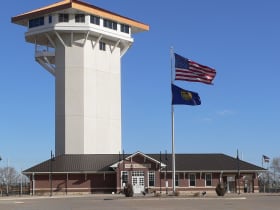
Golden Spike Tower and Bailey Yard
36 miles away
Golden Spike Tower: on North Homestead Road on the north side of North Platte, overlooking Bailey Yard.

The Archway
62 miles away
The Archway: at the east edge of Kearney, spanning Interstate 80 (exit 275). Admission charged.
Platte River and Fort Kearny State Historical Park
65 miles away
Fort Kearny State Historical Park: about 8 miles southeast of Kearney off Highway 50A. Nebraska state park permit required.