

Santee State Park
116 Parklane Dr
Santee, SC
Cabins stand on stilts out over the water of the state's largest lake, where trophy catfish and bass draw anglers from all over.
Santee State Park sits on the shore of Lake Marion, the largest lake in South Carolina and part of the vast Santee Cooper system created in the early 1940s. The park's signature feature is a row of cabins built on pilings that stand right out over the water, so guests wake with the lake lapping beneath the floor and stretching to the horizon. It is one of the most distinctive places to stay in the whole state park system.
Beyond the cabins, the park is a haven for anglers and anyone who loves big open water. Lake Marion is famous for its fishing, holding trophy catfish, striped bass, largemouth bass, and crappie, and boat tours run out to a hidden limestone cave and the drowned cypress mazes of Sparkleberry Swamp. Trails and a bike path wind through the surrounding pine forest, and the flooded timber along the shore shelters an abundance of birds and other wildlife.
What Travelers Love
- Cabins built out over the lake on pilings, with water on all sides
- Fishing for trophy catfish, striped bass, and crappie on Lake Marion
- Boat tours to a limestone cave and Sparkleberry Swamp
- Easy trails and a bike path through pine woods along the shore
Worth Knowing
- The over-water cabins are popular and book far ahead, so reserve early
- This is a working recreation lake, so expect boat traffic in the warm months
- Bring insect repellent for the shoreline and swamp edges in summer
- Watch for alligators near the water and keep pets and children back from the edge
Learn about Santee State Park
The making of Lake Marion
Lake Marion did not exist a century ago. It was created in the late 1930s and early 1940s when the Santee Cooper hydroelectric and navigation project dammed the Santee River, flooding tens of thousands of acres of Lowcountry swamp and farmland to generate power and bring electricity to a rural region. The result was a pair of enormous lakes, Marion and Moultrie, that transformed the landscape of the central part of the state.
When the waters rose, they drowned forests of cypress and hardwood, and much of that timber still stands beneath the surface or breaks the water as gray snags. Those flooded trees and the rich, shallow flats they create are a big part of why the fishing here is so good. The lake was named for Francis Marion, the Revolutionary War partisan known as the Swamp Fox, who fought British forces through these very swamps.
The state park opened along the shore to give the public a foothold on this new inland sea. Its most famous structures, the cabins on pilings reaching out over the water, were built to put visitors as close to the lake as possible, and they remain a beloved and much-requested place to stay.
Fishing and the water
Lake Marion is one of the premier fishing lakes in the Southeast. It is legendary for catfish, including the big blues and flatheads that grow to trophy size in its rich waters, and it also gives up striped bass, largemouth bass, crappie, and bream in good numbers. Anglers come from across the region to fish the flooded timber, the shallow flats, and the old river channels beneath the surface.
The park offers boat landings, fishing piers, and easy shore access, and guided fishing is a local tradition. For those who prefer a slower cruise, park-run boat tours head out to a limestone cave along the shore and into the eerie, beautiful maze of Sparkleberry Swamp, a flooded cypress wilderness that is one of the wildest corners of the lake.
Trails, cabins, and camping
On land, Santee State Park offers a network of walking and biking trails that loop through the pine forest and along the lakeshore, gentle enough for a family outing yet long enough to work up a sweat. The paths pass through classic Sandhills and coastal-plain woods of loblolly pine and hardwood, with glimpses of the water through the trees.
Overnight, the choices range from the famous over-water cabins on their pilings to lakeside cabins on the shore and campgrounds shaded by pines. Staying here means falling asleep to the sounds of the lake and waking to mist rising off the water, a genuine escape into the quiet interior of the state.
Wildlife and the seasons
The lake and its flooded forest draw a wealth of wildlife. Ospreys and bald eagles nest around the shore and dive for fish, herons and egrets stalk the shallows, and wood ducks and other waterfowl gather in the coves. Alligators live in the warmer sloughs, deer and turkey move through the pinewoods, and the swamp margins hum with frogs and insects in the warm months.
Spring and fall are the most pleasant seasons, with mild air and active fishing. Summer is hot and busy, prime time for swimming, boating, and family stays in the cabins. Winter empties the park out and brings the best striped-bass fishing and the greatest concentrations of wintering waterfowl and eagles, a fine quiet time for anyone who does not mind the chill.
Closest Boutels
The closest Boutel™ stays, so you can turn this stop into an overnight. Each is a place we chose through independent editorial review, never a paid placement.
The Station by Compo Hotels
Boutel745 Old Buncombe Rd, Travelers Rest, SC 29690, Travelers Rest, SC
149 miles away|Learn More ›
Details
Santee, SC
Frequently asked questions
What is Santee State Park?
Santee State Park, on the shores of Lake Marion in the Midlands of South Carolina, is a popular park on the state's largest lake, offering excellent water recreation and lakeside beauty. The park features unique cabins built out over the water on piers, along with fishing, boating, swimming, hiking and biking trails, a nature center, and abundant wildlife amid cypress-dotted shores. Lake Marion is famous for its fishing, especially for catfish and bass, drawing anglers from far and wide. A beloved lake getaway, Santee combines recreation with natural beauty. With its big lake, cabins, and trails, Santee State Park offers a rewarding destination in South Carolina.
What can you do at Santee State Park?
You can fish the renowned waters of Lake Marion for catfish, bass, and other species, boat, kayak, and paddle, swim, stay in the unique over-the-water cabins, hike and bike the trails, visit the nature center, tour a limestone cavern area, and watch for wildlife along the cypress shores. The fishing, the over-water cabins, and the lake recreation are highlights, making it a favorite for anglers and families. With its lake fishing, boating, cabins, and trails, Santee State Park offers a rewarding outdoor experience in the Midlands of South Carolina.
What safety tips apply at Santee State Park?
When boating or paddling on the large Lake Marion, always wear a life jacket, watch for winds that can create waves and for boat traffic, and be cautious of the deeper water, while swimmers should stay in designated areas and watch children closely. The lake and its cypress swamps are home to alligators, so keep a safe distance, never approach or feed them, and watch children and pets near the water. Following water safety, respecting the alligators, and supervising children ensure a safe visit to Santee State Park in South Carolina.
When is the best time to visit Santee State Park?
Spring and fall offer pleasant weather and excellent fishing, popular times for anglers, while summer is prime for swimming, boating, and the cabins, though hot and humid, and mild winters draw anglers too. The lake recreation shines in the warm months. Fishing is good much of the year. For the best combination of pleasant weather and fishing aim for spring or fall, and for swimming and water recreation, summer, at Santee State Park on Lake Marion in South Carolina.
What is near Santee State Park?
Santee State Park is on Lake Marion in the Midlands of South Carolina, within reach of the Santee lakes region, the town of Santee, the route between Columbia and Charleston, and the Lowcountry. That makes Santee State Park a rewarding stop to combine with the Santee lakes area and the other attractions along the route between Columbia and Charleston on a visit to South Carolina.
Outside the Park
Edisto Memorial Gardens
21 miles away
People drive past Orangeburg on I-26 with no idea one of the states loveliest public gardens sits by the river here, free to walk.

Cedar Creek
27 miles away
Cedar Creek is a blackwater stream winding through the old-growth heart of Congaree, a designated canoe trail that lets paddlers glide beneath towering cypress and tupelo.

Weston Lake
28 miles away
Weston Lake is a tranquil oxbow lake, a former bend of the Congaree River cut off long ago, reached from the Boardwalk Loop at the Weston Lake Overlook.
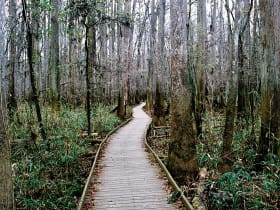
Congaree National Park
28 miles away
One of the tallest deciduous forests left in the world, a floodplain of champion old-growth hardwoods.