
Ryman Auditorium
116 Rep. John Lewis Way N, Nashville, TN
Nashville, TN
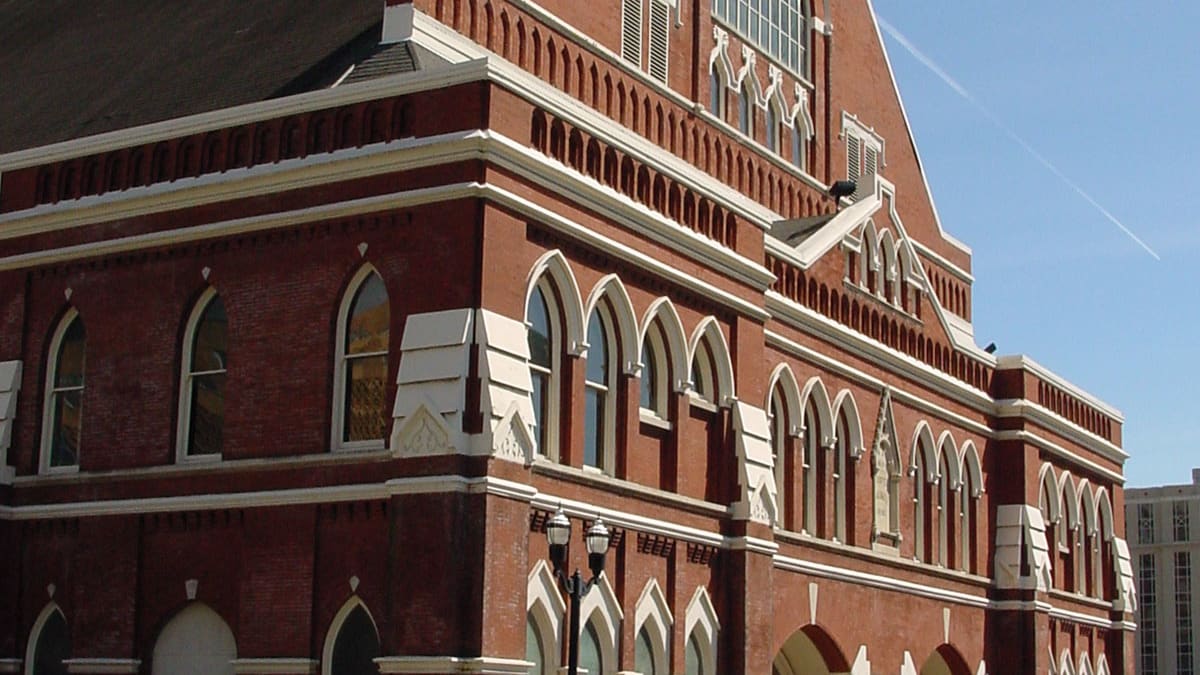
A red-brick tabernacle turned concert hall whose wooden pews and warm acoustics earned it the name the Mother Church of Country Music.
The Ryman Auditorium is the most storied music room in Nashville, a red-brick building of curved wooden pews and stained-glass windows that musicians and fans alike call the Mother Church of Country Music. From 1943 to 1974 it was the home of the Grand Ole Opry, the long-running radio broadcast that made Nashville the capital of country music, and its stage has held nearly every great name in American music across genres.
What began as a house of worship became a house of song. The building was raised in the 1890s as a tabernacle by a riverboat captain who had been moved by a traveling revival, and its churchly design, the pews, the balcony, the vaulted acoustics, turned out to be perfect for music. That accidental acoustic gift is a large part of why performers still speak of the Ryman with something close to reverence.
What Travelers Love
- Standing on the same stage where the Grand Ole Opry was broadcast for decades
- The warm, church-like acoustics that musicians prize above almost any other room
- The original curved wooden pews, still the seating for shows
- Self-guided tours by day and legendary live concerts by night in one building
Worth Knowing
- It is both a museum by day and an active concert venue by night, so tour and show times are separate
- The historic pews are wooden bench seating, in keeping with the building's tabernacle origins
- It is a compact downtown building with limited nearby parking, so plan your approach
- Popular concerts sell out well ahead, so check the schedule early if you hope to see a show
Learn about Ryman Auditorium
From tabernacle to Mother Church
The building was the vision of Thomas Ryman, a Nashville riverboat captain who ran a fleet of steamboats and a string of saloons. In 1885 he attended a tent revival led by the fiery evangelist Samuel Porter Jones, meaning to heckle, and instead came away converted. Ryman resolved to build a great tabernacle where Jones and others could preach to large crowds, and the Union Gospel Tabernacle opened in the 1890s.
When Ryman died in 1904, Jones proposed at his memorial service that the building be renamed the Ryman Auditorium in his honor, and the crowd agreed by acclamation. Over the following decades the hall hosted not only preaching but lectures, opera, theater, and speeches by presidents and famous figures, gradually becoming Nashville's premier gathering place.
The building's musical destiny was sealed in 1943, when the Grand Ole Opry, already a beloved radio show, moved in. For more than thirty years the Ryman was the Opry's home, and the broadcasts carried the sound of Nashville across the country every Saturday night, cementing the city's identity as the home of country music and the building's identity as its Mother Church.
The Opry years and the stars
During the Opry years nearly every legend of country music stood on the Ryman stage, and many careers were made or broken in that room. It was here that a young Bill Monroe and others helped shape the sound of bluegrass, here that Hank Williams made his celebrated debut, and here that the Opry's mix of stars, comedy, and gospel was beamed out to the nation week after week.
The Ryman's reach went well beyond country. Its acoustics and prestige drew performers of every kind over the years, from blues and gospel to rock and pop, and the room became a rite of passage for musicians who wanted to test themselves in one of the best-sounding halls in America. When the Opry moved to a new home in 1974, the Ryman fell quiet for a time, but its legend only grew, and a later restoration brought concerts and tours roaring back.
The room and its sound
The Ryman's magic is in its shape. Built as a tabernacle to carry a preacher's voice to the back row without amplification, the curved wooden pews, the sloping balcony, and the wood-and-brick interior together create a warm, clear, forgiving acoustic that musicians describe as almost impossible to replicate. Instruments and voices bloom in the space in a way that flatters even quiet performances.
That churchly design is felt as much as heard. Audiences still sit on the original curved pews, look up at the stained glass, and share a room built for communal listening. Performers routinely stop mid-show to marvel at the sound and the history, and recordings made in the hall carry a distinctive intimacy. It is a rare case of a building's original purpose accidentally producing one of the finest concert rooms in the world.
Visiting today
By day the Ryman operates as a museum, with self-guided and guided tours that let visitors walk the lobby, sit in the pews, step onto the famous stage, and take in exhibits on the building's history and the many artists who have played it. Photographs, costumes, and instruments trace the sweep from tabernacle to Opry house to living concert hall.
By night the Ryman comes alive as a working venue, hosting concerts across every kind of music in the same room the Opry made famous. Seeing a show here, on the pews, under the stained glass, is one of the great musical experiences in Nashville, and the schedule ranges widely through the year. The Opry itself returns to the Ryman for a run of shows in the colder months, a homecoming for the broadcast that made the building legendary.
Closest Boutels
The closest Boutel™ stays, so you can turn this stop into an overnight. Each is a place we chose through independent editorial review, never a paid placement.
Sportsman's Lodge at Dale Hollow
Honorable Mention1201 Livingston Hwy, Byrdstown, TN
94 miles away|Learn More ›
Details
Nashville, TN
Frequently asked questions
What is the Ryman Auditorium?
The Ryman Auditorium, in downtown Nashville, Tennessee, is a legendary and historic music venue, often called the Mother Church of Country Music, one of the most revered concert halls in the country. Built in the late nineteenth century, the beautiful brick building with its warm wooden pews and renowned acoustics served for decades as the home of the Grand Ole Opry and has hosted countless legendary performances across many genres. Today it welcomes both tours and concerts, letting visitors stand where music history was made. A hallowed and historic music landmark, it moves and delights visitors. With its heritage, the Ryman Auditorium offers a compelling destination in Tennessee.
Why is the Ryman Auditorium famous?
The Ryman Auditorium is famous as the Mother Church of Country Music, revered for its role as the longtime home of the Grand Ole Opry and as the site of countless legendary performances by the greatest names in country music and beyond. Its warm wooden interior, remarkable acoustics, and deep history have made it one of the most beloved and hallowed music venues in the country. Standing on its stage or in its pews connects visitors to music history. Understanding this heritage enriches a visit to the Ryman Auditorium in Tennessee.
Can you tour the Ryman Auditorium?
Yes, the Ryman Auditorium offers tours that let visitors explore the historic hall, learn its rich history, see exhibits, and even stand on the famous stage, while it also hosts concerts and events throughout the year. Because it is both a tour destination and a working concert venue, checking the current tour and event schedule before you go is wise, and attending a show is a special way to experience it. Touring or attending a concert offers a rewarding experience at the Ryman Auditorium in Tennessee.
When is the best time to visit the Ryman Auditorium?
The Ryman offers tours through much of the year, enjoyable in any weather, while concerts and events happen on a schedule, so the best time depends on whether you wish to tour or attend a show. Because tour hours and the event calendar vary, checking the current schedule before you go is wise. For a tour visit during open hours, or time a visit to a concert, at the Ryman Auditorium in Nashville, Tennessee.
What is near the Ryman Auditorium?
The Ryman Auditorium is in downtown Nashville, Tennessee, within reach of Broadway's honky-tonks, the Country Music Hall of Fame and Museum, the Parthenon, and the other attractions of Music City. That makes the Ryman Auditorium a compelling stop to combine with the Country Music Hall of Fame and the other attractions of Nashville on a visit to Tennessee.
Nearby

Country Music Hall of Fame and Museum
0.3 miles away
The Country Music Hall of Fame keeps families engaged even if the kids are not yet country fans.
Adventure Science Center
1.1 miles away
The Adventure Science Center is a go-to for families in Nashville, especially on a hot or rainy day.

The Parthenon
2.1 miles away
People do a double-take when a full-size Greek Parthenon appears in a Nashville park.
Lane Motor Museum
2.9 miles away
Nashville is all music until you find the car museum that stops gearheads in their tracks.

Radnor Lake State Natural Area
7.1 miles away
It is remarkable to find genuine forest wilderness this close to a state capital.