
Roofless Church
420 North St, New Harmony, IN
New Harmony, IN
A walled garden with only the sky for a ceiling, built on the idea that a single roof is too small to hold all the ways people worship.
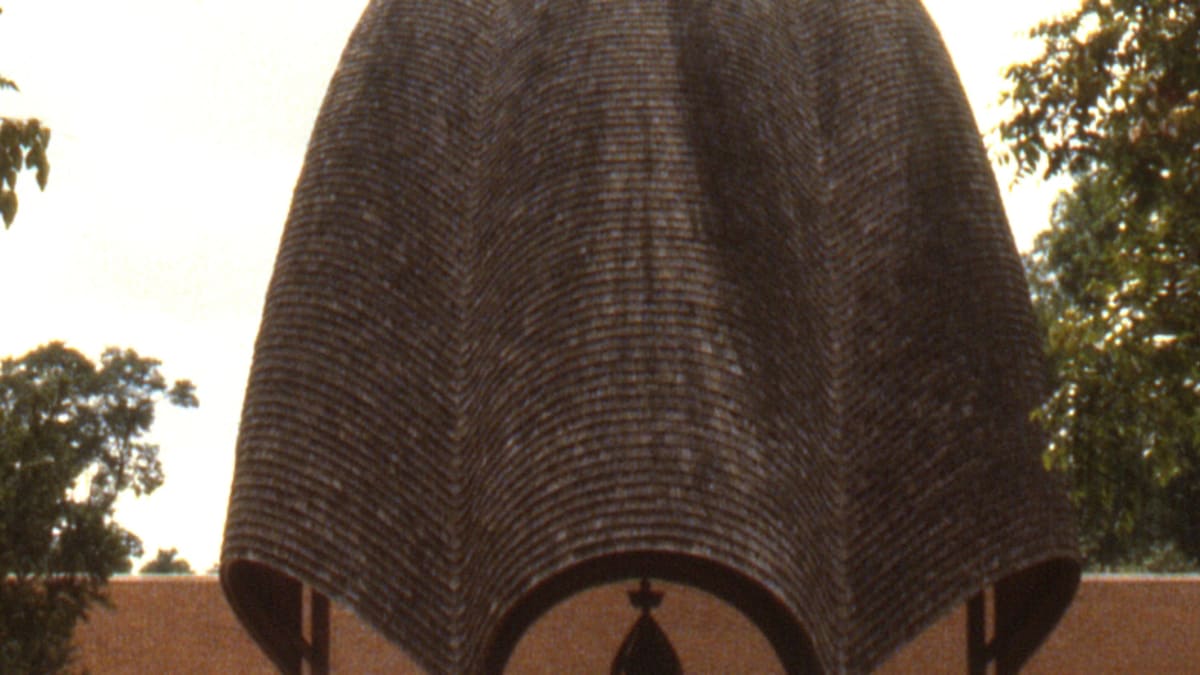
The Roofless Church is an open-air sanctuary in New Harmony, designed by the architect Philip Johnson and dedicated in 1960. Its central feature is a graceful, inverted dome shaped like a rosebud, sheltering a bronze sculpture, while the rest of the sanctuary is enclosed only by brick walls and the open sky. The founder, the philanthropist Jane Blaffer Owen, believed that only one roof, the sky, could embrace all worshipping people, and the church was built for every denomination.
The setting matters as much as the structure. New Harmony was the site of two nineteenth-century utopian communities, and Jane Owen, who married into the family tied to the second of them, spent much of her life restoring the town and commissioning art and architecture in it. The Roofless Church was her most famous gesture, a place meant to be quiet, welcoming, and open to the heavens above the Wabash floodplain.
What Travelers Love
- The soaring shingled dome that shelters a bronze sculpture yet leaves the rest of the sanctuary open to the sky
- Jacques Lipchitz's sculpture 'The Descent of the Holy Spirit' at the heart of the space
- Walking the brick paths and quiet gardens of one of America's most storied small towns
- The sense of calm in a place designed to welcome every faith and none
Worth Knowing
- The sanctuary is open-air, so plan around the weather and dress for the season
- New Harmony is compact and walkable, with the church one stop among many historic sites
- The town is quiet and reflective by design, best explored slowly and on foot
- Check current visiting details before you go, as small-town sites keep limited seasons
Learn about Roofless Church
Two utopias on the Wabash
This land is part of the homeland of the Miami (Myaamia), the Piankeshaw, the Wea, the Shawnee, and the Kickapoo, who lived and traveled along the Wabash River for generations before European settlement. Their presence in the lower Wabash valley shaped the routes and clearings that later communities would use.
In 1814 a German religious group called the Harmonists, or Rappites, led by George Rapp, established the town of Harmonie here, building tidy brick houses, workshops, and communal structures as they awaited what they believed was the imminent second coming. About a decade later they sold the entire town to the Welsh industrialist and social reformer Robert Owen, who renamed it New Harmony and tried to build a secular utopia founded on education, science, and cooperation. Owen's community soon dissolved, but the scholars, scientists, and educators it drew left a lasting mark, and New Harmony became an early American center of learning.
Jane Blaffer Owen and the making of the church
In the twentieth century, Jane Blaffer Owen, a Texan who had married a descendant of Robert Owen, devoted much of her long life to restoring New Harmony and enriching it with new art and architecture. She saw the town's utopian past as a living inheritance rather than a museum piece, and she brought in leading modern artists and designers to add to it.
For the Roofless Church she chose Philip Johnson, one of the most prominent American architects of the century, and the sculptor Jacques Lipchitz, whose bronze 'The Descent of the Holy Spirit' stands beneath the dome. The result was dedicated in 1960 as an interdenominational sanctuary, a place where, as Owen put it, one roof, the sky, could unite all who came to worship.
The dome, the gate, and the garden
The sanctuary is entered through a walled garden and a set of doors, and its focal point is the shingled dome, its shape often compared to a rosebud or an inverted rose. The dome shelters the Lipchitz sculpture while leaving the surrounding space open, so that light, weather, and sky are all part of the experience. The effect is intimate and expansive at once.
Around the church, New Harmony holds other works of art and architecture connected to Jane Owen's vision, including a later meditative structure and quiet garden spaces. Together they make the town a rare place where modern design and a nineteenth-century utopian dream share the same brick streets.
Visiting New Harmony
New Harmony is small and walkable, and the Roofless Church is best experienced as part of a slow wander through the town's historic core, its restored Harmonist houses, and its gardens. The pace is unhurried, and the town leans into reflection and craft rather than spectacle.
Because the sanctuary is open to the sky, the season and weather shape a visit. Spring and fall bring mild air and color to the gardens, summer is green and warm, and a clear day at any time of year opens the sanctuary to full light. It is a place to sit quietly as much as to look.
Closest Boutels
The closest Boutel™ stays, so you can turn this stop into an overnight. Each is a place we chose through independent editorial review, never a paid placement.
Details
New Harmony, IN
Frequently asked questions
What is the Roofless Church?
The Roofless Church, in the historic town of New Harmony in southwestern Indiana, is a beautiful and contemplative open-air church, a serene modernist sanctuary designed by a famous architect with no roof but the sky. Created in the town famous for its nineteenth-century utopian communities, the Roofless Church is an open-air worship space enclosed by walls but open to the heavens, with a striking domed shrine sheltering a notable sculpture, set amid gardens and grounds. It reflects the idea that only the sky is vast enough to roof a place of universal worship. Its beauty, serenity, and thoughtful design make it a moving destination. A serene and beautiful spiritual site, it moves visitors. With its open-air sanctuary, the Roofless Church offers a compelling destination in Indiana.
Why is the Roofless Church roofless?
The Roofless Church is roofless by design, expressing the idea that only the sky is vast enough to serve as the roof for a place of worship meant to welcome all people, an inspiring concept realized by a famous architect. The open-air sanctuary, enclosed by walls but open to the heavens, with its domed shrine and sculpture, creates a serene and universal spiritual space. This thoughtful, symbolic design is central to its meaning and beauty. Understanding this idea enriches a visit to the Roofless Church in Indiana.
What can you see at the Roofless Church?
You can experience the serene open-air sanctuary open to the sky, see the striking domed shrine sheltering a notable sculpture, stroll the gardens and grounds, and reflect in the contemplative setting, all within the historic town of New Harmony. The open-air church, the domed shrine and sculpture, the gardens, and the peaceful atmosphere are the draws, making it a moving and beautiful visit. The serene sanctuary and its symbolism are highlights. With its beauty and meaning, the Roofless Church offers a rewarding experience in Indiana.
When is the best time to visit the Roofless Church?
The mild months of spring through fall are the loveliest for the open-air church and its gardens, with comfortable weather for reflection and the grounds at their most beautiful, though the open-air sanctuary can be experienced in various seasons and weather. Because it is an outdoor site, comfortable weather makes for the best visit. For the most pleasant and beautiful visit, aim for spring through fall at the Roofless Church in Indiana.
What is near the Roofless Church?
The Roofless Church is in the historic town of New Harmony in southwestern Indiana, within reach of New Harmony's other historic sites tied to its utopian community heritage, the Wabash River, Evansville to the east, and the other attractions of southwestern Indiana. That makes the Roofless Church a compelling stop to combine with the historic sites of New Harmony on a visit to Indiana.
Nearby
Mesker Park Zoo and Botanic Garden
19 miles away
An easygoing zoo day right in Evansville. Mesker Park Zoo at 1545 Mesker Park Dr dates to 1928, one of the oldest in the state, and its highlight is Amazonia, an indoor rainforest you walk through pas...

Angel Mounds State Historic Site
29 miles away
Most people driving through Evansville have no idea a major ancient city sits on the edge of town.
Garden of the Gods Recreation Area
44 miles away
Garden of the Gods is what makes southern Illinois feel like another state entirely.