
Red Rock Canyon National Conservation Area
1000 Scenic Loop Dr
Las Vegas, NV
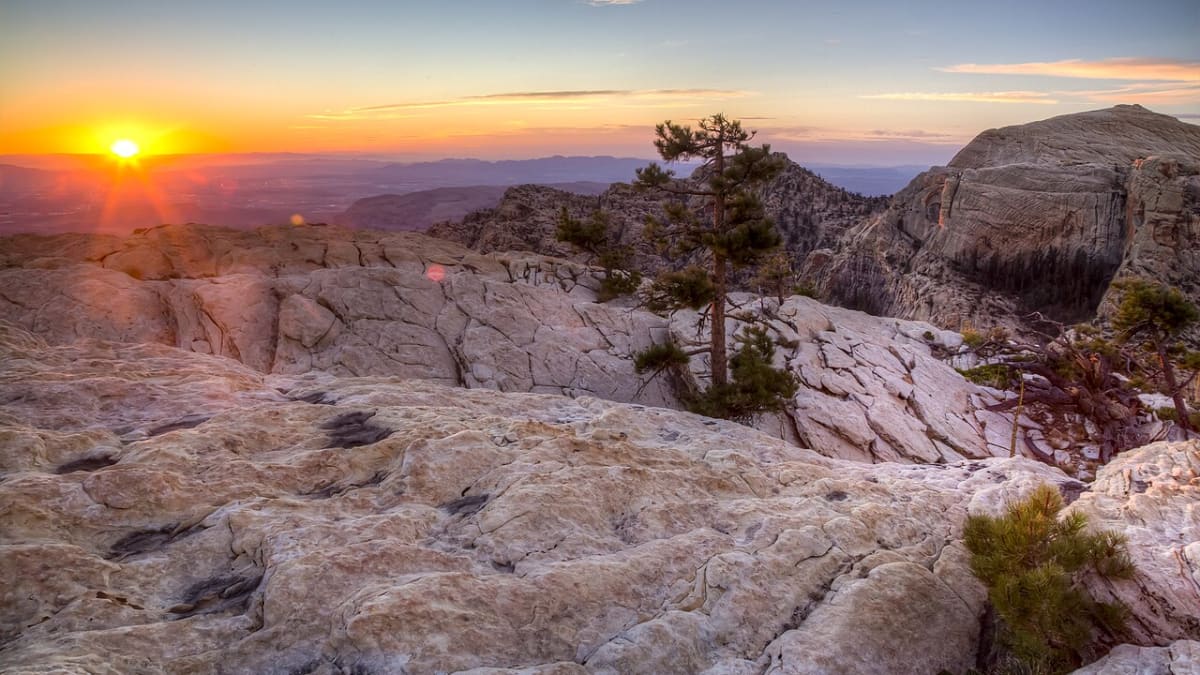
A wall of fire-red sandstone rising straight out of the Mojave, minutes from the neon but a world away from it.
Red Rock Canyon is the great natural counterpoint to Las Vegas, a landscape of towering red and cream sandstone cliffs that begins just seventeen miles from the Strip. Where the city is loud and built, Red Rock is silent and ancient, and the contrast is the whole point, an easy escape into raw Mojave Desert.
The centerpiece is a 13-mile one-way scenic loop that curls beneath the cliffs and past a string of overlooks and trailheads. Behind the color and the views is a remarkable geologic story, a place where the desert's layered rock has been flipped upside down by the collision of the earth's crust, and where wild burros still wander the washes.
What Travelers Love
- The 13-mile one-way scenic loop drive past the most dramatic red cliffs and overlooks
- Some of the best sandstone rock climbing and scrambling in the country
- Hikes to seasonal waterfalls, agave roasting pits, and hidden canyons
- How completely the desert quiet replaces the city, only a short drive from the Strip
Worth Knowing
- The scenic loop uses a timed-entry reservation system during the busy cooler months, so book ahead
- Summer heat is severe, so hike early, carry far more water than seems necessary, and turn back in the midday sun
- The wild burros are protected, so give them room and never feed them
- Flash floods can fill the washes fast, so avoid canyon bottoms when storms threaten
Learn about Red Rock Canyon National Conservation Area
Why the rock is red
The signature cliffs are made of Aztec Sandstone, the hardened remains of enormous sand dunes that piled up in a desert here roughly 180 million years ago. You can still read the old dunes in the sweeping curves of the cross-bedding in the stone. The red comes from iron in the sand that rusted over time, staining the rock in bands of crimson, orange, and cream.
Above and behind the red sandstone stand cliffs of gray limestone, and the way they sit is the surprise. Normally older rock lies beneath younger rock, but here the gray limestone rests on top of the younger red sandstone, an inversion that puzzled early geologists.
The Keystone Thrust
The reason the gray limestone sits above the red sandstone is the Keystone Thrust Fault, one of the clearest examples of a major thrust fault in the country. Roughly 65 million years ago, as the earth's plates collided, a slab of older gray limestone was shoved up and horizontally over the younger red sandstone, stacking old rock on top of young.
The result is a vivid, visible line where gray meets red along the mountain front, a boundary geologists come from around the world to see. A trail leads right to the contact, so visitors can stand where two very different ages of rock, and the immense force that rearranged them, meet.
Climbing, hiking, and the loop drive
Red Rock is one of the premier rock-climbing destinations in North America, its long, clean sandstone walls drawing climbers all winter when the desert is cool. For everyone else, the scenic loop offers overlooks and trailheads for hikes of every length, from short walks to Calico Basin's colorful rocks to longer routes into canyons with seasonal water and pools.
Watch for the roasting pits where Native people cooked agave, for petroglyphs on shaded walls, and for the seasonal waterfalls that appear after rain or snowmelt. The desert looks barren at a glance, but it is full of these small human and natural details for those who slow down.
Wildlife and the desert edge
Herds of wild burros roam Red Rock, descendants of animals turned loose by miners a century ago. They are protected and often seen along the roads and washes, and while they seem tame, they are wild and best given a wide berth. Desert bighorn sheep, wild horses, and a range of desert birds and reptiles also live here.
Because Red Rock sits at the meeting of the low Mojave and the higher Spring Mountains, its plant and animal life is unusually varied for a spot so close to a big city. That richness, plus the sheer visual drama of the cliffs, is why locals treat it as their backyard wilderness and why it belongs on any Las Vegas itinerary.
Closest Boutels
The closest Boutel™ stays, so you can turn this stop into an overnight. Each is a place we chose through independent editorial review, never a paid placement.
Sands Motel of Boulder City
Honorable Mention809 Nevada Way, Boulder City, NV
35 miles away|Learn More ›
Details
Las Vegas, NV
Frequently asked questions
What is Red Rock Canyon National Conservation Area?
Red Rock Canyon National Conservation Area, just west of Las Vegas in southern Nevada, is a stunning desert landscape of towering red and tan sandstone cliffs, dramatic rock formations, and colorful canyons, a beloved natural escape close to the city. The conservation area is famous for its scenic thirteen-mile loop drive winding past the vivid red rock escarpment, along with hiking trails, world-class rock climbing, desert wildlife, petroglyphs, and sweeping views. A striking contrast to the nearby Las Vegas Strip, Red Rock Canyon offers a beautiful desert wilderness for driving, hiking, and climbing. With its red rock cliffs and scenic drive, Red Rock Canyon National Conservation Area offers a spectacular destination in Nevada.
What can you do at Red Rock Canyon National Conservation Area?
You can drive the scenic loop road past the towering red rock escarpment, hike trails to canyons, springs, and formations, rock climb the world-renowned sandstone, view petroglyphs and desert wildlife, visit the visitor center, and photograph the dramatic scenery. The scenic drive, the hiking, the rock climbing, and the vivid red rock cliffs are the highlights, offering a beautiful desert experience minutes from Las Vegas. Trails range from easy to strenuous. With its scenic drive and trails, Red Rock Canyon National Conservation Area offers a rewarding experience in Nevada.
What should I know before visiting Red Rock Canyon National Conservation Area?
The desert can be dangerously hot, especially in summer, so carrying plenty of water, wearing sun protection, and hiking in the cooler morning hours or cooler months are essential, as heat can be hazardous. The scenic loop drive may require a timed reservation in busy seasons, so checking current entry requirements before you go is wise. Staying on trails, watching footing on rocks, and respecting wildlife and any petroglyphs help. Being sun-safe and checking entry rules ensure a safe visit to Red Rock Canyon National Conservation Area in Nevada.
When is the best time to visit Red Rock Canyon National Conservation Area?
The cooler months of fall through spring offer the most comfortable weather for hiking and driving the loop, with spring bringing wildflowers and mild temperatures, while summer brings dangerous desert heat best avoided for hiking or limited to early morning with ample water. The red rocks glow beautifully in early morning and late afternoon light. A timed reservation may apply to the drive in busy seasons. For comfortable weather aim for fall through spring, checking any entry requirements, at Red Rock Canyon National Conservation Area in Nevada.
What is near Red Rock Canyon National Conservation Area?
Red Rock Canyon National Conservation Area is just west of Las Vegas in southern Nevada, within reach of Las Vegas, the Springs Preserve, Valley of Fire State Park, Lake Mead National Recreation Area, and Hoover Dam. That makes Red Rock Canyon a spectacular stop to combine with the Springs Preserve, Valley of Fire State Park, and the other attractions of the Las Vegas area on a visit to Nevada.
Nearby
Springs Preserve
14 miles away
Springs Preserve: open daily, admission charged, children under 5 free. Highlights: interactive natural history galleries, desert tortoise garden, butterfly garden, train ride for kids.
Hoover Dam and Pat Tillman Bridge
40 miles away
Hoover Dam: visitor center open daily, admission charged. Tours: powerplant tour (1 hour, best value), dam tour (2 hours, includes tunnels).
Hoover Dam Bypass Bridge Overlook
40 miles away
The Mike O'Callaghan-Pat Tillman Memorial Bridge (2010) spans 1,900 feet across the Black Canyon at a height of 840 feet above the Colorado River.