
Quincy Mine
20030 W Lower Pewabic St, Hancock, MI
Hancock, MI
A copper mine that once paid dividends for decades on end, crowned by a towering hoist house on the hill above Hancock and a shaft that runs nearly two miles into the earth.
The Quincy Mine, known for generations as Old Reliable, was one of the richest copper mines in the Keweenaw Peninsula, the long finger of land that reaches into Lake Superior at the very top of Michigan. For decades it paid steady dividends to its owners, and its shaft was driven down at an angle for nearly two miles, one of the deepest in the world, following the copper ever deeper into the ancient rock.
Today the mine is a centerpiece of the Keweenaw National Historical Park, its landmark hoist house rising on the hill above Hancock like a red steel cathedral. Visitors can tour the surface buildings, marvel at the mine's colossal steam hoist, and ride a tram down the slope and into the earth to see where the miners worked. It is the whole story of Copper Country in one place.
What Travelers Love
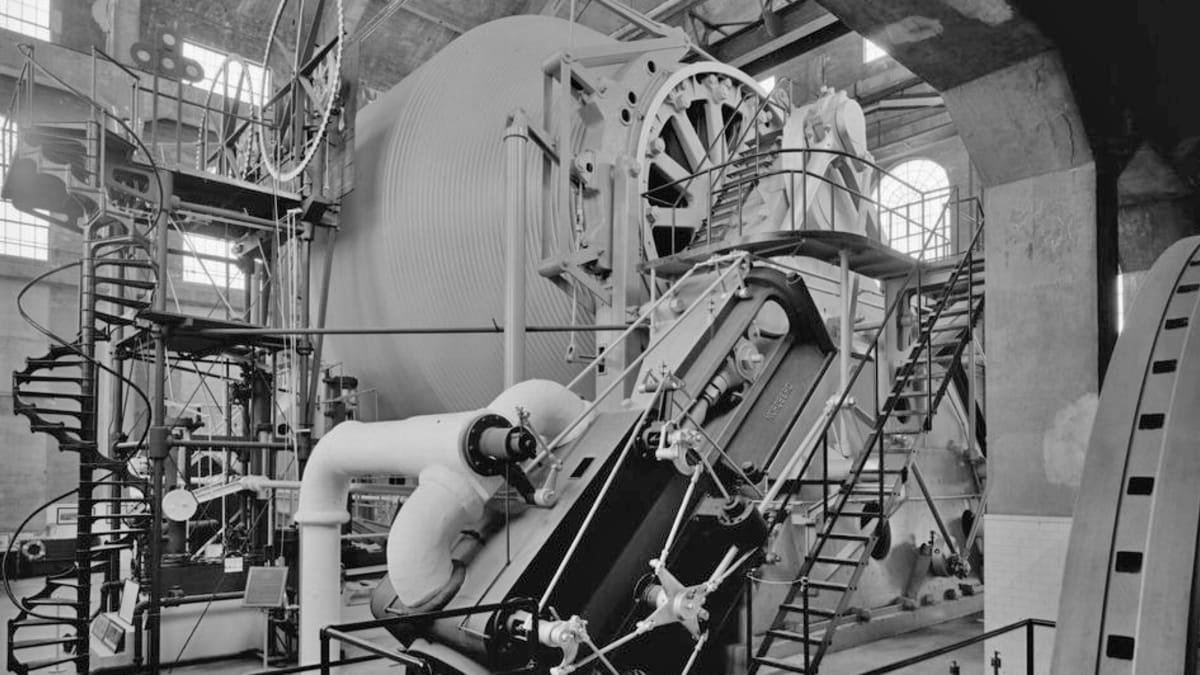
- The enormous Nordberg steam hoist, once the largest of its kind in the world
- Riding a cog tram down the hillside and into an underground level of the mine
- Wide views over Hancock, Houghton, and the Portage waterway below
- The sense of standing inside one of the great stories of American mining
Worth Knowing
- Underground tours are cool year-round, so bring a jacket even in summer
- The mine tour involves a tram ride and walking on damp, uneven ground
- The site is on a steep hillside, so wear sturdy shoes
- Guided tours are seasonal, with the fullest schedule in the warmer months
Learn about Quincy Mine
Copper before the mines
The Keweenaw holds a kind of copper found almost nowhere else on earth in such purity, native copper you can pick up and shape without smelting. This is Anishinaabe country, the homeland of the Ojibwe, part of the Three Fires Confederacy of the Ojibwe, Odawa, and Potawatomi. For thousands of years Native peoples mined this copper from surface pits and worked it into tools, ornaments, and trade goods that traveled across much of North America.
The Keweenaw Bay Indian Community and other Ojibwe continue to live in and steward this region. When American mining companies arrived in the 1840s, they were following veins that had been known and worked for millennia, though on a scale that would transform the land and draw immigrants from across Europe to the remote peninsula.
Old Reliable
The Quincy Mining Company began operations in the mid-1800s and soon earned its nickname, Old Reliable, for paying dividends to shareholders year after year through good times and bad. As the richest rock near the surface was worked out, the miners followed the copper deeper, extending the main shaft to more than a mile and a half of angled depth by the early twentieth century.
The work drew a diverse immigrant workforce, Cornish, Finnish, Italian, and many others, who built the towns of Hancock and Houghton and gave Copper Country an enduring cultural stamp. Mining here wound down in the middle of the twentieth century, undercut by cheaper copper elsewhere and the sheer cost of hauling ore up from such depths, and the mines fell quiet after more than a century of work.
The great hoist and the tram
Quincy's most astonishing artifact is its hoist. Housed in a tall building on the hill, the Nordberg steam hoist was, when it was built, the largest such hoist in the world, a machine designed to raise loaded cars from thousands of feet below at high speed. Standing beside its massive drum and gearing, you get a sense of the scale of engineering the deep mines demanded.
A visit today can include a ride on a cog tram down the steep hillside to a mine adit, where you walk into a level of the underground workings. Inside, the air is cool and damp year-round, the rock glinting faintly with mineral, and guides explain how the miners drilled, blasted, and hauled the copper out by hand and by machine.
Season by season on the Keweenaw
Summer and early fall are the prime seasons to visit, when the surface buildings and underground tours run on their fullest schedules and the Keweenaw's forests and Lake Superior shoreline are at their best. Fall color across the peninsula is superb, and the hilltop views over the Portage waterway are worth the climb.
Winter here is legendary. The Keweenaw is one of the snowiest places in the country, buried under snowfall that draws skiers and snowmobilers, and much of the mine's tour operation pauses in the cold months. Even so, the red hoist house standing above a white-blanketed Hancock is a striking sight in the deep of winter.
Closest Boutels
The closest Boutel™ stays, so you can turn this stop into an overnight. Each is a place we chose through independent editorial review, never a paid placement.
Details
Hancock, MI
Frequently asked questions
What is the Quincy Mine?
The Quincy Mine, near Hancock on the Keweenaw Peninsula in Michigan's Upper Peninsula, is a historic copper mine that helped make this region the heart of America's nineteenth-century copper boom. Once nicknamed Old Reliable for its steady output, the mine is now a fascinating heritage site where visitors can explore the surface buildings, ride down into the workings, and marvel at a colossal steam hoist. Set amid the copper country's dramatic scenery, it offers a memorable, hands-on look at mining history.
What is the Quincy Mine tour like?
The tour typically includes seeing the massive Quincy Mining Company buildings and the enormous steam hoist, once the largest of its kind in the world, then riding a cog-rail tram down the hillside and boarding a vehicle to travel into an underground level of the mine. Inside, guides explain how miners worked the copper rock in cool, damp conditions. It is an engaging, educational experience, though the underground portion involves cool temperatures and uneven surfaces, so dress warmly and wear sturdy shoes.
When is the best time to visit the Quincy Mine?
The mine tours generally operate seasonally, from spring or early summer through fall, so the warm-weather months are when you can take the full underground tour, with summer being peak season. The underground stays cool year-round regardless of the outside temperature, so bring a jacket even in summer. Checking the current tour schedule before you go is important, since availability is seasonal, and a mild day makes the surface tour and tram ride most enjoyable.
Is the Quincy Mine good for families?
Yes, older children and families interested in history, machinery, or mining find it fascinating to ride into a real mine and see the giant hoist and equipment. The underground tour is an adventure that captivates curious kids and adults alike, though the cool, damp conditions and uneven footing mean it is better suited to those who can handle a bit of walking in a rugged environment. It is a genuinely memorable and educational outing for the right group.
What is near the Quincy Mine?
The mine is near Hancock and Houghton on the Keweenaw Peninsula, the heart of Michigan's copper country, within reach of the Keweenaw National Historical Park, more mining heritage sites, and the scenic drive north to Copper Harbor and Fort Wilkins Historic State Park. The wild Lake Superior shoreline and forests surround the area. That makes the Quincy Mine a highlight of exploring the copper-mining history and rugged beauty of the Keweenaw Peninsula.
Nearby

Fort Wilkins Historic State Park
40 miles away
Fort Wilkins brings frontier army life to life for kids at the wild northern tip of the Keweenaw.
Da Yoopers Tourist Trap
60 miles away
This is peak Yooper humor, and the best parts are free. Da Yoopers Tourist Trap on U.S. 41 near Ishpeming celebrates U.P. culture with a straight face and a wink.

Porcupine Mountains, Lake of the Clouds
61 miles away
The Porkies hold one of the largest tracts of old-growth northern hardwood forest left in the country, hemlock and maple that escaped the logging era, draped over ancient billion-year-old ridges.