
Oregon Outback
Lake County, Oregon
Lakeview, OR
A sea of sagebrush so wide and so unlit that on a clear night the Milky Way can throw a faint shadow on the ground.
The Oregon Outback is a vast, quiet stretch of high desert in the far southeast of Oregon, and in 2024 it was certified as the largest Dark Sky Sanctuary on Earth. A Dark Sky Sanctuary is a place officially recognized as one of the darkest and best-protected night skies anywhere, and this one covers millions of acres of sagebrush, fault-block ridges, and dry lake beds where almost no lights burn at all.
The reason to come is the sky, but the land itself is part of the wonder. This is basin-and-range country, where the earth long ago cracked into parallel mountain walls and flat valleys between them. By day you cross an ocean of sagebrush under a huge sky. By night, with no city glow to wash it out, the stars pour down so thick and bright that the glowing band of our own galaxy, the Milky Way, can cast a faint shadow on the pale ground beneath you.
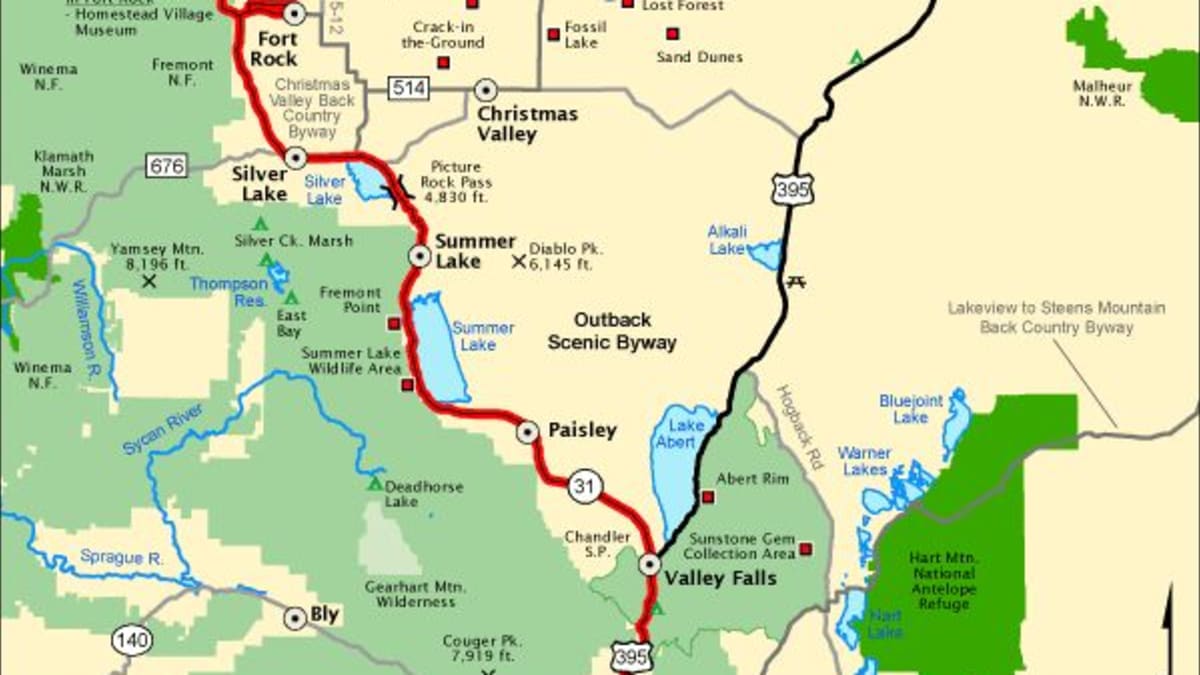
Getting here takes effort, and that is exactly what keeps it dark. The nearby town of Lakeview sits high in the sagebrush, and from there the roads run out toward Plush, Adel, and the wildlife refuges, past ranches and playas and long empty ridges. Come prepared, come patient, and the reward is a night sky the way most people almost never get to see it.
What Travelers Love
- A sky so dark that thousands of stars stretch from one horizon clear to the other, far more than any city ever shows
- The wide-open sweep of sagebrush and fault-block mountains, empty and quiet in every direction
- Wildlife country nearby, where pronghorn, bighorn sheep, and migrating birds share the same still land
- The feeling of true remoteness, with almost no artificial light for miles and miles
Worth Knowing
- This is a certified region, not a gated site, so plan your route and stops around Lakeview, Plush, and the back roads rather than one entrance
- The country is remote and services are far apart, so carry extra fuel, water, and food and start with a full tank
- Many refuge and back roads are gravel and can turn rough or impassable in wet weather or winter snow
- Late spring through fall brings the easiest travel; high-desert winters are cold and the nights get very long
Learn about Oregon Outback
The darkest sky, protected on purpose
Stargazers rate how dark a sky is on a scale from one to nine, called the Bortle scale, where a bright city is a nine and the darkest wild places are a one. The Oregon Outback rates a one, the very best there is. On a clear night here you might see thousands upon thousands of stars, where a city dweller sees only a few hundred, and the Milky Way arches overhead as a bright, cloudy river of light.
This darkness did not happen by accident, and it does not stay by accident either. Winning the sanctuary title took years of work by tourism groups, land agencies, tribes, ranchers, and townsfolk who agreed on a shared plan to keep outdoor lighting low and shielded across the region. That is the deal that protects the night here: a whole community choosing to let the dark stay dark so the stars can keep coming through.
Basin and range, written in the land
The Oregon Outback sits in what geologists call basin-and-range country. Long ago the crust here stretched and cracked into a series of parallel faults, and huge blocks of rock tilted up along them to form mountain walls, with flat valleys, or basins, dropping down between. The result is a landscape of long straight ridges and wide open flats, repeated again and again across the desert.
Some of the sights here are the biggest of their kind. Abert Rim, north of Lakeview, is the largest exposed fault scarp in North America, a towering cliff face that rises above salty Lake Abert on the valley floor. Hart Mountain lifts abruptly in steep cliffs from the Warner Valley. Off to the north stands Fort Rock, the eroded ring of an ancient volcano, rising alone from the flat basin like a great stone crown.
Life in the sagebrush
At first glance the high desert can look empty, but it is full of life adapted to this dry, open country. Sagebrush and juniper cover the valleys, and in spring wildflowers scatter color across the flats. This is one of the last great strongholds of the sagebrush sea, a habitat that supports far more creatures than it seems to at a glance.
The Hart Mountain National Antelope Refuge nearby was set aside in the 1930s and shelters hundreds of species. Pronghorn, the fastest land animal in North America, range across the flats, and California bighorn sheep pick their way along the cliffs. In the wetlands and around the lakes, huge numbers of ducks, geese, and shorebirds stop to rest and feed on their long migrations, making this quiet country a crossroads for birds as well as stars.
Lakeview and the road less traveled
Lakeview is the base for most visits, a small mountain town that holds the title of highest incorporated city in Oregon. From here the roads fan out into the sanctuary: the Oregon Outback Scenic Byway runs north through sagebrush and juniper and old volcanic rock, and rougher routes head east toward the tiny communities of Plush and Adel and out to the refuges.
This is not a place you rush through. The distances are long, the services are few, and the pleasure is in the emptiness and the sky. Travelers come to camp, to watch wildlife, to hike and take pictures, and above all to wait for dark and look up. Bring what you need, respect the ranchland and refuges you pass through, and let the huge, silent country do the rest.
Closest Boutels
The closest Boutel™ stays, so you can turn this stop into an overnight. Each is a place we chose through independent editorial review, never a paid placement.
Details
Lakeview, OR
Frequently asked questions
What is the Oregon Outback Dark Sky Sanctuary?
It is the largest International Dark Sky Sanctuary in the world, covering roughly two and a half million acres of remote high desert in Lake County in south-central Oregon. So far from city lights, it offers some of the darkest, most star-filled skies anywhere in the country, where the Milky Way blazes overhead and countless stars fill the night. It is a destination for people who want to experience a truly natural, undimmed sky.
When is the best time for stargazing in the Oregon Outback?
Aim for the new moon or the few nights around it, when no moonlight washes out the stars, for the very darkest skies. Summer and early fall bring the clearest, driest conditions, though even summer nights turn cold in the high desert, so pack warm layers. Give your eyes at least twenty minutes to adjust to the dark, and use a red flashlight to preserve your night vision.
What towns and services are near the Oregon Outback?
Small gateway towns like Lakeview and Paisley sit at the edges, with communities such as Summer Lake, Plush, and Adel within the region, offering lodges, cabins, and RV and tent camping. Because it is so remote, fuel up, bring plenty of supplies, and check road conditions before heading out. Stop at local visitor centers or public-lands offices for current conditions and good maps.
What is there to do in the Oregon Outback besides stargazing?
By day the high desert offers wide-open scenery, wildlife watching at places like the Hart Mountain antelope refuge, the marshes and hot springs around Summer Lake, rockhounding, and quiet back roads with almost no traffic. It is a landscape of big sky and deep solitude. Combining daytime exploring with a night under the stars makes for an unforgettable, genuinely off-the-grid Oregon experience.
What should I know before visiting the Oregon Outback?
Come completely self-sufficient. This is vast, remote country with long distances between services, little or no cell coverage, and rough roads in places, so carry extra fuel, water, food, warm clothing, and paper maps, and tell someone your plans. Respect the mix of public and private land, and drive carefully on gravel and dirt roads, especially at night when wildlife is active.
Nearby
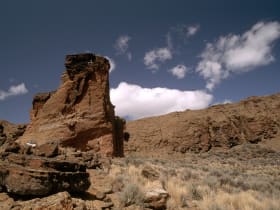
Fort Rock State Natural Area
57 miles away
The cave adjacent to Fort Rock is where archaeologist Luther Cressman discovered sagebrush sandals in 1938.

Klamath Basin National Wildlife Refuges
68 miles away
The basin sits in a high desert plateau where shallow lakes and marshes collect water from the Cascades and Klamath Mountains.