
Old State Capitol State Historic Site
622 E Washington St, Springfield, IL
Springfield, IL
The graceful domed statehouse where Lincoln argued cases, gave his House Divided speech, and later lay in state on his way home.
The Old State Capitol in downtown Springfield is one of the most significant Lincoln sites in the country, a graceful domed statehouse that served as the seat of Illinois government from the 1840s into the late 1860s. Within its walls Abraham Lincoln argued cases before the state supreme court, served in the legislature, kept an office, and, in 1858, delivered his stirring House Divided speech accepting the Republican nomination for the United States Senate.
It was also here that Lincoln's story closed. After his assassination in 1865, his body was brought home to Springfield and lay in state in the capitol's rotunda as thousands filed past. The building visitors see today is a meticulous reconstruction of that historic statehouse, restored to the era when Lincoln walked its halls, and it stands at the center of a downtown square surrounded by other landmarks of his life.
What Travelers Love
- Standing in the restored chamber where Lincoln gave his House Divided speech
- The graceful Greek Revival dome and rotunda at the center of the square
- A deep, direct connection to Abraham Lincoln's Illinois years
- A downtown site within easy walking distance of many other Lincoln landmarks
Worth Knowing
- The building is a careful reconstruction of the original 1830s and 1840s statehouse
- It sits on a walkable square close to Lincoln's home, offices, and the presidential museum
- Costumed guides and living-history programs often bring the chambers to life
- Pair it with the Lincoln Presidential Museum and Home for a full day of history
Learn about Old State Capitol State Historic Site
The statehouse Lincoln knew
In the late 1830s Illinois moved its capital from Vandalia to the more central and growing town of Springfield, and this Greek Revival statehouse rose on the town square to house the new capital. A young Abraham Lincoln, then a state legislator, was among those who helped bring the capital to Springfield, and he would spend much of his public life in and around the building over the next two decades.
Here Lincoln served in the legislature, practiced law before the Illinois Supreme Court, which met in the building, and kept a working presence in the political life of the state. The chambers, offices, and library saw the debates and deals of an era when Illinois grew rapidly and the nation edged toward crisis over slavery. Few buildings are so densely woven into a single great American life.
A house divided
On June 16, 1858, in the hall of the House of Representatives here, Lincoln accepted the Republican nomination for the United States Senate with one of the most famous speeches in American history. A house divided against itself cannot stand, he declared, warning that the nation could not endure permanently half slave and half free. The words drew on scripture and cut to the heart of the sectional crisis.
Lincoln lost that Senate race to Stephen Douglas, but the campaign and the speech vaulted him to national attention and set the stage for his election to the presidency two years later. Standing in the restored chamber where those words were first spoken gives visitors a powerful sense of the moment when a prairie lawyer stepped onto the national stage.
Lincoln comes home
The building's connection to Lincoln reached its solemn close in May 1865. After his assassination in Washington, Lincoln's funeral train carried his body across the country and home to Springfield. He lay in state in the rotunda of this capitol, draped in mourning, as an immense crowd of citizens filed slowly past to pay their respects before he was laid to rest in the city.
By then the statehouse was already outgrown, and Illinois soon built a larger capitol nearby, the one still in use today. The old building served other public uses for decades and was eventually taken down to its foundations and rebuilt in the 1960s as a faithful reconstruction, restored to its Lincoln-era appearance so that visitors could experience the rooms as he knew them.
The heart of Lincoln's Springfield
The Old State Capitol sits at the center of a downtown square ringed by history, and it is best experienced as part of a larger visit to Lincoln's Springfield. Within easy walking distance are the Lincoln Home, the only house he ever owned, the Lincoln-Herndon Law Offices where he practiced, and the modern Abraham Lincoln Presidential Library and Museum.
Costumed interpreters and living-history programs often bring the chambers to life, and the restored interior lets visitors imagine the debates, court sessions, and speeches that filled the building in Lincoln's day. Between the statehouse and the surrounding sites, downtown Springfield offers one of the richest concentrations of Lincoln history anywhere, a city where his presence is still keenly felt.
Closest Boutels
The closest Boutel™ stays, so you can turn this stop into an overnight. Each is a place we chose through independent editorial review, never a paid placement.
Details
Springfield, IL
Frequently asked questions
What is the Old State Capitol State Historic Site?
The Old State Capitol State Historic Site, in Springfield, Illinois, is a beautifully restored historic statehouse deeply connected to Abraham Lincoln, where he served, spoke, and where his body later lay in state. This graceful Greek Revival building served as the Illinois statehouse during Lincoln's years in Springfield, and it was here that he delivered his famous House Divided speech, worked as a lawyer and legislator, and, after his assassination, lay in state as the nation mourned. Restored to its historic appearance, it offers tours and exhibits rich in Lincoln and Illinois history. Its profound Lincoln connections make it a significant destination. A historic and moving landmark, it educates visitors. With its history, the Old State Capitol offers a compelling destination in Illinois.
What is the connection between the Old State Capitol and Abraham Lincoln?
The Old State Capitol in Springfield is deeply connected to Abraham Lincoln, who during his years in Springfield served in and around the statehouse as a lawyer and legislator, argued cases, and delivered his famous House Divided speech here, warning of the divisions over slavery. After his assassination, his body lay in state in the building as the nation mourned. These profound connections make the Old State Capitol a significant Lincoln site. Understanding this history deepens a visit to the Old State Capitol State Historic Site in Illinois.
What can you see at the Old State Capitol State Historic Site?
You can tour the beautifully restored historic statehouse, see the legislative chambers and rooms where Lincoln worked and spoke, learn about his famous House Divided speech and his time in Springfield, and explore exhibits on Lincoln and Illinois history. The restored statehouse, the chambers, the Lincoln history, and the exhibits are the draws, offering a rich and moving historical experience. The connection to Lincoln's life and death is the highlight. With its history, the Old State Capitol offers a rewarding visit in Springfield, Illinois.
When is the best time to visit the Old State Capitol State Historic Site?
As a mostly indoor historic site, the Old State Capitol is enjoyable year-round in any weather, and it keeps its own hours with tours offered on a schedule, so checking the current schedule before you go is wise. It pairs naturally with the nearby Lincoln museum and other Springfield Lincoln sites. For a visit, check current hours at the Old State Capitol State Historic Site in Illinois.
What is near the Old State Capitol State Historic Site?
The Old State Capitol State Historic Site is in Springfield, Illinois, within reach of the Abraham Lincoln Presidential Library and Museum, Lincoln's home and tomb, the Cozy Dog Drive In on Route 66, and the other Lincoln and Springfield attractions. That makes the Old State Capitol a compelling stop to combine with the Abraham Lincoln Presidential Library and Museum and the other attractions of Springfield on a visit to Illinois.
Nearby

Abraham Lincoln Presidential Library and Museum
0.1 miles away
This is the Lincoln site kids actually love, because it is built to grab them.
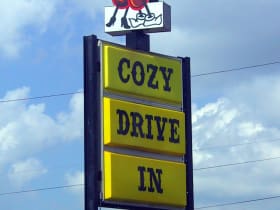
Cozy Dog Drive In
2.6 miles away
Every corn dog at a state fair traces back to this Springfield drive-in. Ed Waldmire Jr.
Lincoln Watermelon Monument
28 miles away
Here is a Lincoln story almost no one knows. The town of Lincoln, Illinois, is the only place named for Abraham Lincoln before he became president, and he was there in August 1853 to christen it himse...