
Northern Forest Heritage Park
961 Main Street
Berlin, NH
A restored river-drivers' camp on the bank of the Androscoggin, where the story of the men who ran the logs and the mill city they built is kept alive.
Northern Forest Heritage Park tells a story that built much of northern New England but is easy to forget today: the story of the logs and the men who moved them. On the bank of the Androscoggin River in Berlin, the park has rebuilt a river-drivers' logging camp, the kind of rough, self-contained village that crews lived in through the winter cut, complete with a cook camp, bunkhouse, and blacksmith shop.
For generations the Androscoggin was a working river, choked each spring with millions of logs floated down from the North Woods to the mills. The park keeps that vanished world close at hand, and it also honors the people who came to run the mills, above all the French-Canadian families whose language and culture still shape Berlin. It is a small place with a long memory.
What Travelers Love
- A faithfully rebuilt logging camp with a cook camp, bunkhouse, and blacksmith shop on the riverbank
- Standing beside the Androscoggin where the great log drives once ran
- Guided talks and living-history programs that bring the river-drivers' world to life
- A window into the French-Canadian families who made Berlin a mill city
Worth Knowing
- The site is seasonal, with the fullest programming and camp access in the warmer months
- It sits right in downtown Berlin, so pair it with a drive into the surrounding North Woods
- Check ahead for the schedule of guided tours and special heritage events
- The riverside setting can be buggy in early summer, so bring what you need for black flies
Learn about Northern Forest Heritage Park
The river and the logs
The Androscoggin River rises in the lakes of the North Country and runs south and east through Berlin before crossing into Maine. For more than a century it was the highway of the timber trade. Each spring, as the ice broke up, crews drove the winter's cut downstream on the high water, a dangerous, cold, relentless job that gave the river-drivers their near-legendary reputation.
Running the drive meant walking the moving logs, breaking up jams, and riding the current for miles, often soaked and always at risk. The rebuilt camp at the park recreates the world these crews lived in, from the long tables of the cook camp, where enormous quantities of food kept the men working, to the bunkhouse where they slept packed together after a day on the water.
Berlin, the city that ran on paper
Berlin grew up around the timber that came down the Androscoggin. By the late 1800s the city's mills were turning the North Woods into lumber and, above all, paper, and Berlin became one of the great pulp-and-paper centers of the region. The smokestacks and mill buildings defined the skyline and the economy for generations.
The mills drew thousands of workers, and many came south from Quebec. French-Canadian families settled Berlin in such numbers that French was long the language of whole neighborhoods, churches, and clubs. That heritage is still a living part of the city's identity, and the park treats it as central to the story rather than a footnote.
A camp rebuilt
The heart of the park is the logging camp itself, assembled from historic and reconstructed buildings to show how a winter camp actually worked. The blacksmith shop, essential for keeping tools and horse gear in repair, stands alongside the living quarters, and guides use the buildings to explain the daily rhythm of a crew far from any town.
Living-history programs and demonstrations fill out the picture, and the park hosts heritage events through its season. Because the site sits directly on the river in the middle of Berlin, a visit naturally connects the camp to the water that made all of it possible.
The land it opens onto
Berlin is the gateway to New Hampshire's Great North Woods, the sparsely settled top of the state where forest runs unbroken toward the Canadian border. This is moose country, and the drives north toward Dixville Notch and the Connecticut Lakes pass through some of the wildest land in New England.
To the south and west rise the White Mountains and the Presidential Range, the highest peaks in the Northeast. The heritage park sits at the meeting point of the industrial river valley and that great expanse of woods, which is exactly the relationship its story is about.
Closest Boutels
The closest Boutel™ stays, so you can turn this stop into an overnight. Each is a place we chose through independent editorial review, never a paid placement.
Profile Motel & Cottages
Honorable Mention391 Styles Bridges Highway, Lincoln, NH
35 miles away|Learn More ›
Details
Berlin, NH
Frequently asked questions
What is the Northern Forest Heritage Park?
The Northern Forest Heritage Park, in Berlin in the Great North Woods of northern New Hampshire, is a museum and heritage site celebrating the rich logging and river-driving history of the North Country's great northern forest. Along the Androscoggin River, the park preserves and shares the story of the loggers, river drivers, and mill workers, many of them French-Canadian immigrants, who shaped the region's economy and culture, with a recreated logging camp, exhibits, historic buildings, and, at times, riverboat tours and demonstrations. A window into the heritage of the timber industry and the people who lived it, the park offers an engaging cultural destination. With its logging heritage and river history, the Northern Forest Heritage Park offers a fascinating destination in New Hampshire.
What can you do at the Northern Forest Heritage Park?
You can explore the recreated logging camp and historic buildings, view exhibits on the logging, river-driving, and milling history of the northern forest and the workers who did it, learn about the French-Canadian and other immigrant communities who shaped the region, and, when offered, enjoy riverboat tours on the Androscoggin and living-history demonstrations. The logging camp, the heritage exhibits, and the river and cultural history are the draws, offering an engaging look at the North Country's timber past. Seasonal programs add to a visit. With its heritage exhibits and history, the Northern Forest Heritage Park offers an engaging experience in Berlin, New Hampshire.
Why is logging history important to this region?
Logging history is central to the Great North Woods because for generations the vast northern forest and its rivers drove the economy and culture of the region, with loggers cutting timber in the woods and river drivers floating logs down rivers like the Androscoggin to the mills, dangerous and demanding work that built communities. Many workers were French-Canadian and other immigrants whose heritage still shapes the area, and cities like Berlin grew around the mills. The Northern Forest Heritage Park preserves this story. Understanding this timber heritage enriches a visit to the Northern Forest Heritage Park in Berlin, New Hampshire.
When is the best time to visit the Northern Forest Heritage Park?
The park is best enjoyed in the warm months, generally late spring through fall, when the outdoor logging camp, grounds, and any riverboat tours and demonstrations are available, and fall adds beautiful North Woods foliage. Because programs, tours, and hours are seasonal and can vary, checking the current schedule before you go is wise. Summer offers the fullest slate of activities. For the fullest experience with outdoor exhibits and any river tours, aim for the warm season at the Northern Forest Heritage Park in Berlin, New Hampshire.
What is near the Northern Forest Heritage Park?
The Northern Forest Heritage Park is in Berlin in the Great North Woods of New Hampshire, along the Androscoggin River, within reach of the Nansen Ski Jump nearby, Dixville Notch and Table Rock, the Pittsburg lakes region with Lake Francis State Park, and the White Mountains to the south. That makes the Northern Forest Heritage Park a fascinating stop to combine with the Nansen Ski Jump, Dixville Notch, and the other attractions of the Great North Woods on a visit to New Hampshire.
Nearby
Nansen Ski Jump
2.9 miles away
It comes into view like something left behind by a lost civilization: a 171-foot steel ski jump standing alone in the forest north of Berlin.
Mount Washington Auto Road
15 miles away
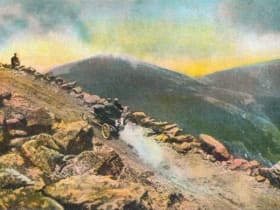
It calls itself the oldest man-made tourist attraction in America, and the claim holds up: the road opened in 1861 to carry carriages to the summit.
Grafton Notch State Park
16 miles away
Grafton Notch is a mountain pass that packs waterfalls, gorges, and big peaks into a few scenic miles north of Bethel.
Screw Auger Falls
16 miles away
Screw Auger Falls is the kind of waterfall kids love, because you can walk right up to it.