
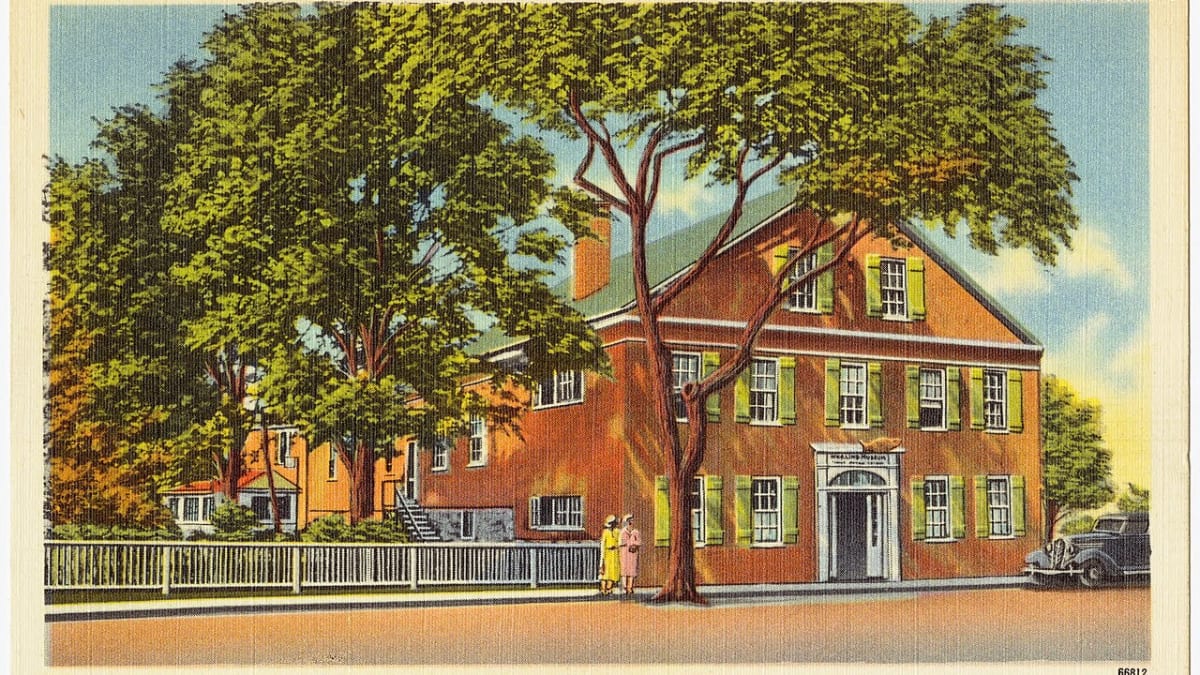
Nantucket Whaling Museum
13 Broad St, Nantucket, MA
Nantucket, MA
Inside a former candle factory, the story of the little island that was once the whaling capital of the world, complete with a full sperm whale skeleton.
The Nantucket Whaling Museum tells the astonishing story of how a small, remote island became, for a time, the whaling capital of the world. Housed in a restored candle factory near the wharf, the museum holds a full sperm whale skeleton, gleaming collections of scrimshaw, harpoons and ship models, and the portraits and possessions of the captains and families who sent ships around the globe in pursuit of whales.
In the late 18th and early 19th centuries, Nantucket's fleet ranged across the world's oceans, and the oil rendered from sperm whales lit the lamps of America and Europe. That trade made the island wealthy and worldly far beyond its size, and it shaped a culture whose gray-shingled houses and cobbled streets survive almost intact. The museum is the key to reading the whole island around it.
What Travelers Love
- The towering sperm whale skeleton suspended in the main gallery
- Rich collections of scrimshaw, harpoons, ship models, and portraits of whaling captains
- The setting inside a beautifully restored 19th-century candle factory
- A rooftop view over the town and harbor from the museum's observation deck
Worth Knowing
- The museum is run by the Nantucket Historical Association, which manages historic sites across the island
- Nantucket is reached only by ferry or small plane, so plan travel to the island ahead
- Summer is the island's peak season, when the town and ferries are busiest
- The compact old town is best explored on foot over the cobblestones
Learn about Nantucket Whaling Museum
The whaling capital of the world
Nantucket's people took to whaling early, first from small boats close to shore and then, as demand for whale oil grew, in ships that sailed for years at a time across the Atlantic, Pacific, and Indian oceans. By the early 1800s the island's fleet was among the greatest on earth, and the fortunes it brought back built the fine houses that still line the streets.
The prize was the sperm whale, whose oil burned cleaner and brighter than any other and whose head held spermaceti, prized for the finest candles. That trade tied this small island to the wider world, drew a diverse community of sailors, and inspired the literature of the sea, most famously Herman Melville's Moby-Dick, whose story sets sail from Nantucket. The museum's candle factory home was part of that very industry.
Inside the candle factory
The museum occupies a restored 19th-century factory that once refined whale oil and pressed spermaceti candles, and the great beam press used in that work still stands inside, a massive relic of the trade. Around it, galleries hold harpoons and whaling tools, ship models, logbooks, portraits, and one of the world's great collections of scrimshaw, the intricate carvings and engravings sailors made on whale teeth and bone during long voyages.
The centerpiece is a complete sperm whale skeleton, suspended overhead, that came from a whale that stranded on the island's shore. Standing beneath it gives a visceral sense of the size of the animals the whalers hunted and the danger of the work. From the museum's rooftop observation deck, a climb up gives a sweeping view over the town's rooftops and out to the harbor.
The town the whales built
The wealth of the whaling era froze the town in time. When the industry declined in the mid-1800s, undercut by the rise of petroleum and by disasters at sea, the island lost its fortune but kept its architecture, and the cobblestoned streets, gray-shingled cottages, and grand captains' mansions survived largely unchanged into the present day.
That is why Nantucket town feels like a preserved 19th-century seaport. The Nantucket Historical Association, which runs the whaling museum, cares for many other historic houses and sites across the island, so the museum is a gateway to a walkable open-air history lesson. Wandering the lanes after a museum visit, you read the whaling story in the buildings themselves.
The island around it
Nantucket lies well out to sea south of Cape Cod, reached by ferry or small plane, a low island of moors, beaches, and salt ponds ringed by wide Atlantic shores. Beyond the town, sandy roads lead to lighthouses, the village of Siasconset, and long beaches, and the open heathland glows with wildflowers in season.
The island is part of the homeland of the Wampanoag people, who lived here for thousands of years before European settlement and whose presence shaped the early island community. Summer is the busy season, when the harbor fills with boats and the town hums, while spring and fall offer quieter streets, softer light, and an easier pace on the cobblestones.
Closest Boutels
The closest Boutel™ stays, so you can turn this stop into an overnight. Each is a place we chose through independent editorial review, never a paid placement.
AWOL Provincetown
Honorable Mention59 Province Lands Road, Provincetown, MA
52 miles away|Learn More ›
Details
Nantucket, MA
Frequently asked questions
What is the Nantucket Whaling Museum?
It is a fascinating museum on the island of Nantucket, housed in a former whale-oil candle factory, that tells the story of the island's remarkable nineteenth-century golden age as one of the whaling capitals of the world. Through dramatic artifacts, art, and immersive exhibits, it captures both the wealth and daring of the whaling era and the island's unique history. It is one of Nantucket's cultural highlights and a must-see for visitors to the island.
What can you see at the Nantucket Whaling Museum?
Highlights include a towering sperm whale skeleton, a massive restored candle press used to make whale-oil candles, and outstanding collections of scrimshaw and whaling artifacts. You can also see the great Fresnel lens from a Nantucket lighthouse and climb to a rooftop observation deck with sweeping views over the harbor and town. Knowledgeable staff and live talks add depth, bringing the whaling story and island history vividly to life.
When is the best time to visit the Nantucket Whaling Museum?
The museum is busiest during the summer island season, when Nantucket is bustling and it keeps its fullest hours, while off-season hours are more limited, so checking current times before you go is wise, especially outside summer. Being indoors, it also makes an excellent rainy-day option when beach plans fall through. Allow around one and a half to two hours to enjoy the exhibits and the rooftop view.
What is near the Nantucket Whaling Museum?
The museum sits in the heart of Nantucket's charming, walkable downtown, amid cobblestone streets lined with historic homes, boutiques, and restaurants, and close to the harbor. That central location makes it easy to combine with strolling the town, shopping, and dining, as well as with trips to the island's beautiful beaches. It is a natural centerpiece for a day exploring Nantucket's history and seaside character.
How do you get to the Nantucket Whaling Museum?
Since it is on the island of Nantucket, you first reach the island by ferry from Cape Cod, or by a short flight, and the museum is then an easy walk from the ferry landing in the downtown area. Planning your ferry or flight and any island lodging in advance, especially in the busy summer season, makes for a smooth trip, after which the museum and the walkable town are conveniently close together.
Nearby
Coskata-Coatue and Great Point
6.1 miles away
Nantucket's northeast corner runs wild, a long chain of barrier beaches, dunes, and salt marsh curling out to the lonely Great Point Light.

Flying Horses Carousel
26 miles away
This is a ride and a piece of living history at once. The Flying Horses Carousel in Oak Bluffs has spun since 1876, the oldest working platform carousel in the country, with hand-carved horses that ha...

John F. Kennedy Hyannis Museum
27 miles away
A manageable indoor stop that brings recent American history down to a human scale. The John F.