
Museum of the Fur Trade
6321 US-20, Chadron, NE
Chadron, NE
One of the finest collections anywhere on the North American fur trade, standing on the ground of a real 19th-century trading post in the Pine Ridge.
The Museum of the Fur Trade is one of those places that stops travelers in their tracks: a small museum in a remote corner of the Nebraska Panhandle that holds one of the finest and most complete collections in the world on the North American fur trade. Scholars, collectors, and curious road-trippers alike come away astonished at the depth of what is gathered here, far from any city, along a quiet highway near Chadron.
The museum stands on hallowed ground for its subject. It occupies the site of a genuine nineteenth-century trading post, where traders once exchanged goods with the Lakota and other Native nations for furs and hides. A reconstruction of that post lets visitors step into the world the collection describes, making this both a great archive and a living piece of the frontier it interprets.
What Travelers Love
- One of the most complete collections on the fur trade found anywhere
- The reconstructed trading post on its original historic site
- A serious, scholarly museum that surprises travelers in a small-town setting
- The connection to the region's Native nations and frontier commerce
Worth Knowing
- This is a deep, detailed museum best enjoyed by those who like to read and linger
- It sits in the scenic Pine Ridge, worth exploring alongside a visit
- The reconstructed post shows how trade actually worked on the ground
- The gift shop and library are notable resources for the seriously curious
Learn about Museum of the Fur Trade
The fur trade that opened the West
Long before farmers and ranchers, it was the fur trade that first drew Europeans and Americans deep into the western interior. For more than two centuries, trappers and traders pushed up the rivers and across the plains in search of beaver, buffalo robes, and other furs, building a vast commercial network that linked Native hunters, frontier posts, and distant markets in the East and Europe.
That trade shaped the history of the whole region. It created alliances and rivalries, spread goods and disease, and laid down many of the routes and relationships that later settlement would follow. The Museum of the Fur Trade tells this sprawling story in remarkable detail, from the tools and trade goods to the peoples and companies that made the commerce work.
A trading post on its own ground
The museum sits on the site of the Bordeaux Trading Post, established in the mid-1800s to trade with the Lakota and other nations of the northern plains. Here, along the pine ridges and open grasslands, traders and Native hunters met to exchange furs and hides for manufactured goods, and the post became a fixture of frontier commerce in the region.
A careful reconstruction of the trading post now stands on the site, letting visitors see how such a place looked and functioned, the cramped rooms, the stacked trade goods, the counter where deals were struck. Seeing the post in its actual landscape, with the Pine Ridge rising nearby, grounds the museum's vast collection in a real time and place.
The tribes and the trade
The fur trade was, above all, a meeting of peoples. The Lakota, Cheyenne, and other nations of the northern plains were central participants, not passive bystanders, supplying the furs and robes that drove the whole enterprise and shaping its terms through their own needs and choices. These are living peoples today, with homelands and reservations in the region, and their central role in the trade is woven throughout the museum's story.
The collection includes trade goods, tools, weapons, clothing, and objects that passed between cultures, illustrating how deeply the trade intertwined Native and newcomer lives. It is a history of exchange and adaptation as much as of commerce, and the museum handles it with a seriousness that respects the complexity and the peoples involved.
A scholarly gem in the Pine Ridge
What makes the museum so celebrated is its depth. Its collections and library are treated as serious research resources, drawing historians and collectors from across the country, and its exhibits reward visitors willing to slow down and read. This is not a quick photo stop but a place to immerse yourself, and those who do come away with a genuine understanding of a pivotal chapter of American history.
The setting adds to the appeal. The museum sits in the Pine Ridge, a rugged, beautiful country of buttes, pine-clad ridges, and open grassland that stands apart from the flatter plains to the south and east. A visit pairs naturally with time exploring that landscape and the nearby college town of Chadron, making the trip to this out-of-the-way treasure well worth the miles.
Closest Boutels
The closest Boutel™ stays, so you can turn this stop into an overnight. Each is a place we chose through independent editorial review, never a paid placement.
Details
Chadron, NE
Frequently asked questions
What is the Museum of the Fur Trade?
The Museum of the Fur Trade, near Chadron in the northwestern Nebraska Panhandle, is a renowned museum devoted to the history of the North American fur trade, considered one of the finest of its kind. The museum holds outstanding collections of artifacts related to the fur trade, including trade goods, firearms, tools, and items reflecting the interactions between traders and Native peoples, and it stands on the site of a historic trading post. It offers a deep and scholarly look at an era that shaped the early history of the West and the encounters between many cultures. A fascinating window into the fur-trade era, it educates visitors. With its collections, the Museum of the Fur Trade offers a compelling destination in Nebraska.
What can you see at the Museum of the Fur Trade?
You can see outstanding collections of fur-trade artifacts, including trade goods, historic firearms, tools, clothing, and items reflecting the relationships and exchanges between traders and Native peoples, along with a reconstructed historic trading post on the site. The rich artifact collections, the trading-post site, and the story of the fur-trade era and its many peoples are the draws, offering a deep and thoughtful experience. The museum is noted for the quality and depth of its collections. With its history and collections, the Museum of the Fur Trade offers a rewarding visit near Chadron, Nebraska.
Why is the fur trade important to this region's history?
The fur trade is important to the region's history because it was one of the earliest and most influential forces in the exploration and development of the American West, bringing traders into sustained contact and exchange with the Native peoples of the plains. This era shaped economies, alliances, and the encounters between many cultures, with lasting and complex consequences. The museum interprets this history, including the roles and experiences of the Native peoples central to the trade. Understanding this heritage enriches a visit to the Museum of the Fur Trade in Nebraska.
When is the best time to visit the Museum of the Fur Trade?
The museum generally operates seasonally with the warmer months as its main season, so late spring through early fall is the surest time to visit, when the indoor exhibits and the outdoor reconstructed trading post are accessible and the weather is pleasant for the remote Panhandle setting. Because it is seasonal, checking the current schedule before you go is wise. For the surest access, plan a warm-months visit to the Museum of the Fur Trade in Nebraska.
What is near the Museum of the Fur Trade?
The Museum of the Fur Trade is near Chadron in the northwestern Nebraska Panhandle, within reach of Chadron State Park, Fort Robinson, Toadstool Geologic Park, and the Pine Ridge country. That makes the Museum of the Fur Trade a compelling stop to combine with Toadstool Geologic Park and the other attractions of the northwestern Nebraska Panhandle on a visit to the state.
Nearby
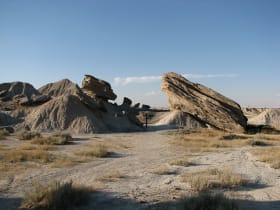
Toadstool Geologic Park
34 miles away
Toadstool Geologic Park: about 20 miles north of Crawford via Toadstool Road, unpaved for the final stretch and impassable when wet. Managed by the US Forest Service; a small day-use fee applies.

Carhenge
47 miles away
Carhenge: about 3 miles north of Alliance on Highway 87. Free, always open, no admission or gate. A small visitor center near the entrance keeps seasonal hours.

The Mammoth Site
49 miles away
The Mammoth Site: on the US-18 bypass in Hot Springs. Admission charged. Best for ages 5 and up, though the sheer size of the tusks grabs even younger kids.

Wind Cave National Park
58 miles away
One of the world's longest and most complex caves, famous for its rare honeycomb boxwork formations.