
Mount Pisgah Mormon Cemetery State Preserve
1830 Talmage Rd, Thayer, IA
Thayer, IA
A quiet prairie hilltop where thousands of Mormon pioneers paused on their long march west, and where hundreds who did not survive the journey lie buried.
Mount Pisgah is a quiet prairie hilltop in southern Iowa with a large and moving history. In the middle of the 1800s, thousands of Mormon pioneers fleeing persecution in the East passed this way on their long trek toward the Rocky Mountains, and here they built a temporary settlement, a way station where travelers could rest, plant crops, and gather strength for the road ahead.
Life at the encampment was hard, and many who paused here never left. Sickness and hardship claimed hundreds of pioneers, who were buried on this hill. Today the site is a state preserve, a peaceful cemetery and restored prairie that honors those travelers and marks one of the most poignant chapters of the Mormon Pioneer Trail across Iowa.
What Travelers Love
- Standing on a quiet hilltop steeped in pioneer history
- Restored tallgrass prairie waving over the old trail site
- A moving memorial to the pioneers who paused and died here
- A contemplative, uncrowded stop off the beaten path
Worth Knowing
- This is a burial place and memorial, so visit with quiet respect
- It is a small, remote site with few services, so bring water and plan around a longer drive
- Prairie trails can be grassy and buggy in summer, so dress accordingly
- The site welcomes visitors who come to reflect and learn
Learn about Mount Pisgah Mormon Cemetery State Preserve
A way station on the trail west
In the mid-1840s, members of the Church of Jesus Christ of Latter-day Saints left their settlements in the East under intense pressure and set out across Iowa toward a new home in the West. The journey was slow and grueling, and along the route they established a string of temporary settlements where the wagon companies could regroup.
Mount Pisgah was one of the larger of these way stations. Pioneers cleared ground, planted crops to feed those coming behind them, and built rough shelters, turning a bare prairie hill into a working community for a few short years. It was named for the biblical mountain from which Moses viewed the promised land, a fitting name for a place of pause on a long pilgrimage.
Hardship and loss
The settlement bought the pioneers time and food, but it came at a heavy cost. Crowded conditions, poor shelter, and disease swept through the encampment, and many travelers, already worn down by the road, fell ill and died here. Hundreds were laid to rest on the hilltop.
The cemetery that remains today is the quiet heart of the preserve. Memorials mark the burials and tell the story of the community that briefly lived and died on this ground, honoring the ordinary people who gave everything to reach a place most of them never saw.
The prairie returns
After the pioneers moved on and the settlement faded, the land returned to farm and prairie. Today the state preserve protects and restores a patch of tallgrass prairie on the site, the kind of grassland that once covered much of Iowa before the plow, with big bluestem and prairie wildflowers waving over the old trail.
This corner of southern Iowa is homeland to Native peoples of the region, including the Ioway, for whom the state is named, and the Sauk, whose long presence on this prairie runs deep. The restored grassland is a reminder of the land the pioneers crossed, and of the peoples who knew it long before.
Visiting the preserve
Mount Pisgah is a place for quiet reflection rather than busy sightseeing. A visit means walking the hilltop, reading the memorials, and taking in the wide prairie views, letting the weight of the history settle. It is uncrowded and remote, which suits its contemplative mood.
Because the site is small and far from services, it is best paired with a longer drive through southern Iowa's rolling farm country. Come with respect for the burial ground, bring water, and give yourself a little time to stand on the hill and imagine the wagon companies that once camped here.
Closest Boutels
The closest Boutel™ stays, so you can turn this stop into an overnight. Each is a place we chose through independent editorial review, never a paid placement.
Details
Thayer, IA
Frequently asked questions
What is Mount Pisgah Mormon Cemetery State Preserve?
Mount Pisgah Mormon Cemetery State Preserve, in southern Iowa in Union County, marks the site of an important way station along the Mormon Trail, where Mormon pioneers migrating westward in the mid-nineteenth century established a temporary settlement to rest, farm, and resupply. Many who stopped here fell ill and died, and the preserve protects their cemetery and the memory of the settlement, with a monument, interpretive information, and a peaceful, reflective setting amid the rolling countryside. It is a moving stop honoring the hardships of the westward migration. With its Mormon Trail history and quiet memorial setting, Mount Pisgah offers a meaningful destination in southern Iowa.
What was Mount Pisgah on the Mormon Trail?
Mount Pisgah was one of the temporary settlements, or way stations, established by Mormon pioneers along the Mormon Trail in the mid-nineteenth century as they migrated westward from Illinois toward the Salt Lake area. At Mount Pisgah, travelers built cabins, planted crops, and rested to gather strength and supplies for the long journey ahead, and the settlement supported many emigrants over several years. Sadly, disease and hardship claimed many lives here, and they were buried in the cemetery now preserved. This poignant history of the westward migration is what Mount Pisgah Mormon Cemetery State Preserve commemorates in southern Iowa.
What can you see at Mount Pisgah Mormon Cemetery State Preserve?
You can visit the historic Mormon pioneer cemetery, see the monument honoring those who lived and died at the Mount Pisgah way station, read interpretive information about the Mormon Trail and the settlement, and reflect in the peaceful, rural setting that once bustled with emigrants preparing for the westward journey. The quiet memorial and the history of the migration are the heart of a visit. It is a moving and contemplative stop. With its pioneer cemetery, monument, and Mormon Trail history, Mount Pisgah Mormon Cemetery State Preserve offers a meaningful and reflective experience in southern Iowa.
When is the best time to visit Mount Pisgah Mormon Cemetery State Preserve?
As an outdoor historic and memorial site, Mount Pisgah can be visited year-round, with late spring through fall offering the mildest weather to walk the grounds and reflect comfortably amid the green countryside, while the setting is peaceful in any season. It is a quiet, contemplative stop rather than a busy attraction. Winter can be cold and the rural access harder in bad weather. For the most comfortable weather and greenest surroundings, aim for late spring through fall at Mount Pisgah Mormon Cemetery State Preserve in southern Iowa.
What is near Mount Pisgah Mormon Cemetery State Preserve?
Mount Pisgah Mormon Cemetery State Preserve is in southern Iowa in Union County, within reach of the lake and state park country such as Red Haw and Lake Wapello, Corydon with the Prairie Trails Museum, and the rolling farmland and Mormon Trail heritage of the region. That makes Mount Pisgah a reflective historic stop to combine with the southern Iowa state parks and the other attractions of the region on a visit to the state.
Outside the Park

Madison County Covered Bridges
17 miles away
Six weathered 1800s wooden covered bridges are scattered across the farm roads around Winterset, about a half hour southwest of Des Moines off Interstate 80.
Bridge View and the Osceola depot country
18 miles away
Osceola sits on I-35 south of Des Moines, an easy-to-miss county seat that rewards a slow stop.
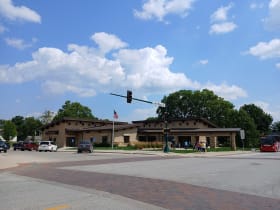
John Wayne Birthplace and Museum
21 miles away
The plain four-room house where Marion Morrison, the future John Wayne, was born in 1907, restored to its period look, sits beside the only museum in the world devoted to the Duke, holding the largest...