
Mote Marine Laboratory and Aquarium
225 University Town Center Dr
Sarasota, FL
The aquarium a legendary Shark Lady started, grown into one of the world's great marine research labs, where the animals you meet are part of real ocean science.
Mote Marine Laboratory and Aquarium is one of the rare aquariums that grew out of a genuine scientific legend. It traces its roots to a tiny fishing-shack lab founded in 1955 by Dr. Eugenie Clark, the pioneering ichthyologist known around the world as the Shark Lady, whose fearless, first-hand study of sharks helped change how we understand them. From that modest start on the Gulf Coast, Mote has become one of the leading independent marine research institutions on earth.
That research heritage is what sets a visit apart. The animals you meet here, from sharks and rays to manatees and sea turtles, are the public face of an institution whose scientists study everything from shark behavior to coral restoration to the harmful algal blooms that plague Florida's coast. In 2025 Mote opened a large new aquarium near Sarasota's University Town Center, giving its creatures far more room and giving visitors a modern, immersive way to connect with the Gulf of Mexico and the science that protects it.
What Travelers Love
- Coming face to face with sharks, rays, and Gulf fish gliding through a huge floor-to-ceiling ocean habitat
- Meeting Florida's own wildlife up close: manatees, sea turtles, river otters, and an alligator snapping turtle
- Touch stations where kids can gently meet stingrays and tidepool creatures
- Knowing the animals are part of a real, world-respected research and rescue institution, not just a show
Worth Knowing
- The aquarium moved in 2025 from its longtime City Island site to a large new home near University Town Center, so use the newer address when navigating
- It is an indoor, air-conditioned attraction, which makes it a perfect plan for a hot afternoon or a rainy day on the coast
- Weekends and holidays draw crowds, so an early or midweek visit means shorter lines and calmer galleries
- Allow a couple of hours to take it in, and check ahead for feeding times and animal encounters, which change with the day
Learn about Mote Marine Laboratory and Aquarium
The Shark Lady's legacy
The Mote story begins with Eugenie Clark, a young scientist who in 1955 established the Cape Haze Marine Laboratory in a small building on Florida's Gulf Coast to study the sharks of the region. At a time when few people took sharks seriously as research subjects and fewer still dove among them, Clark pioneered the capture and study of live sharks and became one of the world's foremost experts on their behavior, earning the affectionate nickname the Shark Lady.
The lab moved to Sarasota in 1960, and in 1967 it was renamed for William Mote, a businessman whose generous support helped secure its future; over his lifetime he gave millions to the institution. What had begun as a one-woman shark lab steadily expanded into a broad marine research center, adding scientists, programs, and a public aquarium that opened in 1980.
That founding spirit still shapes the place. Mote is an independent, nonprofit institution whose researchers work on the leading edge of ocean science, and the aquarium exists in large part to bring that work, and a love of the sea, to the public who walk through its doors.
What you will meet
The centerpiece of the aquarium is a vast Gulf of Mexico habitat holding hundreds of thousands of gallons of water, where sharks, rays, moon jellies, sea turtles, and schools of Gulf fish glide past and even overhead, so you feel surrounded by the open ocean. It is the kind of immersive tank that makes children go quiet and adults linger.
Around it, the galleries introduce Florida's own coastal wildlife: manatees in a dedicated large habitat, sea turtles, playful river otters, an alligator snapping turtle, a gopher tortoise, and other iconic local species. There are newer residents too, including penguins and a strikingly intelligent giant Pacific octopus, along with jellyfish, seahorses, and the small, jewel-like creatures that reward a close look.
Hands-on touch stations let visitors gently meet stingrays and tidepool animals under staff guidance, a favorite with younger guests. Throughout, signage and staff tie what you are seeing back to Mote's research and conservation work, so a stroll through the tanks doubles as a lesson in why healthy oceans matter.
Science and rescue behind the glass
What makes Mote more than a pretty aquarium is the working laboratory behind it. Its scientists pursue research across a striking range of subjects, from the behavior and biology of sharks that Eugenie Clark first championed, to sea turtle and coral-reef conservation, to the study of the red tide and other harmful algal blooms that periodically foul Florida's beaches and waters.
Mote also plays a hands-on role in caring for the region's marine life, contributing to the rescue, rehabilitation, and release of animals such as sea turtles and marine mammals. Because of that, the residents on display can change over time, and some are animals that could not be returned to the wild, given a good home where they help teach the public.
This blend of exhibit and institution is exactly why Mote stands out among Gulf Coast attractions. You are not just watching fish in tanks; you are visiting one of the world's respected ocean-science centers, where the wonder on the visitor side of the glass is meant to inspire care for the real sea just beyond Sarasota's beaches.
Visiting Mote Aquarium
Mote's new aquarium sits near Sarasota's University Town Center, close to Interstate 75 and beside a large rowing lake, an easy detour from a Gulf Coast road trip. It replaced the lab's longtime home on City Island in 2025, so be sure to navigate to the current University Town Center Drive address rather than the old barrier-island location.
The aquarium is fully indoor and air-conditioned, which makes it one of the best rainy-day or beat-the-heat plans on the coast, and a natural pairing with a morning at Siesta Key or Lido Beach. Plan on a couple of unhurried hours, check the day's feeding times and animal encounters when you arrive, and let the kids take their time at the touch tanks. Between the immersive Gulf habitat, the parade of Florida wildlife, and the sense that it all serves real science, it earns its place as one of Sarasota's signature stops.
Closest Boutels
The closest Boutel™ stays, so you can turn this stop into an overnight. Each is a place we chose through independent editorial review, never a paid placement.
Details
Sarasota, FL
Frequently asked questions
What is Mote Marine Laboratory and Aquarium?
Mote Marine Laboratory and Aquarium, in Sarasota on Florida's Gulf coast, is a respected marine research institution and public aquarium showcasing the marine life of Florida and beyond. The aquarium features sharks, sea turtles, manatees, rays, colorful fish, and other sea creatures in engaging exhibits, along with touch pools and educational displays, and it highlights Mote's important marine research and conservation work, including sea turtle and marine mammal rescue. A blend of aquarium fun and cutting-edge science, it delights families and ocean lovers. With its marine life, aquarium exhibits, and research mission, Mote Marine Laboratory and Aquarium offers an engaging destination in Florida.
What can you see at Mote Marine Laboratory and Aquarium?
You can see sharks, sea turtles, manatees, rays, colorful reef fish, and other marine creatures in engaging exhibits, explore touch pools where you can gently touch rays and other sea life, learn about Mote's marine research and conservation work including animal rescue, and enjoy educational displays about the ocean. The sharks, sea turtles, manatees, and touch pools are highlights, engaging for all ages. It blends fun with science and conservation. With its marine animals, touch pools, and research focus, Mote Marine Laboratory and Aquarium offers a fun and educational visit in Sarasota, Florida.
Is Mote Marine Laboratory and Aquarium good for families?
Yes, Mote Marine Laboratory and Aquarium is a great family destination, with fascinating marine animals like sharks, sea turtles, and manatees, interactive touch pools where children can gently touch rays and sea creatures, and educational exhibits that delight and teach kids and adults alike, all in a comfortable, mostly indoor setting. Children especially love the touch pools and the big animals. It combines fun with learning about the ocean. With its animals, touch pools, and hands-on exhibits, Mote Marine Laboratory and Aquarium makes an excellent family destination in Florida.
When is the best time to visit Mote Marine Laboratory and Aquarium?
As a largely indoor aquarium, Mote Marine Laboratory and Aquarium is enjoyable year-round in any weather, making it a great stop during the hot, humid Sarasota summer or a rainy day, though it can be busier on weekends, holidays, and in the winter tourist season, so weekday and morning visits tend to be quieter. Checking current hours before you go is wise. Because it is climate-controlled and engaging, Mote Marine Laboratory and Aquarium makes a reliable family stop any time of year in Sarasota, Florida.
What is near Mote Marine Laboratory and Aquarium?
Mote Marine Laboratory and Aquarium is in Sarasota on Florida's Gulf coast, near Lido Beach, within reach of the Ringling, Marie Selby Botanical Gardens, and Siesta Key Beach. That makes Mote Marine Laboratory and Aquarium a fun family stop to combine with Lido Beach, the Ringling, and the other attractions of the Sarasota area on a visit to Florida.
Nearby
The Ringling
6.8 miles away
The circus paid for one of the finest art museums in the South, and most road-trippers do not realize it is here.
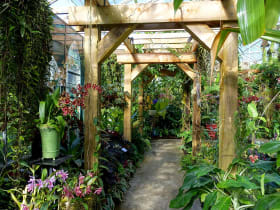
Marie Selby Botanical Gardens
7.4 miles away
Right in downtown Sarasota, tucked on the bay at 1534 Mound St, this garden built its reputation on plants that grow on air.

Lido Beach
9.5 miles away
Sarasota's own wide, uncrowded public beach on Lido Key, with soft quartz sand, calm Gulf water, free parking right beside the sand, and a pavilion with restrooms and a pool.

Siesta Key Beach
11 miles away
One of the great family beaches, and the sand is the reason. Siesta Key Beachs quartz grains stay cool underfoot even at midday, so little feet do not burn, and the same fine sand packs firm for serio...