
Michigan State Capitol
100 N Capitol Ave, Lansing, MI
Lansing, MI
A soaring nineteenth-century statehouse whose painted dome and jewel-box interiors look hand-crafted because they are, restored to their full Victorian glory.
The Michigan State Capitol is one of the most beautifully preserved statehouses in the country, a soaring Victorian building completed in 1879 and designated a National Historic Landmark. From the outside it presents a classic domed capitol; inside, it dazzles with color, ornament, and craftsmanship that reward a slow look upward.
The building's most famous feature is its inner dome, its walls and ceilings covered in decorative painting that mimics carved stone, glass, and relief, all done by hand. A major restoration returned the interior to its original nineteenth-century splendor, and today the capitol welcomes visitors for guided tours through its chambers and halls.
What Travelers Love
- A soaring interior dome hand-painted to look like carved stone and glass
- Restored Victorian interiors rich with color, pattern, and craftsmanship
- Guided tours that welcome visitors through the historic chambers
- A chance to see state government at work in a National Historic Landmark
Worth Knowing
- The capitol welcomes visitors and offers guided tours; check the schedule ahead
- Security screening is required to enter, so allow a little extra time
- The building is busiest when the legislature is in session; tours still run
- It is a working seat of government, so some areas may be restricted at times
Learn about Michigan State Capitol
A capitol for a growing state
Michigan moved its capital to Lansing in the mid nineteenth century, choosing a then-remote spot in the forest partly for its central location. The grand capitol that rose there, completed in 1879, was designed by architect Elijah Myers, who went on to design statehouses in other states as well, making him one of the most prolific capitol architects in the nation.
The building was ambitious for its time, a symbol of a young state's confidence and prosperity, built as Michigan grew rich on timber, mining, and farming. It has served continuously as the seat of Michigan government ever since, and remains a working statehouse rather than a museum piece.
The hand-painted interior
Step inside and the ceilings become the show. The interior is covered with decorative painting, much of it a technique that makes flat plaster and painted surfaces appear to be carved stone, molded glass, and three-dimensional relief. It is an enormous amount of skilled hand-work, and the effect is one of richness far beyond what the materials themselves would suggest.
The inner dome, glowing above the rotunda, is the crowning example, painted to trompe-l'oeil perfection. Portraits, chandeliers, and ornate chambers add to the sense that every surface was considered. Much of this splendor had faded or been covered over by the twentieth century before it was carefully brought back.
Restoration and visiting
In the late twentieth century Michigan undertook a major restoration of the capitol, cleaning and reviving the decorative painting, restoring the chambers, and modernizing the building's systems without sacrificing its historic character. The work returned the interior to something very close to how it looked when it first opened.
Today the capitol welcomes visitors, with guided tours leading through the rotunda, the House and Senate chambers, and the historic offices, while docents explain the building's art, architecture, and history. It is both a cultural landmark and a living seat of government where laws are still made.
Lansing and the region
Lansing grew up around the capitol and along the Grand River, and today it combines state government with a working, unpretentious Midwestern character. Nearby East Lansing is home to Michigan State University, one of the country's original land-grant colleges, which brings a lively campus energy to the area.
This part of central Michigan lies within the ancestral homeland of the Anishinaabe peoples, including the Ojibwe, Odawa, and Potawatomi of the Three Fires. The capitol district makes a good base for exploring the city's river trail, museums, and the surrounding college town.
Closest Boutels
The closest Boutel™ stays, so you can turn this stop into an overnight. Each is a place we chose through independent editorial review, never a paid placement.
Details
Lansing, MI
Frequently asked questions
What is the Michigan State Capitol?
The Michigan State Capitol, in the heart of Lansing, is a stately and historic building completed in 1879 and recognized as a National Historic Landmark. One of the first state capitols built to echo the design of the U.S. Capitol in Washington, it is celebrated for its soaring dome, ornate Victorian-era interior, hand-painted decorative finishes, and beautifully restored chambers. A working seat of Michigan government and an architectural treasure, it welcomes visitors to admire its grandeur and learn about the state's history and civic life.
Can you tour the Michigan State Capitol?
Yes, the Capitol offers free guided and self-guided tours that lead visitors through its magnificent interior, including the rotunda beneath the dome, the historic legislative chambers, and galleries of portraits and artifacts, while guides share the building's history and the workings of state government. Because it is an active government building, tour availability can depend on the legislative schedule and days of the week, so checking the current tour information before you go is wise to plan your visit.
What can you see inside the Michigan State Capitol?
Inside, you can admire the stunning rotunda and dome with its decorative glass floor and painted finishes, the ornate House and Senate chambers, the governor's ceremonial areas, and displays of historic flags, portraits, and artifacts that tell Michigan's story. The building's restored nineteenth-century craftsmanship, from the hand-painted surfaces to the detailed woodwork, is a highlight. The combination of beautiful architecture and living history makes a tour both visually impressive and educational for visitors of all ages.
When is the best time to visit the Michigan State Capitol?
As an indoor attraction, the Capitol is enjoyable year-round, and weekdays are typically when tours and the most activity are available, though this also means the legislature may be in session, which can be interesting to observe. Checking the current tour schedule and hours before you go is important, since availability can vary with the government calendar. A weekday visit generally offers the fullest experience of both the architecture and the workings of state government.
What is near the Michigan State Capitol?
The Capitol sits in downtown Lansing, near the Michigan History Center museum, the river trail, and the city's dining and cultural offerings, with the Potter Park Zoo and Michigan State University in neighboring East Lansing a short distance away. That central location makes the Michigan State Capitol an easy and worthwhile stop to combine with Lansing's museums, riverfront, and university-town attractions for a day exploring Michigan's capital city.
Nearby
Potter Park Zoo
1.3 miles away
Potter Park Zoo is just the right size for young kids, big enough to see rhinos, snow leopards, and penguins, small enough that little legs do not give out.
The Ledges at Grand Ledge
10 miles away
Almost nobody expects real cliffs in the flat farmland around Lansing, which is exactly what makes The Ledges a find.
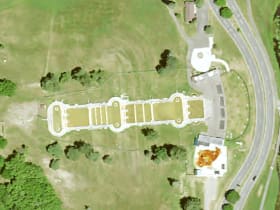
The Cascades Falls
36 miles away
For a genuinely unusual stop, see The Cascades in Jackson, a 500-foot man-made waterfall that pours down a hillside in 16 separate falls.