
Medicine Rocks State Park
1141 MT-7, Ekalaka, MT 59324
Ekalaka, MT
Wind and water carved these strange, wavy sandstone towers straight out of the Montana prairie, and by night they stand black against a river of stars.
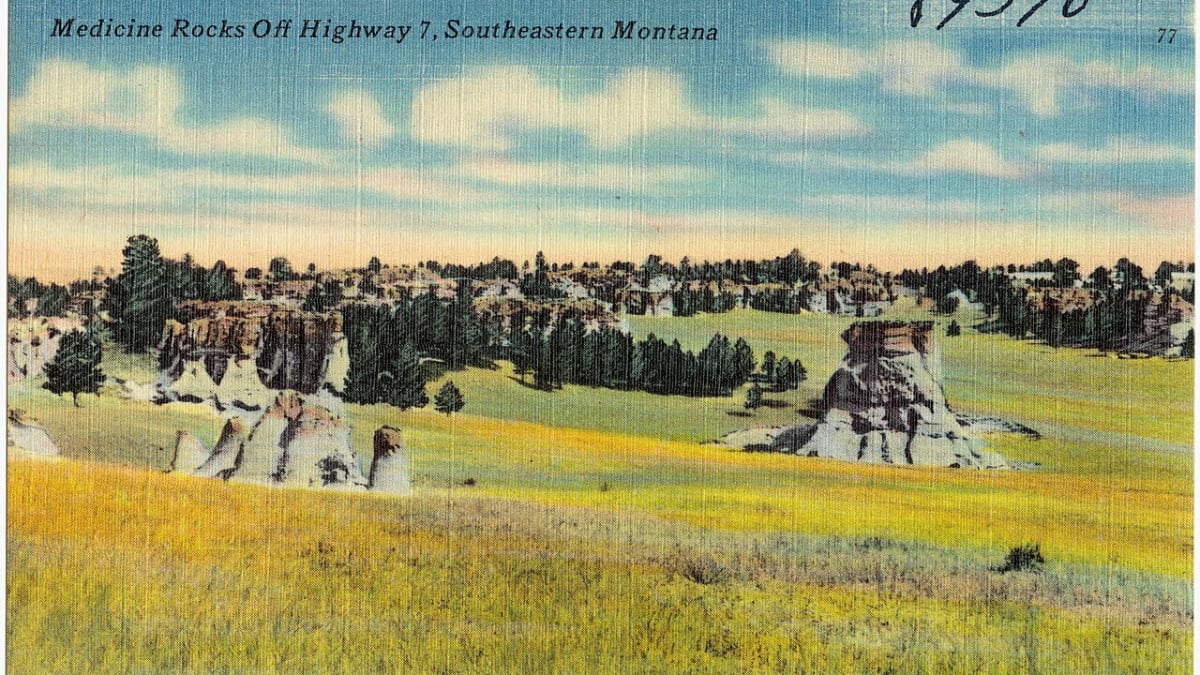
Medicine Rocks State Park is one of the more surprising sights on the northern plains: a cluster of strange, wavy sandstone towers rising straight out of the open Montana prairie. Wind and water have worked the soft rock for ages, hollowing it into holes, arches, tunnels, and pillars, some of them dozens of feet tall, until the whole place looks a little like it was carved by a dream. It sits in a remote corner of southeastern Montana, near the small town of Ekalaka, far from any city.
The park's name points to what these rocks have long meant to people. For the Sioux, Northern Cheyenne, and Crow, this was sacred ground, a place of powerful medicine, meaning spiritual strength, along the old route between the Yellowstone country and the Black Hills. Hunters watched for game from these heights, and generations left carvings in the soft stone. Even Theodore Roosevelt, who passed through in the 1880s, called it as fantastically beautiful a place as he had ever seen.
Today Medicine Rocks is a quiet place to camp, wander, and look up. Trails wind among the pillars, deer and pronghorn move through the grass and pine, and after dark the reason for its dark-sky title becomes clear. With no city lights for miles, thousands of stars and the glowing band of the Milky Way pour down over the pale, weathered rock.
What Travelers Love
- Strange, wavy sandstone towers full of holes and arches, rising straight out of the open prairie
- A place held sacred for generations, with old carvings and inscriptions worn into the soft stone
- Some of the darkest skies in the country, with thousands of stars popping out above the rocks
- Quiet, uncrowded camping among the pillars, where wildlife moves through the pine and grass
Worth Knowing
- The park is remote, about a fourteen-mile drive north of little Ekalaka, so top off fuel and supplies before you head out
- The dirt road that winds through the interior can turn slick and impassable for larger vehicles after rain
- Camping is primitive, with vault toilets and drinking water only near the entrance, so plan to be self-sufficient
- The rocks carry historic carvings, but adding your own is now illegal, so look but do not mark the stone
Learn about Medicine Rocks State Park
Rocks carved by wind and time
The towers at Medicine Rocks are sandstone, part of a rock layer laid down more than sixty million years ago by rivers washing sediment down from the young Rocky Mountains. Over the long ages since, that soft stone has been slowly eroded by wind and water, which is patient work that hollowed out the holes and arches and left the standing pillars behind. The result is a strange, sculpted look, almost like weathered Swiss cheese, with the tallest formations rising many dozens of feet from the prairie floor.
Because the stone is soft, it keeps changing. The same wind that shaped the rocks keeps reshaping them, wearing new hollows and softening old edges. It also means the rock holds a record: worn into the pillars are markings left over many generations, from ancient Native carvings to the names of cowboys and homesteaders. That history is exactly why visitors are now asked to look but never carve, so the story stays intact.
Sacred ground on the plains
Long before it was a state park, Medicine Rocks was a place of meaning. The Sioux, Northern Cheyenne, and Crow peoples knew it as sacred country, a place of medicine, which in this sense means spiritual power rather than any cure. An old Native name for the rocks describes stone with a hole in it, a fitting description for these pillars. The rocks sat along a travel route between the Yellowstone Valley and the Black Hills, and their heights made good lookouts over the surrounding plains where great herds once grazed.
The place drew notice from newcomers too. In the 1880s a young Theodore Roosevelt, ranching and hunting in the Dakotas, rode through and was struck by the rocks, writing that they were as fantastically beautiful a place as he had ever seen. That mix of the sacred and the wondrous still hangs over the park, and it is part of what makes wandering among the pillars feel like more than sightseeing.
Prairie, pine, and wildlife
Medicine Rocks sits where open prairie meets scattered ponderosa pine, a mix that gives the park more variety of life than the bare grassland around it. Native grasses roll away in every direction, and clusters of pine give shade and shelter among and around the rocks. Together they support a good range of animals for such a quiet, remote spot.
Mule and white-tailed deer are common, and pronghorn range the flats nearby. Coyotes, bobcats, foxes, and porcupines move through, while overhead you may spot hawks, golden eagles, prairie falcons, and wild turkeys. In spring the grouse gather to display. It is the everyday wildlife of the northern plains, easy to overlook until you sit still among the rocks at dusk and let it come to you.
A truly dark sky
In 2020 Medicine Rocks was certified as a Dark Sky Sanctuary, one of the darkest and best-protected night skies on Earth. Stargazers rate darkness on a scale from one to nine, called the Bortle scale, where a bright city is a nine and the darkest wild places are a one. Medicine Rocks rates a one, the very best there is. With no city lights for miles in any direction, thousands of stars and the glowing Milky Way, the cloudy band of our own galaxy, pop out above the pale sandstone.
The park makes the most of it, hosting guided night hikes and group stargazing on summer evenings among the pillars. Nights are shortest in high summer, so many visitors set an alarm for around midnight to catch the fullest sky. In the cooler months the dark comes earlier and lasts far longer, and a night near the new moon, when the moon is dark, lets even the faintest stars shine through over the rocks.
Closest Boutels
The closest Boutel™ stays, so you can turn this stop into an overnight. Each is a place we chose through independent editorial review, never a paid placement.
Details
Ekalaka, MT
Frequently asked questions
What is Medicine Rocks State Park?
Medicine Rocks State Park, in the remote high plains of southeastern Montana near Ekalaka, protects a striking landscape of wind-sculpted sandstone rock formations that rise dramatically from the prairie, a place of both natural beauty and deep sacred significance. The soft sandstone has been eroded by wind and weather into pillars, arches, and honeycombed formations riddled with holes and hollows, creating an otherworldly landscape. The rocks have long been a sacred place to Native peoples, who came here for spiritual purposes, and the area is also renowned as an International Dark Sky Sanctuary, one of the darkest places in the country for stargazing. With its sacred rock formations and dark skies, Medicine Rocks State Park offers a spectacular destination in Montana.
Why are the Medicine Rocks sacred?
The Medicine Rocks are sacred because they have long held deep spiritual significance to Native American peoples, who came to the striking sandstone formations to pray, seek visions, and connect with the spiritual world, giving the place its name and its enduring reverence. The unusual, otherworldly rocks were regarded as a place of powerful medicine, or spiritual power. Visitors are encouraged to treat the formations and the site with respect, honoring this sacred heritage and never carving or defacing the rocks. Understanding and respecting this significance is central to a meaningful visit to Medicine Rocks State Park in Montana.
Why is Medicine Rocks State Park good for stargazing?
Medicine Rocks State Park is renowned for stargazing because its extremely remote location on the high plains, far from any city lights, gives it some of the darkest night skies in the country, earning it designation as an International Dark Sky Sanctuary, one of the most protected dark-sky designations in the world. Under these pristine skies, the Milky Way blazes with astonishing brilliance and countless stars fill the darkness above the sacred rock formations. Bringing warm layers and letting your eyes adjust reveals the spectacular sky. This exceptional darkness makes Medicine Rocks State Park a premier stargazing destination in Montana.
What can you do at Medicine Rocks State Park?
You can walk among and admire the striking wind-sculpted sandstone formations, hike the trails, photograph the otherworldly rocks, camp, and, at night, marvel at some of the darkest, most brilliant star-filled skies in the country as an International Dark Sky Sanctuary. The unusual sacred rock formations, the trails, the remote prairie setting, and the spectacular stargazing are the draws, offering a memorable experience of both beauty and reverence. Treating the sacred rocks with respect and never carving them is essential. With its formations and dark skies, Medicine Rocks State Park offers a rewarding experience in Montana.
What is near Medicine Rocks State Park?
Medicine Rocks State Park is in the remote high plains of southeastern Montana near Ekalaka, within reach of the Ekalaka area and its dinosaur museum, Makoshika State Park to the north, the remote southeastern Montana plains, and the region's dark-sky country. That makes Medicine Rocks State Park a spectacular stop to combine with Makoshika State Park and the other attractions of southeastern Montana on a visit to the state.
Outside the Park
Pioneer Trails Regional Museum
54 miles away
Pioneer Trails Regional Museum: 12 1st Ave NE in Bowman, off US-85 and US-12 in the southwest corner. Admission is modest. Best for ages 5 and up.
White Butte, Highest Point in North Dakota
62 miles away
White Butte: south of Amidon in Slope County, reached by gravel county roads then a rough trail of roughly a mile and a half each way.
Burning Coal Vein and the Columnar Junipers
63 miles away
Burning Coal Vein: in the Little Missouri National Grassland, reached by gravel roads southwest of Medora through the tiny community of Amidon. A Forest Service campground sits at the site.