
Longwood Gardens
1001 Longwood Rd, Kennett Square, PA
Kennett Square, PA
One of the great gardens of the world, where a du Pont fortune built acres of fountains, a glass conservatory the size of a palace, and formal gardens that shift with every season.
Longwood Gardens is one of the premier public gardens in the world, spread across more than a thousand acres of the Brandywine Valley near Kennett Square. It grew from the vision and fortune of Pierre S. du Pont, who bought the land in 1906 to save a stand of old trees and then spent decades turning it into a showplace of fountains, formal gardens, meadows, and one of the largest conservatories anywhere.
The heart of the place is that great glass conservatory, a series of rooms kept green and blooming through every season, and the Main Fountain Garden outside it, where thousands of jets rise, cross, and fall in choreographed displays. Around them lie formal gardens, tree-lined allées, a lake, and wilder meadows, so a visit ranges from grand European geometry to quiet native landscape in a single afternoon.
What Travelers Love
- The Main Fountain Garden and its choreographed jets of water, lit after dark in season
- A conservatory of many rooms under glass, lush and blooming even in the depth of winter
- Sweeping formal gardens, allées, and meadows that reward a slow, unhurried walk
- Seasonal spectacles, from spring bulbs to the elaborate holiday displays and lights
Worth Knowing
- The grounds are large, so plan on plenty of walking and comfortable shoes
- Timed entry is used at busy periods, and the holiday and fountain-show seasons draw the largest crowds
- There is a great deal indoors under glass, so a rainy day is still a fine day to visit
- Fountain performances follow a seasonal schedule, so check the calendar if that is a priority
Learn about Longwood Gardens
Pierre du Pont and the making of a garden
The land had been a Quaker farm and arboretum for generations, planted with specimen trees by the Peirce family beginning in the early 1800s. When those trees were threatened with the axe in 1906, Pierre S. du Pont, an industrialist of the du Pont chemical family, bought the property to protect them. That rescue became a lifelong passion.
Over the following decades du Pont poured his engineering mind and his fortune into the gardens, building the vast conservatory that opened in 1921 and the elaborate waterworks that made Longwood famous, drawing on the great fountain gardens of Europe he had admired in his travels. He entertained lavishly and staged fountain and fireworks shows for guests. Before he died he placed the estate in a foundation so that it would remain a public garden, which it has been ever since. The Brandywine country around it was long the ancestral homeland of the Lenape people, whose descendant nations continue elsewhere today.
The conservatory and the fountains
The conservatory is the wonder that keeps Longwood alive through the cold months, a grand hall of glass filled with palms, orchids, and seasonal displays that are changed out through the year. Wander its connected rooms and you pass from a formal indoor garden to a hall of ferns to displays that turn over with the calendar, all warm and blooming while snow may lie outside.
The Main Fountain Garden is the other showpiece, a formal expanse where hundreds of jets, some rising very high, play in patterns set to music, lit in color after dark during the performance season. Du Pont, a lover of both engineering and spectacle, designed the systems himself, and the modern restoration kept the grandeur while adding new capabilities. Beyond the main garden, smaller fountains and water features thread quietly through the grounds.
Gardens, meadow, and trees
Longwood is far more than its showpieces. Formal gardens, an Italian water garden, a topiary garden, a rose garden, and long tree-lined allées give the estate its European bones, while the surviving Peirce trees, some well over two centuries old, anchor it to the farm it once was.
In recent decades the gardens have leaned into wilder, native landscape as well, with a large restored meadow laced with paths, alive in warm months with grasses, wildflowers, birds, and butterflies. That mix, grand geometry giving way to loose native meadow, is part of what makes a long walk here feel like several gardens in one.
Season by season
Spring is a riot of bulbs, flowering trees, and fresh green, one of the most beloved times to walk the outdoor gardens. Summer brings full fountain performances, long evenings, and the meadow at its height.
Fall lays color across the trees and the Brandywine hills and quiets the crowds a little. Winter is when the conservatory earns its keep, blooming and warm, and it is also the season of the celebrated holiday display, when the gardens glow with lights and decorated trees indoors and out. Because so much lives under glass, there is no truly off season here.
Closest Boutels
The closest Boutel™ stays, so you can turn this stop into an overnight. Each is a place we chose through independent editorial review, never a paid placement.
Travelers Rest Motel
Honorable Mention3701 Old Philadelphia Pike, Intercourse, PA
25 miles away|Learn More ›
Details
Kennett Square, PA
Frequently asked questions
What is Longwood Gardens?
Longwood Gardens, near Kennett Square in Pennsylvania's Brandywine Valley, is one of the world's premier public gardens, set on the former estate of industrialist Pierre du Pont. Spanning more than a thousand acres, it dazzles with spectacular formal gardens, meadows and woodlands, a vast glass Conservatory, and famous illuminated fountains. Renowned for its year-round beauty and elaborate seasonal displays, it is a magnificent destination that rewards a leisurely half-day or more of wandering.
What are the highlights of Longwood Gardens?
The grand Conservatory bursts with blooms and tropical plants year-round, the Main Fountain Garden puts on choreographed fountain shows, spectacular when illuminated at night in season, and the outdoor gardens shift with dazzling seasonal displays. Highlights include spring bulbs, summer's festival of fountains, the fall Chrysanthemum Festival, and the beloved Christmas lights and displays. With treehouses, an Italian water garden, and miles of paths, there is far more than you can see in one visit.
When is the best time to visit Longwood Gardens?
Every season offers something special, so the best time depends on what you want to see: spring for bulbs and blossoms, summer for the fountain shows, fall for the famous chrysanthemums, and the winter holidays for the spectacular Christmas lights and decorated Conservatory, one of the most popular times. Because it changes constantly, many visitors return in different seasons. Timed tickets are recommended and often required, so book ahead, especially for the Christmas season.
What should I know before visiting Longwood Gardens?
Plan for a lot of walking across the large grounds, so wear comfortable shoes and dress for the weather, since much of the experience is outdoors. Timed-entry tickets are needed and can sell out for popular periods like Christmas, so reserve in advance. Allow at least a half day, and consider the fountain show and any evening illumination schedules when planning your visit. There are dining options on site to refuel during a full day of exploring.
What is near Longwood Gardens?
Longwood sits in the scenic Brandywine Valley, rich with attractions including the Winterthur estate and gardens, the Brandywine River Museum of Art with its Wyeth paintings, and the historic countryside around Chadds Ford. The town of Kennett Square, known as the mushroom capital, offers dining nearby, and both Wilmington, Delaware, and Philadelphia are within easy reach. That makes Longwood an easy centerpiece for a rewarding day or weekend in the Brandywine region.
Nearby

Winterthur Museum, Garden and Library
6.2 miles away
Even people who tour the Brandywine estates sometimes skip this one, and it is the deepest of them all.

Delaware Museum of Nature and Science
6.7 miles away
A well-pitched stop for younger kids near the Brandywine estates.
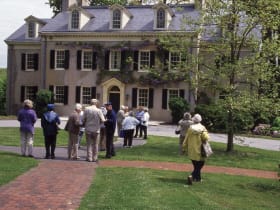
Hagley Museum and Library
8.4 miles away
This is where the whole du Pont story starts, and it is far more hands-on than the mansions.

Nemours Estate
8.6 miles away
Most Wilmington visitors never realize the largest formal French gardens in North America sit at the edge of town. Nemours, at 1600 Rockland Rd, was Alfred I.

Brandywine Zoo
9.8 miles away
For families with small children, the size is the selling point: the Brandywine Zoo at 1001 N Park Dr is small enough to walk in a morning without wearing anyone out.

White Clay Creek State Park
12 miles away
In a state that is mostly flat coastal plain, White Clay Creek is where Delaware finally gets some hills.

Ridley Creek State Park
13 miles away
A big block of quiet forest a short drive from the city, Ridley Creek State Park near Media wraps 2,600 wooded acres around the valley of Ridley Creek.
Wharton Esherick Museum
16 miles away
Almost nobody stumbles onto this, and you cannot just walk up: the Wharton Esherick Museum on Horseshoe Trail near Malvern is by advance reservation only.

Colonial Theatre
20 miles away
Film buffs know it, but most people driving through Phoenixville have no idea the little marquee on Bridge Street is a movie legend.