
Loess Bluffs National Wildlife Refuge
Key Stone Dr, Mound City, MO
Mound City, MO
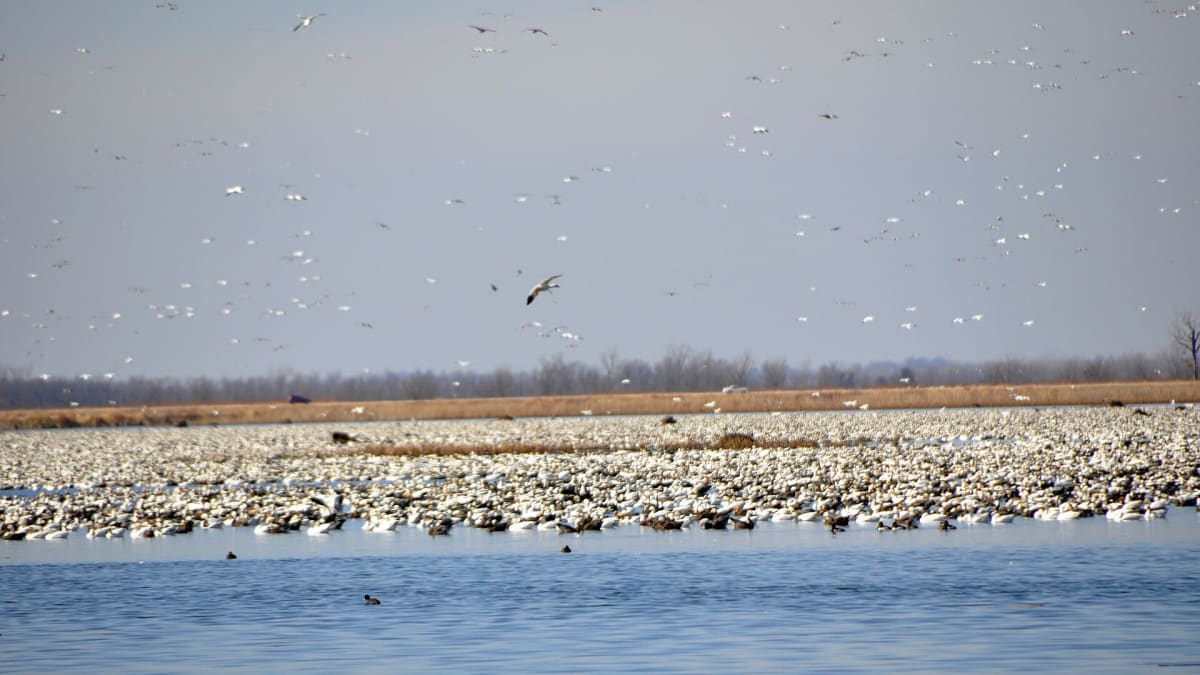
In peak migration, the sky over this quiet marsh fills with hundreds of thousands of snow geese rising at once, one of the great wildlife spectacles of the American heartland.
Loess Bluffs National Wildlife Refuge, long known as Squaw Creek before it was renamed, is a wetland set aside as a resting and feeding stop on one of North America's great bird highways, the Central Flyway. For most of the year it is a peaceful patchwork of marsh, pools, and grassland below a wall of steep hills. But twice a year, on migration, it becomes the stage for one of the most staggering wildlife spectacles in the middle of the continent.
At the height of the snow goose migration, the refuge can hold hundreds of thousands of the birds at once, sometimes numbers that stagger belief, blanketing the water and rising in roaring white clouds when something startles them. Bald eagles gather by the hundreds to hunt the flocks, and the whole scene unfolds beneath the Loess Hills, ridges built grain by grain from wind-blown dust at the end of the last Ice Age.
What Travelers Love
- The astonishing sight of hundreds of thousands of snow geese lifting off the marsh at once
- Hundreds of bald eagles gathered along the water during peak migration
- The auto tour loop that lets you watch the wildlife from your car
- The steep, unusual loess hills rising above the wetland edge
Worth Knowing
- The great snow goose numbers come during migration, mainly late fall and early spring, not year-round
- The best viewing is early morning and late afternoon when the birds are most active
- Bring binoculars or a spotting scope; the flocks are huge but can be far across the water
- Drive the auto tour route slowly and stay in your vehicle where posted to avoid flushing the birds
Learn about Loess Bluffs National Wildlife Refuge
A stop on the great flyway
Loess Bluffs lies along the Central Flyway, one of the broad aerial highways that migrating birds follow between their northern breeding grounds and their southern wintering grounds. Wetlands like this one are essential rest stops, places where exhausted birds can feed and gather strength before continuing a journey that may span a continent. The refuge was established to protect exactly this kind of habitat as the great marshes of the interior were being drained for farms.
The refuge's marshes, pools, and moist grasslands are managed to provide food and safe water for the millions of waterfowl and other birds that pass through each year. In the off-season it is a quiet place of herons, muskrats, deer, and resident birds, but its true purpose reveals itself in the crush of the spring and fall migrations, when the sky itself seems to move.
The snow geese and the eagles
The signature event is the snow goose migration. As the birds funnel down the flyway, huge numbers stop here, and at peak the refuge can hold flocks numbering in the hundreds of thousands. When a flock takes flight all at once, the sound is a roar and the sky turns white, a wall of wings that has to be seen to be believed. It is regularly ranked among the finest wildlife spectacles in the region.
Where there are that many geese, there are eagles. Bald eagles gather at the refuge during migration in remarkable numbers, perching in bare trees and along the ice to hunt weakened or injured birds. Watching hundreds of the national bird patrol a marsh crowded with geese is a rare thing, and it draws photographers and birders from across the Midwest during the peak weeks.
The Loess Hills
The refuge takes its name from the Loess Hills that rise steeply along its eastern edge, and they are geological oddities in their own right. Loess is fine, wind-blown silt, and at the close of the last Ice Age, winds picked up vast quantities of this dust from the barren floodplains of the Missouri River and piled it into ridges along the valley's edge. Deep deposits of this kind are found in only a couple of places on Earth.
The result is a range of unusually steep, sharp-crested hills with their own specialized plants and animals adapted to the dry, well-drained soil. Rising directly above the flat, wet marshland, they give the refuge a striking layered profile: hills of ancient dust looking down on a wetland alive with wings. Trails and overlooks let visitors take in the contrast.
How to visit
The heart of a visit is the auto tour route, a driving loop around the pools and marshes that lets you watch the wildlife from your vehicle, which doubles as a moving blind that keeps the birds from spooking. Pullouts and overlooks let you stop and scan the water, and early morning and late afternoon bring the most activity as the flocks move between roosting and feeding.
The great numbers come with migration, so timing matters: late fall for the southbound push and late winter into early spring for the return are the classic windows for the snow geese and eagles. Bring binoculars or a scope, dress warm, and be patient, and you may witness the moment when the whole marsh rises into the air at once.
Closest Boutels
The closest Boutel™ stays, so you can turn this stop into an overnight. Each is a place we chose through independent editorial review, never a paid placement.
Prairie Lodge Motel
Honorable Mention1219 Old US Highway 56, Council Grove, KS
119 miles away|Learn More ›
Details
Mound City, MO
Frequently asked questions
What is the Loess Bluffs National Wildlife Refuge?
The Loess Bluffs National Wildlife Refuge, in northwestern Missouri near Mound City, is a beautiful wetland refuge world-famous as a spectacular stopover for migrating birds, especially its breathtaking gatherings of snow geese. Set where wetlands meet the distinctive loess bluffs, the refuge hosts astonishing numbers of migrating waterfowl, and during peak migration, hundreds of thousands of snow geese and other birds fill the marshes and skies in an awe-inspiring natural spectacle. The refuge offers an auto tour loop, trails, and observation areas for viewing the birds and abundant wildlife. A premier birdwatching destination, it delights nature lovers. With its wetlands and migrating birds, the Loess Bluffs National Wildlife Refuge offers a spectacular destination in Missouri.
What can you do at the Loess Bluffs National Wildlife Refuge?
You can drive the auto tour loop and walk the trails and observation areas through the wetlands, watch for the enormous numbers of migrating snow geese, waterfowl, eagles, and other birds and wildlife, especially during peak migration, and photograph the spectacular scenes. The astonishing bird migrations, the auto tour, the wildlife viewing, and the scenic wetlands beneath the loess bluffs are the draws, making it a premier destination for birders and nature lovers. The snow goose spectacle is unforgettable. Bringing binoculars greatly enhances a visit. With its wetlands and birds, the Loess Bluffs National Wildlife Refuge offers a rewarding experience in Missouri.
When is the best time to visit the Loess Bluffs National Wildlife Refuge?
The fall and, especially, late fall migration is the most spectacular time, when hundreds of thousands of snow geese and other waterfowl gather in an awe-inspiring display, with eagles present in late fall and winter, while spring migration also brings abundant birds. The peak of the snow goose migration is the highlight. Bringing binoculars and checking current migration reports before you go help. For the breathtaking snow goose spectacle, aim for the peak fall migration at the Loess Bluffs National Wildlife Refuge in Missouri.
What should I know before visiting the Loess Bluffs National Wildlife Refuge?
The refuge is best experienced via its auto tour loop, so bringing binoculars, a camera, and warm clothing for the cool migration seasons greatly improves a visit, and observing wildlife from your vehicle or designated areas and staying on the tour route protect the birds and habitat. Migration timing varies year to year, so checking current bird reports before you go helps time the peak. Early morning and evening offer great viewing. Coming prepared and timing the migration ensure a rewarding visit to the Loess Bluffs National Wildlife Refuge in Missouri.
What is near the Loess Bluffs National Wildlife Refuge?
The Loess Bluffs National Wildlife Refuge is in northwestern Missouri near Mound City, within reach of the loess hills and bluffs of the region, the Missouri River country, and St. Joseph to the south. That makes the Loess Bluffs National Wildlife Refuge a spectacular stop to combine with the other attractions of northwestern Missouri on a visit to the state.
Nearby
Indian Cave Petroglyphs
19 miles away
Indian Cave Petroglyphs: within Indian Cave State Park, about 10 miles south of Brownville off Highway 67 and park road.

Indian Cave State Park
20 miles away
Indian Cave State Park: in the far southeast corner off Highway 64E, on the Missouri River bluffs. Nebraska state park permit required.

Davis Memorial
23 miles away
Davis Memorial: in Mount Hope Cemetery on the east edge of Hiawatha. Free, open during cemetery daylight hours.

Loess Hills Scenic Byway
40 miles away
The Loess Hills run in a narrow band along Iowas western edge, steep ridges of wind-deposited silt so deep and rugged that this landform reaches comparable scale in only one other place on earth.