
Little Spokane River Natural Area
Indian Painted Rocks Trailhead, W Rutter Pkwy
Spokane, WA
A slow, marshy river just outside the city, where great blue herons nest in the cottonwoods and ancient painted rocks watch over the water.
The Little Spokane River Natural Area protects a slow, reed-lined stretch of river on the edge of the city, a place of marsh, meandering current, and ponderosa-cloaked hills that feels far more remote than it is. A riverside trail and a gentle paddling route let you explore it on foot or by boat, and both begin near a set of ancient Native pictographs.
It is the kind of quiet that surprises people so close to Spokane. Herons stalk the shallows, turtles bask on logs, and the water drifts along at a pace made for a lazy afternoon float, all within a protected corner of the vast Riverside State Park.
What Travelers Love
- A gentle, marshy river made for an easy canoe or kayak float past herons and turtles
- The Indian Painted Rocks, protected Native pictographs at the trailhead
- A great blue heron rookery in the tall cottonwoods along the water
- A riverside trail that feels remote yet sits right on the edge of Spokane
Worth Knowing
- The river is for non-motorized boats only, canoes, kayaks, and paddleboards, which keeps it peaceful
- The pictographs are fragile and sacred, so view them from the marked area and never touch them
- Spring high water can be swift and cold, so check conditions before paddling
- A Washington Discover Pass is required to park at the trailheads
Learn about Little Spokane River Natural Area
The Indian Painted Rocks
The trail into the natural area passes the Indian Painted Rocks, a protected cluster of pictographs painted onto the rock by Native people long before the city grew up nearby. The Spokane people and their neighbors have lived along these rivers for countless generations, and the paintings are a direct link to that long presence.
These images are fragile, sacred, and irreplaceable, so the site is fenced and interpreted, and visitors are asked to view them only from the marked area and never touch them. Treat the rocks as you would any place of living cultural importance, with quiet and respect.
Paddling and walking the river
The Little Spokane is one of the region's finest gentle paddles. Non-motorized boats put in near the Indian Painted Rocks and at St. George's, and the current carries you slowly through marsh, past overhanging cottonwoods, and around lazy bends where wildlife is easy to spot. It is a classic point-to-point float, so many paddlers arrange a shuttle between put-in and take-out.
For those who prefer to stay dry, the riverside trail traces the same water, threading through pine and meadow with the marsh on one side. Either way the pace is unhurried, and the reward is the same: a close, quiet look at a living river.
The heron rookery and the wildlife
About a mile along the river stands the natural area's most celebrated resident colony, a great blue heron rookery high in the streamside cottonwoods, where the big birds nest and raise their young. Watching a heron lift off from the marsh on slow, enormous wings is one of the trip's certain pleasures.
The wetland teems with life. Painted turtles line up on logs, ospreys and eagles hunt overhead, waterfowl work the quiet backwaters, and beaver, muskrat, and deer move along the banks. The mix of marsh, river, and dry ponderosa forest packs an unusual variety of habitat into a small area.
The seasons
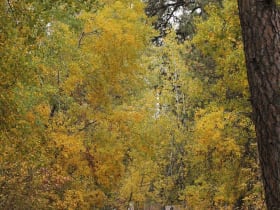
Spring brings high, brisk water and the return of nesting birds, and the herons are active at the rookery. Summer is warm and gentle, the classic season for a slow float, though the current drops. Fall paints the cottonwoods gold along the water and thins the crowds.
Winter quiets the natural area and can ice the edges of the marsh, a stark and peaceful time for a walk when the herons have gone but eagles patrol the open water. Whenever you come, mornings are best for wildlife and calm.
Closest Boutels
The closest Boutel™ stays, so you can turn this stop into an overnight. Each is a place we chose through independent editorial review, never a paid placement.
Details
Spokane, WA
Frequently asked questions
What is the Little Spokane River Natural Area?
The Little Spokane River Natural Area, just north of Spokane in eastern Washington, is a beautiful protected area along the gentle, winding Little Spokane River, offering peaceful paddling, hiking, and wildlife viewing amid scenic river, wetland, and forest landscapes. The calm, meandering river is especially popular for kayaking and canoeing, gliding past marshes, forests, and rock outcrops rich with birds and wildlife, while trails follow the river and lead to the Indian Painted Rocks, ancient Native American pictographs. A serene natural escape close to the city, the Little Spokane River Natural Area offers lovely paddling, trails, wildlife, and a glimpse of Native heritage near Spokane, Washington.
What can you do at the Little Spokane River Natural Area?
You can paddle the gentle, scenic Little Spokane River by kayak or canoe, a popular and peaceful float past marshes, forests, and wildlife, hike the trails that follow the river and surrounding hills, watch for abundant birds and wildlife including moose, deer, herons, and waterfowl, and see the ancient Native American pictographs at the Indian Painted Rocks. The calm river and rich wildlife make it especially lovely for paddling and nature watching. With its serene paddling, riverside trails, wildlife, and Native rock art, the Little Spokane River Natural Area offers a peaceful and scenic outdoor experience near Spokane, Washington.
What should I know before paddling the Little Spokane River?
The Little Spokane is a gentle, popular paddling river, but as with any water, wear a life jacket, be aware of the current and any obstacles, and check on the designated put-in and take-out points, since the natural area has specific access arrangements and the popular float is typically done one-way, sometimes requiring a shuttle. Be mindful of cold water and changing weather. Respect the wildlife and the protected natural area, staying on the water and trails. Being prepared with a life jacket, knowing the put-in and take-out, and respecting the natural area ensures a safe and enjoyable paddle on the Little Spokane River.
When is the best time to visit the Little Spokane River Natural Area?
Late spring through early fall is the prime season for paddling the river in pleasant weather, with summer popular for floating and the calm water inviting, while spring brings high, lush conditions and active wildlife, and fall offers beautiful color and comfortable temperatures for paddling and hiking. Dawn and dusk are best for wildlife, including the chance to spot moose. Winter is cold and quiet. For paddling and the best weather, aim for late spring through early fall, when the Little Spokane River Natural Area is at its most inviting near Spokane, Washington.
What is near the Little Spokane River Natural Area?
The Little Spokane River Natural Area is just north of Spokane in eastern Washington, near the city of Spokane with Riverfront Park and the Spokane Falls, the Northwest Museum of Arts and Culture, and within reach of the lakes and scenery of the region. That makes the Little Spokane River Natural Area a peaceful outdoor stop to combine with Spokane's attractions and the other sights of eastern Washington on a visit to the state.
Nearby
Riverfront Park
6.0 miles away
Spokane's Riverfront Park was the 1974 World's Fair grounds, now a 100-acre city park where the Spokane Falls are accessible from shore and by gondola over the falls.
Mobius Science Center
6.0 miles away
The Mobius Science Center is in the River Park Square development in downtown Spokane, one block from the Spokane Falls.
Spokane Falls
6.1 miles away
The Spokane Falls are a series of drops on the Spokane River as it passes through the basalt canyon in downtown Spokane, with a total drop of roughly 130 feet over a short stretch.

Northwest Museum of Arts and Culture
6.2 miles away
The Northwest Museum of Arts and Culture (MAC) in Spokane's Browne's Addition neighborhood houses the largest ethnographic collection of Plateau Indian artifacts in the world, alongside regional art,...
Turnbull National Wildlife Refuge
20 miles away
Turnbull National Wildlife Refuge covers 16,000 acres of ponderosa pine forest and wetland potholes on the Channeled Scablands south of Cheney.