Lamar Valley, Yellowstone National Park
Northeast Entrance Road, Yellowstone National Park, WY
Yellowstone National Park, WY
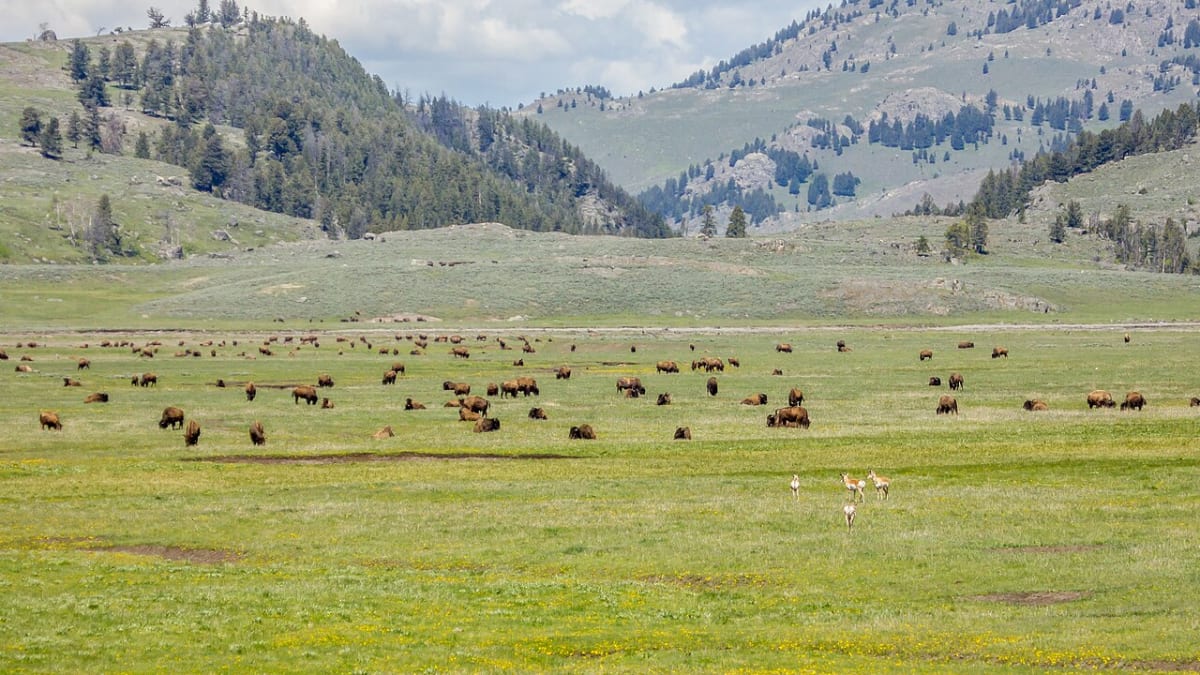
A wide glacial valley in Yellowstone's quiet northeast corner, famous for wolves, bison, and open country wildlife watching.
The Lamar Valley is often called the Serengeti of North America, and the comparison is earned. This broad, grassy valley in the northeastern corner of Yellowstone is one of the finest places on the continent to watch large wild animals living as they have for thousands of years. Herds of bison move across the flats, elk graze the slopes, and grizzly and black bears work the hillsides, all against a backdrop of open country and distant mountains.
The valley became world famous after wolves were returned to Yellowstone in the mid 1990s, and Lamar quickly proved to be one of the best places anywhere to see them in the wild. On a cold morning the pullouts along the road fill with people and spotting scopes, watching a wolf pack move across the far hillside, in one of the great wildlife spectacles of the American West.
What Travelers Love
- Watching wild wolves through a spotting scope at dawn or dusk
- Vast herds of bison grazing and crossing the road
- The open, uncrowded feel compared with the geyser basins
- Sharing the roadside with the community of dedicated wildlife watchers
Worth Knowing
- Wildlife is most active around dawn and dusk, so plan for early mornings
- Bring binoculars or a spotting scope, since much of the viewing is at a distance
- Never approach or feed wildlife, and give bison and bears a very wide berth
- This is the coldest, snowiest corner of the park, so conditions can turn quickly
Learn about Lamar Valley, Yellowstone National Park
A valley shaped by ice
The Lamar Valley owes its broad, open floor to the glaciers that once filled this part of Yellowstone. As the ice advanced and retreated, it carved out a wide, flat bottomed valley and left behind rounded hills and scattered boulders dropped by the melting glaciers. The Lamar River now winds across the valley floor, feeding the grasslands that support so much life.
That open grassland is the key to the valley's wildlife. Unlike the forested plateaus that cover much of the park, Lamar is a sweep of sage and grass where animals gather in the open and can be watched from a distance, making it a natural theater for the drama of predator and prey.
The return of the wolves
Wolves were absent from Yellowstone for much of the twentieth century after being hunted out of the region. In the mid 1990s they were reintroduced to the park, and the Lamar Valley became a center of that effort and of the research that followed. The valley's open terrain made it possible to observe the packs closely, and it remains one of the best places on Earth to see wild wolves.
The wolves reshaped the valley in ways scientists are still studying, influencing the movements of elk and, in turn, the health of streamside willows and the animals that depend on them. Watching a pack move across the hills at dawn is a reminder that this is a working wild ecosystem, not a static scene.
Bison, bears, and more
Wolves get much of the attention, but the Lamar Valley is rich with wildlife of every kind. Some of Yellowstone's largest bison herds range across the valley, and it is common to be stopped on the road as hundreds of animals amble across. Grizzly and black bears feed on the slopes, pronghorn and elk graze the flats, and coyotes, foxes, badgers, and raptors round out the cast.
The mix changes through the year, from the calving and courtship of spring to the bugling elk of autumn. Because so much of the valley is open and visible, patient watchers with binoculars can often see several species in a single morning.
The watching community
Wildlife watching in the Lamar Valley has grown into something of a culture. On many mornings the pullouts fill with regulars, guides, and researchers, their spotting scopes trained on distant hillsides, and newcomers are often welcomed with a look through a scope and a quiet word about what is happening across the valley.
That shared attention is part of the experience. Standing at a pullout in the cold air, watching a far off pack or a bear on a hillside alongside a line of strangers, is a distinctly Lamar way to spend a morning, and it draws people back year after year.
Closest Boutels
The closest Boutel™ stays, so you can turn this stop into an overnight. Each is a place we chose through independent editorial review, never a paid placement.
Details
Yellowstone National Park, WY
Frequently asked questions
What is the Lamar Valley?
The Lamar Valley, in the northeastern part of Yellowstone National Park in Wyoming, is a broad, beautiful river valley renowned as one of the best places in the world to watch wildlife, often called America's Serengeti. The wide, grassy valley, framed by mountains and cut by the Lamar River, is home to large herds of bison, along with elk, pronghorn, bears, and, most famously, gray wolves, making it a premier destination for wildlife watching. Wolf reintroduction to Yellowstone centered on this area, and wolf watchers gather here. With its abundant wildlife and stunning scenery, the Lamar Valley offers some of the finest wildlife viewing in North America in Yellowstone National Park.
What wildlife can you see in the Lamar Valley?
The Lamar Valley is famous for its abundant wildlife, including large herds of bison that often graze near and even cross the road, elk, pronghorn, bighorn sheep, and predators such as gray wolves, grizzly and black bears, coyotes, and foxes. It is especially renowned as one of the best places anywhere to spot wild wolves, with dedicated wolf watchers gathering with spotting scopes. Bald eagles and other birds are also present. The valley's open terrain makes wildlife easier to spot. Bringing binoculars or a spotting scope greatly enhances the experience of watching the remarkable wildlife of the Lamar Valley.
What safety precautions should I take in the Lamar Valley?
Never approach or feed wildlife, keeping a safe distance from bison, bears, wolves, and other animals, as bison are especially dangerous and injure people who get too close, and bears require carrying bear spray and knowing how to use it. Watch wildlife from your vehicle or from a safe distance with binoculars, and never get between animals or approach for photos. Be cautious of bison on the road. Follow all park rules. Keeping a safe distance from all wildlife and using binoculars or scopes for viewing ensures a safe experience in the Lamar Valley.
When is the best time to visit the Lamar Valley for wildlife?
Dawn and dusk are the prime times for wildlife viewing, especially for spotting wolves and other predators, which are most active in the low light of early morning and evening. Spring and early summer bring newborn animals and active wildlife, while fall brings the rut and, again, active predators. Winter offers a stark beauty and wolf watching, though access is more limited. For the best wildlife viewing, especially wolves, arrive at dawn or stay until dusk, and visit in spring, early summer, or fall, bringing a spotting scope, in the Lamar Valley of Yellowstone National Park.
What is near the Lamar Valley?
The Lamar Valley is in the northeastern part of Yellowstone National Park in Wyoming, near the park's northeast entrance, the gateway towns of Cooke City and Silver Gate in Montana, the Tower-Roosevelt area, and within reach of the park's other wonders and the Beartooth Highway to the northeast. That makes the Lamar Valley a premier wildlife-viewing stop to combine with the other attractions of Yellowstone National Park and the surrounding gateway areas on a visit to Wyoming.
Nearby
Mammoth Hot Springs
25 miles away
Yellowstone's living travertine terraces, pale stone laid down layer by layer by hot mineral water so the springs grow and shift from year to year.

Grand Prismatic Spring
41 miles away
Grand Prismatic Spring is the largest hot spring in the United States and the third largest in the world, measuring 370 feet across and 121 feet deep.

Old Faithful
43 miles away
Old Faithful erupts approximately every 90 minutes to between 106 and 185 feet, making it the most reliably predictable major geyser in the world.